
The Coherence Map Playbook to Turn Scattered Ideas Into Recognizable Authority in 60 Minutes
A coherent body of work is built, not hoped for.
In the next 60 minutes, this playbook turns a pile of “good ideas” into a system where every post, blog, and insight reinforces the same expertise, so people (and discovery systems) can actually recognize what the brand stands for.
What “coherence” actually means (and why random posting is killing authority)
Coherence is repeated, interlinked signals that teach the market what to associate with a business.
Not volume. Not vibes. Not “staying active.” Coherence is the pattern someone feels after seeing a few pieces of content, and realizing, without effort, what the business is known for.
Random posting breaks that pattern. A founder shares a sharp take on pricing one day, a thread on morning routines the next, a hot AI tool list after that. Each piece might be fine. Together, they don’t add up to anything. There’s no mental category to put the brand in, which means there’s no reason to remember it.
“It starts by understanding your expertise. Not broadly. But clearly.” That sentence is the whole game.
This is where Inkflare draws a hard line against the usual advice. Durable authority beats vanity metrics, every time. A system beats hustle, every time. Likes can spike on randomness. Trust rarely does. Trust comes from the quiet experience of “this brand keeps showing up with the same kind of useful clarity,” across blog, social, search, and the new AI-driven discovery surfaces that summarize and compare ideas fast.
The cost shows up in small, frustrating ways. People say “great content” but don’t buy, because the content never makes a specific promise. A post spikes, then everything goes quiet again, because nothing connects. The brand looks busy, but not owned. Plenty of output, no category.
If a business sells expertise, coherence is not optional. It’s the difference between being visible and being chosen.
For a deeper look at why “posting more” doesn’t solve presence, and why proof accumulation matters, this related read is worth keeping open: Stop Posting and Start Accumulating the Proof That Builds Real Presence.
Step 1 (10 min): Write the ‘known-for sentence’ (identity before content)
The fastest way to stop content drift is to write one sentence that acts like a filter.
A “known-for sentence” is not a mission statement. It’s not a brand bio. It’s a constraint that forces clarity, so every future idea can be sorted in seconds: on-brand, or distraction.
Use this template:
Inkflare helps (specific audience) get (specific outcome) by (specific mechanism).
To keep it honest, make it do four jobs at once. It needs one audience (not “anyone building a business”), one outcome (not “growth, confidence, clarity, freedom”), one mechanism (how the outcome happens), and it has to fit in one sentence (no stacking ten offerings in a trench coat).
Here are examples that actually work, because they’re specific enough to exclude the wrong people. For a coach: “Inkflare helps leadership coaches turn client conversations into consistent, search-friendly thought leadership by mapping their expertise into connected themes.” For a founder: “Inkflare helps early-stage SaaS teams build organic visibility by turning product insights into an interlinked content system across blog, social, and AI discovery.” For a consultant: “Inkflare helps B2B consultants become the obvious choice in their niche by publishing a coherent body of work that makes their expertise legible.”
The micro-check is ruthless and useful: if the sentence could fit five different businesses, it’s too vague.
That vagueness is usually where the anxiety lives. The fear of being boxed in. The fear of leaving opportunities on the table. The reality is simpler. Broad content doesn’t create optionality, it creates confusion. Clear positioning creates optionality because it builds trust faster, and trust is what makes people lean in.
Step 2 (10 min): Choose 3–5 core themes (the only buckets allowed)
Themes are the only buckets allowed because they create repetition without sounding repetitive.
A theme is a lane the brand can stay in for years, while still exploring hundreds of angles. A theme is not a format (podcast, carousel). It’s not a trend (the latest platform feature). It’s the subject area where the brand wants to be reliably useful.
Pick three to five themes by pressure-testing them in a simple way. First, relevance: does this theme directly support the known-for sentence, or is it just interesting? Second, proof: can the brand teach it from real experience and results, not recycled takes? Third, demand: are people already searching, asking, hiring for this? Fourth, longevity: will this matter next quarter and keep mattering after the hype cycle moves on?
Then name themes in plain language the audience would actually say out loud. “Authority-building systems” beats “integrated omnichannel synergy.” The point is to be understood, not admired.
One hard rule saves months of wasted content: if a theme doesn’t support the known-for sentence, it’s a distraction. That can feel restrictive until it becomes relieving. Less brainstorming. Less second-guessing. Less rebuilding the brand’s identity every time a new idea shows up.
Step 3 (15 min): Build the message spine (beliefs + contrasts that create a point of view)
A message spine is 3 to 5 beliefs plus 3 to 5 contrasts, and it’s what makes content sound like it belongs to the same business.
Without a spine, content becomes interchangeable. Helpful, maybe. Memorable, rarely. A spine is how a brand signals judgment, which is what buyers are actually evaluating when they’re choosing an expert-led business.
Start with beliefs, the ideas that can be defended, taught, and repeated without getting tired. For Inkflare, that could look like: visibility is built by connection, not output; education earns trust, and trust is what makes promotion land later; a coherent presence should feel intentional, not improvised; consistency is a strategy, not a personality trait.
Then write contrasts, the lines that draw a boundary around what gets rejected. Most people think the answer is “post more,” but a better model is “publish connected,” because a body of work compounds and random posts don’t. Most people think AI should flood the internet with content, but a better model is AI that operationalizes real expertise, because generic output trains audiences to ignore. Most people think vanity metrics prove relevance, but a better model is repeated recognition, because being remembered is the point.
To keep this practical, run each belief through one clean structure: Belief → Why it matters → What it changes → Proof signal. The proof signal is where authority becomes real. A short example. A before-and-after story. A client objection that got resolved. Anything that shows the belief wasn’t invented for a post.
Here’s a fully worked example:
Belief: Connected content beats isolated content. Why it matters: when people discover a brand in pieces, a single good post rarely creates enough certainty to act, it just creates a quick “nice.” What it changes: instead of chasing new topics to stay interesting, the brand revisits the same expertise from different angles, in different formats, and links them together, so the audience experiences depth, not noise. Proof signal: when a buyer skims a profile and sees a pillar article, two supporting posts, and a clear FAQ answer that matches the same language and point of view, the internal question shifts from “do they actually do this?” to “this is clearly their space.” That’s not a copywriting trick, it’s a trust pattern.
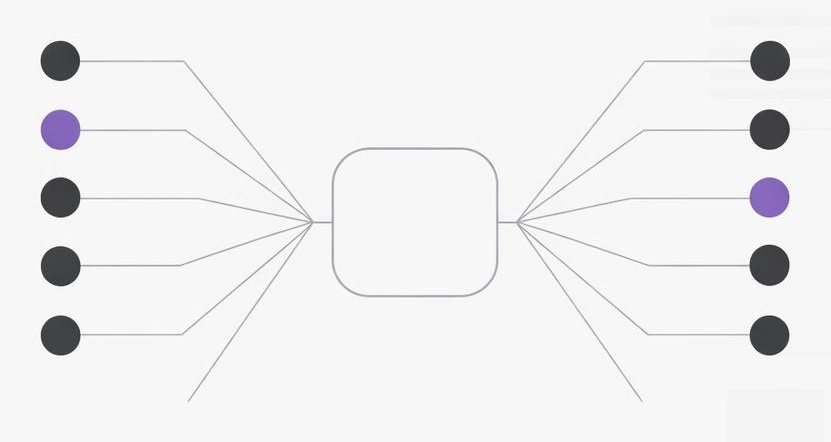
Step 4 (15 min): Create the Coherence Map (pillar → clusters → FAQs)
A Coherence Map turns themes into a topic ecosystem, pillar pages for depth, clusters for breadth, and FAQs for search and AI discovery.
This is the moment scattered ideas become structured momentum. The map is the bridge between “having ideas” and “building an asset.”
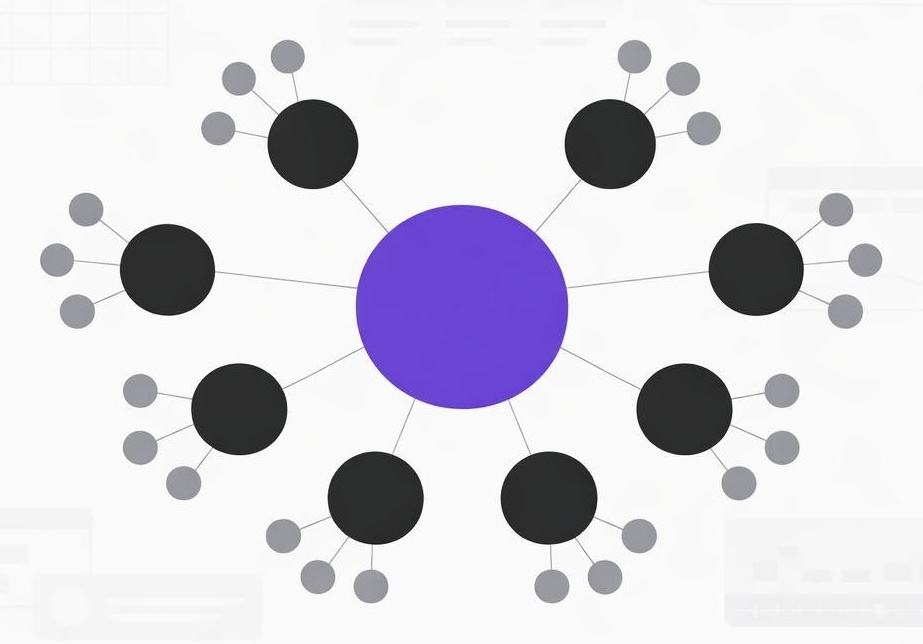
Build it in three layers. For each theme, choose one pillar, the definitive home base that explains the big concept clearly. Under that pillar, define five to eight cluster posts, each one a specific angle that links back to the pillar and strengthens it. Then add FAQs, the questions people ask when they’re curious, skeptical, comparing options, or trying to decide. Include reader questions and objection questions, because objections are just unasked FAQs with higher stakes.
“Instead of random ideas… You have structured topics.”
A tight example for one theme, “AI-powered authority building,” might look like this: a pillar called “AI Visibility for Expertise-Led Businesses, a Practical Guide.” Around it, clusters like content systems vs content calendars, topic clusters that compound, thought leadership that teaches first, AI Overviews and what “legible” expertise looks like, repurposing without sounding copied, and proof assets that make claims credible. Then FAQs that are blunt and decision-shaped: What is AI visibility? How many themes are enough? Why do random posts feel pointless? What makes a topic cluster work? How does internal linking help? How can a brand stay consistent without sounding repetitive?
The interlinking logic is the compounding logic. Pillars link to clusters, clusters link back to pillars, and FAQs link to the cluster they answer. Over time, the brand is not just “posting.” It’s building a library where each new piece makes the whole clearer.
This also forces a subtle but important discipline: consistent entities and terminology. When the same core concepts are named the same way, defined the same way, and connected internally, the brand becomes easier to interpret. That helps humans because it reduces cognitive load. It helps discovery systems because patterns are easier to summarize and surface than one-off randomness.
If “expertise legibility” is the missing piece in a content strategy, this companion read adds extra texture and language: Expertise legibility is the difference between good content and getting chosen.
Step 5 (10 min): Continuity rules + 5-minute Coherence Audit checklist (to spot gaps and drift)
Continuity rules are the guardrails that keep every format reinforcing the same identity.
This is where most content strategies quietly fail. Not because the ideas are bad, but because the rules are missing. Without rules, every new platform, trend, or “great idea” pulls the brand off-center, and suddenly the blog sounds like one business while social sounds like another.
Continuity doesn’t need a 20-page brand bible. It needs a few rules that are actually enforceable: every piece must ladder to a theme, every theme must tie back to the known-for sentence, and clusters should reference their pillar so nothing becomes an orphan. Core concepts should use consistent phrasing so the audience learns the brand’s language over time. Calls to action should feel stable, not like a personality switch from teacher to salesperson. Repurposing should mean re-framing within the same spine, not copying and pasting the same idea until everyone is tired.
Then run a 5-minute Coherence Audit once a month. Keep it blunt, yes or no:
- If someone consumes three pieces, is the known-for sentence obvious, or does it still feel like “smart content, unclear category”?
- Are there coverage gaps (missing pillars, missing FAQs) or obvious drift (posts that don’t map to any theme or belief)?
- Do internal links actually connect pillar → cluster → FAQ, or are there weak links and orphan pages that never get reinforced?
- Is terminology consistent (same labels, same definitions), or does the brand rename the same idea every week and reset understanding?
- Is there proof where it matters (examples, outcomes, constraints), or is the content making claims without assets that back them up?
This is the part that makes content feel like an asset instead of an obligation. The brand stops rebuilding itself every week. It starts accumulating.
Inkflare is built to operationalize this exact approach. Not by pushing generic AI output, and not by asking for more hustle, but by turning real expertise into an interlinked, always-on visibility system across blog, social, search, and AI-driven discovery surfaces, so the brand can stay coherent even when time is limited.
A coherent presence is not louder. It’s clearer.
The next step is simple: write the known-for sentence, pick the themes, lock the spine, map the clusters, then enforce continuity like it’s brand security. The market can’t recognize what it can’t consistently see.