Zero-Click Search Explained and Why Being the Source Beats Being Number One
Zero-click search means the search engine answers the query before the user clicks anything. In the AI search era, Google AI Overviews, ChatGPT, Perplexity, and similar discovery systems pull information from sources, synthesize an answer, and show that answer first. The click no longer starts the journey. The answer does. That sounds terrifying if the old goal was “rank number one and collect traffic.” But for expertise-led businesses, the smarter goal is different: become the source those systems trust enough to quote, cite, and send qualified buyers toward.
The clearest way to understand this shift is simple: what changed, why it matters, and how content has to be built differently. For years, organic visibility was treated like a race to the top of a page. Win the keyword, get the click, nurture the visitor, maybe convert later. That machine is not dead, but it is no longer the whole machine. The new search loop is compressed. A buyer asks a question, AI gives the first explanation, and only then does the buyer decide whether a source deserves more attention.
That decision changes everything.
The brands that still optimize only for blue-link ranking are fighting yesterday’s war with a very polished sword. The brands that design their ideas to be extracted, attributed, and trusted are building visibility where attention is moving next.
AI Answers First, Clicks Happen Later
AI-driven search has changed the order of discovery by moving the answer before the website visit. A user searching “best content strategy for coaches” or “how to improve AI visibility” may no longer scan ten links first. They may see a synthesized explanation, compare the named sources inside it, and click only when one citation feels worth investigating.
That creates a colder reality for generic content. If a page only repeats what twenty other pages say, it gives the AI system nothing distinctive to carry forward. It becomes background noise, useful enough to be crawled, not strong enough to be remembered. The page may exist. The brand may have published. The search engine may even understand the topic. But the business still disappears at the moment that matters.
This is why zero-click search should not be understood as “nobody clicks anymore.” That is too simplistic, and honestly, too defeatist. People still click when they need depth, proof, a point of view, pricing, process, trust, or a person behind the answer. The difference is that the click has to earn its way out of the AI answer box.
A click in this environment is no longer a casual tap from someone wandering around the internet with a lukewarm curiosity. It is more intentional. The user has already received the basic answer. If they keep going, it means the answer created enough tension, trust, or curiosity for them to ask, “Who said that, and can they help?”
That is the new search loop. Answer first. Source evaluation second. Click third. Trust either compounds or collapses from there.
Zero-Click Is Not the End of Traffic, It Is a Filter
Zero-click search filters out low-intent visitors and leaves behind the people who have a stronger reason to click. That may feel painful if traffic volume has been the main scoreboard. Fewer anonymous visitors can look like decline on a dashboard. But dashboards are great at counting movement and terrible at measuring seriousness.
Think about the old blog traffic pattern. Someone types a broad question, lands on a post, skims three paragraphs, opens six tabs, and disappears forever. Technically, that was a visit. Emotionally and commercially, it was a shrug. Plenty of businesses built content machines around attracting those shrugs, then wondered why “organic traffic” was not creating enough conversations, calls, customers, or revenue.
AI search removes many of those soft visits. It gives the quick answer to the window shopper. That person gets what they need without clicking, and that is not always a loss. It may actually save the business from mistaking attention for demand.
The more interesting visitor is the one who clicks the citation. That person has already seen a compressed answer and still wants more from the source behind it. They are not arriving empty. They are arriving with context. They may have read a quote, seen the brand named beside an answer, or noticed that the explanation had a sharper edge than the rest. By the time they land on the page, the trust meter is already moving.
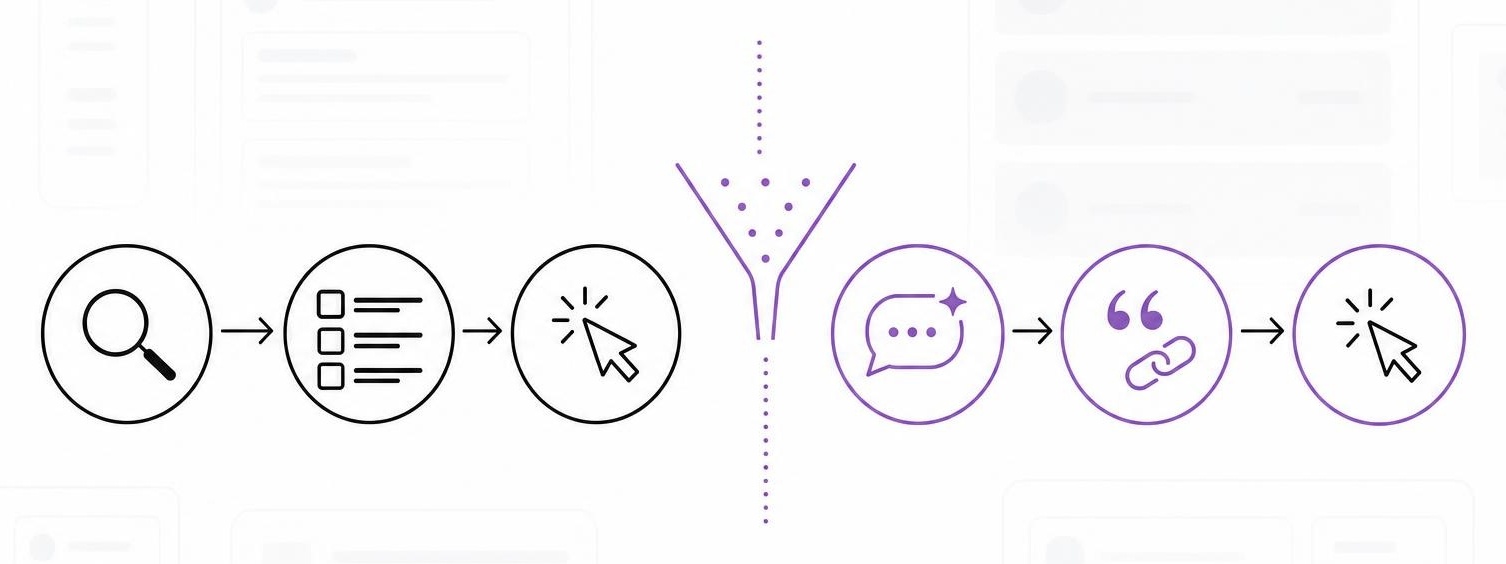
This is where the first visual belongs: the old loop versus the new loop. The old loop starts with ranking, then click, then answer. The new loop starts with answer, then citation, then qualified click. Seeing that sequence makes the filter obvious.
This is the non-obvious upside: zero-click search can lower traffic while improving visitor quality. Not automatically. Not magically. But when a brand is cited for a useful, specific, credible idea, the resulting click often carries more intent than a traditional ranking click. The visitor is not asking, “What is this?” They are asking, “Can this source go deeper?”
That is a different conversation.
And different conversations convert differently.
Being the Source Beats Being Number One
The new visibility advantage is not simply ranking above competitors, it is being the authority AI systems choose to reference when they shape the answer. Ranking still matters, but ranking alone is weaker when the search experience itself summarizes, compares, and frames the buyer’s first impression before the user reaches a website.
This is where many experts feel the ground shift under their feet. They spent years trying to produce “SEO content,” which often meant long articles, keyword variations, predictable definitions, and safe advice that sounded like everyone else. Then AI systems arrived and rewarded something more strategic: a clear market position that can survive compression.
Being the source is not a formatting trick. It is a positioning decision. It means the brand has a strong enough point of view that AI systems and buyers can both understand what the brand stands for, what problem it names, and why its perspective deserves attention. The dominant archetype here is the Challenger, willing to say, “The old scoreboard is broken.” The supporting archetype is the Guide, calm enough to show the better way forward. The shadow to avoid is the noisy rebel, all hot takes and no usable structure.
That balance matters because expertise-led businesses do not win by sounding louder. They win by making their expertise easier to believe. A coach, founder, consultant, or course creator does not need more content for the sake of activity. They need content that turns hard-won expertise into referenceable ideas. The kind of framework a buyer can remember two days later. The kind of explanation that makes someone think, “That is exactly the problem, finally.”
(Generic advice dies quietly here.)
If a brand is not the source, it becomes dependent on someone else’s explanation of the market. That is expensive. It means competitors frame the problem, AI systems repeat their language, and buyers enter the conversation already influenced by another point of view. The business may still be capable. It may even be better. But if its expertise is not visible in the answer layer, it shows up late.
Late is dangerous. By the time a buyer clicks, the shortlist may already be forming.
Extractable Content Is the New Visibility Requirement
If content is not extractable for AI systems, it becomes much harder for that content to appear in AI-generated answers, citations, and discovery surfaces. Extractable content is not thin content. It is structured expertise that a machine can parse and a human can trust.
This requires a different writing discipline. The first sentence of a section should make a clear claim. Headings should answer real questions rather than tease clever concepts. Definitions should be tight enough to quote. Examples should be concrete enough to prove the idea. Internal links should connect related thinking so the brand looks like an authority system, not a drawer full of unrelated posts.
The common mistake is assuming AI visibility means writing for machines instead of people. That is backwards. The best AI-extractable content often feels more human because it removes fog. It says the thing plainly. It names the tension. It gives the reader language for something they have been feeling but could not quite explain.
For example, “post consistently” is weak because it is vague and overused. “A silent expert slowly trains the market to forget them” is stronger because it names the real cost. The first line is advice. The second creates recognition. AI can extract the concept, and a human can feel the consequence.
Extractability also demands specificity. “Build authority” is not enough. Authority around what? For whom? Against which old belief? With what proof? Miss that distinction, and the content becomes interchangeable.
Interchangeable content rarely becomes a citation. It becomes compost.
Citation Magnets Are Built, Not Accidentally Published
Citation Magnets are pieces of content designed to be quotable, attributable, and useful inside AI-generated answers. They work because they package expertise into clear definitions, strong points of view, clean structure, and connected context that search and AI systems can understand.
A Citation Magnet does not chase every keyword. It owns a specific angle. It may define a term in a sharper way than competitors. It may explain a buyer’s problem with unusual clarity. It may introduce a practical framework that helps readers make sense of a messy topic. The point is not to sound bigger than the business is. The point is to make the business’s real expertise easier to find, cite, and trust.
For Inkflare, this is the heart of modern organic visibility. Inkflare helps expertise-led businesses turn what they know into a connected content ecosystem across blogs, social media, search, and AI discovery surfaces. Not random posts. Not generic AI sludge. Not a frantic Tuesday-night attempt to “stay active” because the feed has been quiet for three weeks.
A strong Citation Magnet usually does three jobs at once: it teaches the reader, gives AI systems a clean source to extract from, and reinforces the brand’s authority across related content. Ignore any one of those jobs and the system weakens. Teach without structure, and the idea may not travel. Structure without point of view, and the content becomes sterile. Promote without substance, and trust evaporates before the visitor reaches the second paragraph.
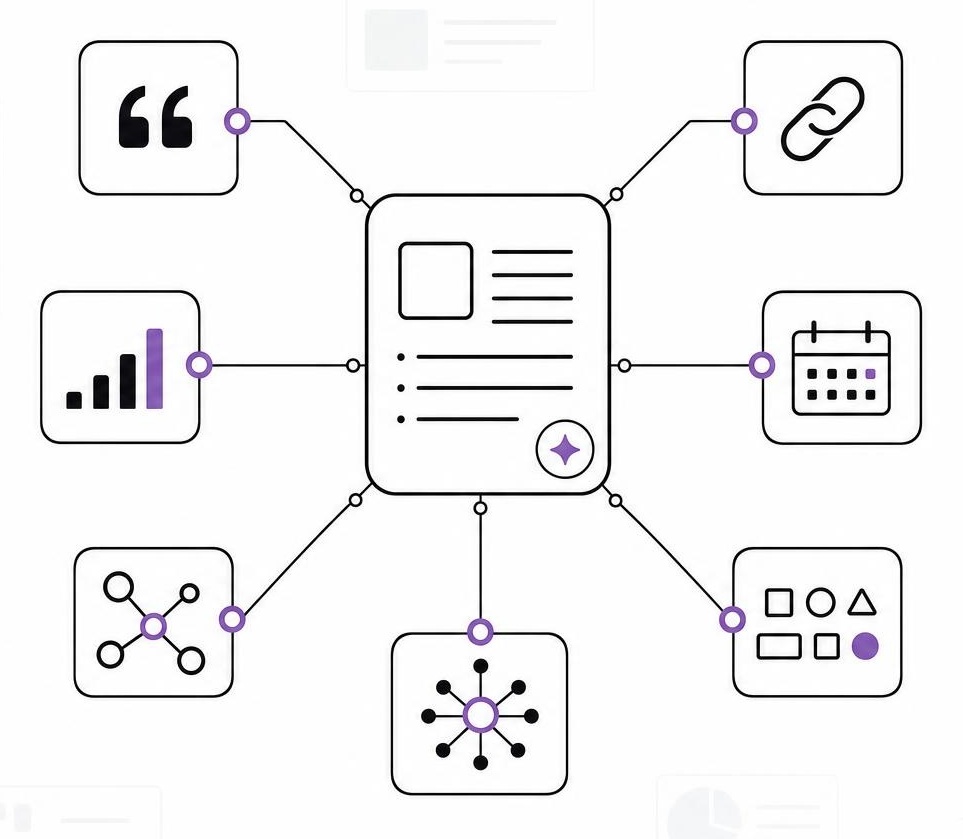
This second visual belongs here because Citation Magnets are easier to grasp as a system: clear claim, quotable definition, proof, internal connection, attribution-ready structure. Without that map, the idea can sound like another content label. With it, the mechanism becomes visible.
The future of search is not about begging for clicks from people who barely care. It is about earning attribution in the answer layer and making the next click feel obvious to the right person. That requires content with bones. Clear definitions. Specific language. Interlinked authority. A point of view strong enough to survive compression.
Zero-click search is not the villain. Weak, forgettable content is.
So the real question is not, “How does the brand get more people to click?” The sharper question is, “When AI answers first, is the brand important enough to be named?”