Traditional SEO vs AI Citations A Decision Framework for Coaches and Consultants
Traditional SEO is still worth it, but not as a default growth plan, and not if the only win condition is “more traffic.” In an AI Overview world, the highest leverage often shifts from ranking pages to earning citations, because a citation is pre-trust. It is the difference between being one of ten blue links, and being the source the machine points to.
This framework is for coaches and consultants who sell expertise, judgment, and transformation, and who can’t afford to spend six months “doing content” just to find out the clicks do not convert. It’s not for businesses that only need cheap traffic at scale (affiliate sites, ad-heavy publishers, commodity ecommerce). The recommendation is simple: keep traditional SEO where it drives high-intent conversions, but prioritize citation-worthy authority assets when the buyer’s journey starts in AI summaries and ends in trust.
Decision Step 1, Understand why traditional SEO got demoted
Traditional SEO still works when the business model needs high-intent visitors to land on a page, read, and convert, but informational search now often ends before a click ever happens.
AI Overviews now trigger for over 80% of informational queries. And 64.82% of searches end without a single click. That means a lot of “winning” looks like being seen, summarized, and then ignored.
This is where many smart operators get whiplash.
The old story was simple. Publish useful content, rank, get clicks, capture leads. The new story is messier. A prospect can get the gist of a topic inside an AI answer, form an opinion, then move to LinkedIn, watch two videos, ask another AI tool to sanity-check, and only then decide who feels credible enough to talk to. The website may show up late in the journey, or not at all.
That doesn’t make SEO pointless. It changes what “SEO” is supposed to produce.
The practical shift is this: stop treating Google like a slot machine, start treating search and AI as distribution.
Traffic is one outcome. Citations are another.
Decision Step 2, Treat citations as the new conversion multiplier
Citations matter because they deliver prospects with context and pre-trust, which is why a cited click can convert dramatically higher than a cold click.
A click used to be the start of the relationship. A citation is closer to the middle.
When an AI system cites a business, the prospect arrives with context already installed. They are not asking “who is this?” as much as “are they the real deal?” That’s why citation clicks can convert 23x higher. The machine has already vouched for relevance, and that vouch reduces the reader’s skepticism.
That doesn’t mean every citation becomes a lead. Some citations are pure awareness, a drive-by mention. But for expertise-led businesses, the direction is clear.
If a coach or consultant becomes the cited source for a specific problem, the conversion math changes in practical, boring ways that matter. Less time educating from scratch, more time clarifying fit. Fewer “just curious” calls, more conversations that start with, “This already makes sense, what would working together look like?”
Here’s the part most people miss: chasing clicks in a no-click environment quietly trains a business to overproduce. More posts, more pages, more keywords, more hustle, still fewer meaningful conversations. (And then the calendar stays oddly empty, which is the most irritating part.)
So the question isn’t “should SEO be done.”
The question is “what is the asset being built.”
Decision Step 3, Choose the visibility lane that matches the business model
The right visibility strategy depends on what outcome is needed most, clicks, familiarity, speed, or citations, and each lane comes with a hidden trade-off.
Below is the decision matrix for the four paths most small teams drift into, and what each one tends to produce.
| Lane | What it optimizes for | What it’s great at | The hidden cost if it’s the only plan |
|---|---|---|---|
| Rank-chasing SEO | Organic clicks | Durable pages that answer clear, high-intent queries | Long feedback loops, heavy upkeep, and diminishing returns when answers get summarized before the click |
| Social volume | Attention and familiarity | Staying top of mind, warming up the market, building personality and positioning | Burnout risk, inconsistent compounding if topics jump around, a “loud but forgettable” brand pattern |
| Paid acquisition | Speed | Fast pipeline testing, predictable reach when economics work | Cash leakage if the offer or trust isn’t tight, dependency on spend, leads that arrive cold and price-sensitive |
| Citation-first authority assets | Being referenced by search and AI | Warmest discovery moments, higher trust at entry, “pre-sold” attention | Requires clarity, cohesion, and enough depth to be quotable, not just publishable |
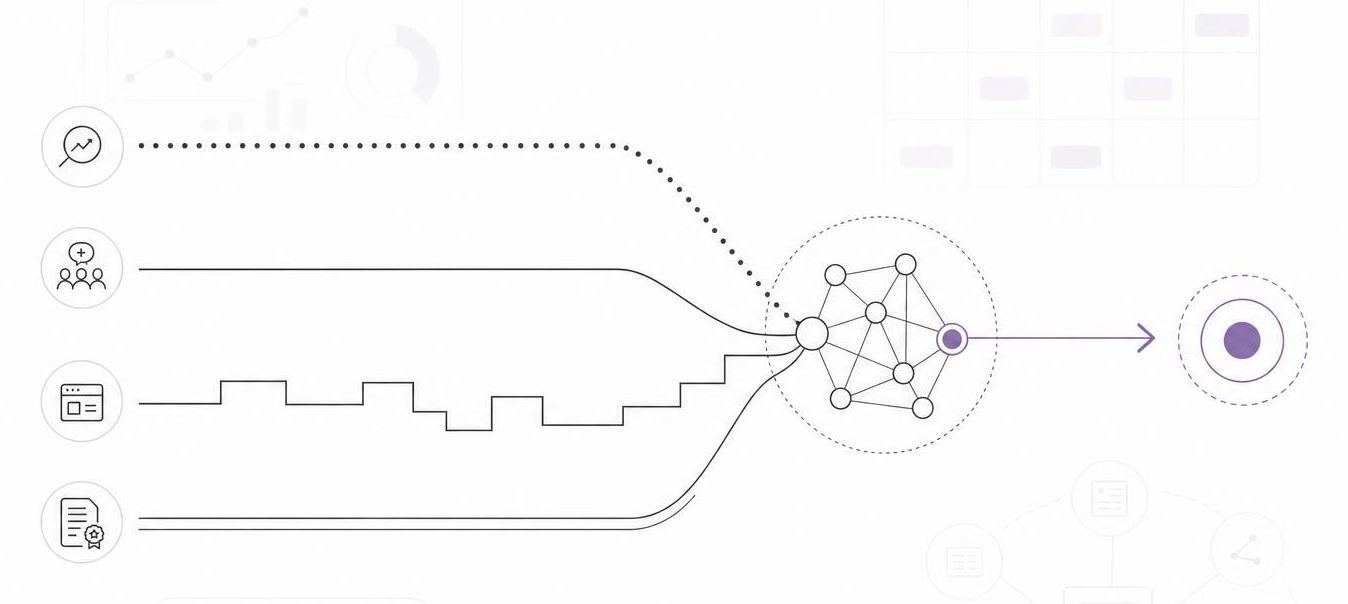
There’s no moral high ground here. Each lane can work. Each lane can also waste months.
The real filter is fit.
Rank-chasing SEO fits best when the niche has stable, searchable problems and the buyer genuinely needs to compare options before reaching out. It also demands the ability to sustain content depth and site quality long enough for compounding to kick in, otherwise it becomes an endless cycle of “publish, wait, tweak, repeat” with nothing to show for it.
Social volume fits best when trust is built through repeated exposure and the market behaves like a relationship market, not a spreadsheet market. The catch is consistency. When posting becomes occasional or topic selection gets scattered, the brand starts to feel like a different person every week, which makes recognition harder and trust slower.
Paid acquisition fits best when the offer is already proven and margins can handle acquisition without turning every lead into a stress test. If the funnel is not tight, paid will happily magnify the weakest part of the business, and the result looks like “more leads” while profitability quietly bleeds out.
Citation-first authority assets fit best when the business wins on expertise and the category is noisy. The goal is to become the “obvious” choice because the market keeps encountering the same clear thinking in multiple places, not because of volume, but because the ideas are easy to reference, easy to summarize, and hard to confuse with generic advice.
Ignoring fit leads to predictable pain. Rank-chasing without patience becomes an endless rewrite cycle. Social volume without structure becomes scattered posting. Paid without trust becomes expensive disappointment. Citation-first without clarity becomes content that looks active but never gets referenced.
Decision Step 4, Diagnose the real bottleneck, Extraction Layer or Trust Layer
Most visibility problems come from either weak Extraction Layer (systems can’t read the expertise) or weak Trust Layer (humans don’t believe it), and the fix depends on which gap is real.
The cleanest way to choose a lane is to separate two jobs that content does.
Extraction Layer is the work that helps systems extract meaning. It’s language, structure, topical consistency, internal connections, and pages that answer real questions in plain terms.
Trust Layer is the work that makes humans believe. It’s proof, specificity, case patterns, clear positioning, and a body of work that feels coherent rather than improvised.
Most coaches and consultants overbuild one layer and neglect the other.
Extraction without trust looks like polished articles that read fine, but don’t land. They attract visitors who skim, then bounce, because nothing signals why this business is different. The consequence is subtle but costly: even when the content “performs,” the pipeline stays soft because nothing in the experience makes a buyer feel safe choosing this business over the next one.
Trust without extraction looks like brilliant thinking trapped in a few social posts, a podcast appearance, a half-finished site, and a lot of “DM for details.” Systems can’t connect it, buyers can’t find it, and the market assumes silence equals smallness. The consequence here is even more frustrating, because the expertise is real, it just isn’t legible, so louder competitors get the credit.
A concrete example makes the difference clearer. Imagine a consultant who is genuinely excellent at fixing churn for early-stage SaaS. If the online presence is mostly a personal story post on Monday, a random sales screenshot on Thursday, and a hot take about hiring two weeks later, the Trust Layer might feel human, but Extraction is weak. AI systems have a harder time understanding, “This business consistently helps with churn.” Prospects also struggle to repeat the story to a teammate, which means the referral chain breaks. The business stays dependent on luck, not discovery.
Now flip it. Imagine a site with twenty churn articles optimized for long-tail keywords, but each one sounds like it was written by a different brand, with no consistent point of view, no proof, no clear stance on what actually works. Extraction is strong, trust is thin. The result is traffic that doesn’t turn into conviction, and calls that start with skepticism instead of momentum.
If the business already gets inbound interest, referrals, or strong engagement when people do find it, but discovery is inconsistent, the next move is usually Extraction Layer.
If the business gets views, clicks, or even citations, but prospects still hesitate, price shop, or treat it like a commodity, the next move is usually Trust Layer.
The consequence of getting this wrong is brutal. Building Extraction when trust is the real issue creates more exposure to doubt. More people see the brand, and still don’t feel safe choosing it. Building Trust when extraction is the real issue creates a stronger story that nobody reliably encounters, so the market never gets enough repetitions to recognize it.
Decision Step 5, Build citation-first consistency (without turning into a content factory)
Citation-first consistency works when it becomes a system (clear themes, connected assets, steady publishing), not a burst of output followed by silence.
A small team rarely loses because it lacks effort. It loses because effort is sprayed.
The highest-leverage move is to build a tight authority footprint around a few problems that matter, then show up with connected content across the places buyers actually learn. In practice, that means choosing a narrow set of themes the business wants to be known for, then creating a small set of “anchor assets” that are easy for both humans and systems to recognize as definitive. Think pages and posts that define the terms of the category, explain common failure modes, compare approaches, and show a clear point of view on what actually works. Not more content, more quotable content.
This is also where teams accidentally sabotage themselves. A citation-first strategy collapses when every asset reads like a different voice, a different target buyer, a different promise. The market feels the inconsistency even when it can’t name it. Systems do too. The result is visibility that resets instead of compounds.
This is the point where Inkflare fits naturally.
Inkflare is built for expertise-led businesses that don’t have time to run a multi-platform content machine manually, but still need to be discoverable, coherent, and consistently present. It’s not a content farm, and it’s not random posting. Inkflare turns real expertise into a connected visibility system across blogs, social, search, and AI-driven discovery surfaces, so the brand becomes easier to understand and easier to trust.
Under the hood, the archetype is intentional. Inkflare plays the Challenger-Sage: push back on outdated playbooks (Challenger), while teaching clearly enough that the market feels safe acting on the advice (Sage). The shadow to avoid is the seductive one, chasing vanity visibility that looks impressive but doesn’t compound into trust.
Traditional SEO is still worth it when it’s used to build authority assets that earn citations and create recognition, not when it’s treated like a treadmill for clicks.
If AI answers are increasingly where decisions start, is the current strategy building pages that rank, or building sources worth citing?