

The Search Everywhere Playbook for Building a Connected Content Ecosystem
If consistent visibility feels impossible, the fix is not “post more”, it’s to build connected content that travels across formats. This playbook lays out a seven-step workflow (with a few steps bundled into the same section for readability) that starts with three themes and ends with an interlinked publishing cadence, so one strong idea becomes a small ecosystem, and AI, search, and social reinforce each other instead of competing for attention.
The goal is simple. When someone is learning about a problem your business solves, your ideas should show up more than once, in more than one place, and feel like the same brand every time.
What “search everywhere” really means for an expert business
Search is no longer a single moment where someone types keywords, clicks three links, and makes a decision. It’s a chain of micro-research moments spread across AI answers, social feeds, and traditional search, usually happening quietly before a conversation ever starts.
That’s why “being good” can still look like “being invisible.” Plenty of coaches, founders, consultants, and course creators have real results, real frameworks, real proof. The problem is that the market can’t feel any of it when the trail is thin, scattered, or goes cold for weeks at a time.
From the reader’s side, the experience is blunt. A potential client sees a helpful post, taps the profile, then finds gaps, unrelated topics, and a website that feels like it came from a different company. Nothing is “wrong,” but nothing stacks. The emotional result is subtle, uncertainty. And uncertainty kills momentum.
Connected content fixes that because it creates a pattern. Humans trust patterns, and modern discovery systems look for them too. A business that repeatedly teaches related ideas, in consistent language, across a few formats becomes easier to understand, easier to remember, and easier to recommend.
This is also where Inkflare’s worldview is different. The internet does not need more noise. It needs more legible expertise. The dominant archetype in this playbook is the Challenger, rejecting random posting and empty metrics. The supporting archetype is the Architect, building a system where each piece has a job. The shadow to avoid is the Content Sprayer, publishing disconnected fragments that never compound.
Step 1 Choose three themes that can carry your whole presence
Three core themes turn content from a weekly scramble into a long-term signal.
Most inconsistency isn’t laziness, it’s decision fatigue. When every post starts with “what should be said today,” the brain pays a tax before the work even begins. Three themes remove that tax. They create boundaries that feel freeing instead of restrictive, because the brand stops reinventing itself every time it publishes.
A strong set of themes has range. Each theme should be big enough to generate dozens of angles, but specific enough that the audience can place the business quickly. For an expertise-led business, that usually means one theme that names the problem clearly (what’s broken or misunderstood), one theme that explains the method (how the work actually gets done, what makes it different), and one theme that anchors the outcome (what changes, what gets easier, what “better” looks like in real life).
What makes this step quietly powerful is that it keeps the Challenger energy pointed in the right direction. The Challenger isn’t “anti-everything,” it’s anti-drift. Saying “no” to tempting topics that don’t build authority is what creates a signal people can recognize.
A quick test helps. Imagine a stranger seeing three pieces of content in a week. If all three fit under the same three umbrellas, the business feels focused. If those three pieces need eight different umbrellas, the content isn’t “varied,” it’s blurry.
The tell that themes are working is this: if someone reads or watches three pieces of content in a row, the business starts to feel “obvious.” Not boring, obvious. Clear. Like the same mind is behind it all.
Step 2 Write one structured blog that becomes the source of truth
One structured blog post should function like a home base that everything else can point back to.
A lot of people treat blogging like homework. Long, slow, lonely, and easy to postpone. The shift is to treat a blog as a strategic asset, the cleanest place to explain an idea without getting squeezed by character limits or trends.
The key word is structured. Not stiff, not academic, structured. Clear headings, crisp definitions, and a logical flow that an AI system can extract without mangling the meaning. That’s also what makes the post useful for a human skimmer who’s trying to decide, fast, whether the business is worth trusting.
This is the Architect showing up. The Architect doesn’t guess what people will take away, the Architect designs the takeaway. A well-structured post becomes the source of truth that protects the brand from drifting into the Content Sprayer shadow later, where every new post tries to be a brand-new identity.
A simple way to pressure-test a pillar blog is to ask: if someone only read the headings and the first sentence under each one, would they still get an accurate explanation and a credible point of view? If not, the piece might be written beautifully, but it won’t travel.
Once that pillar exists, it stops being “a blog.” It becomes the source document for every other format.
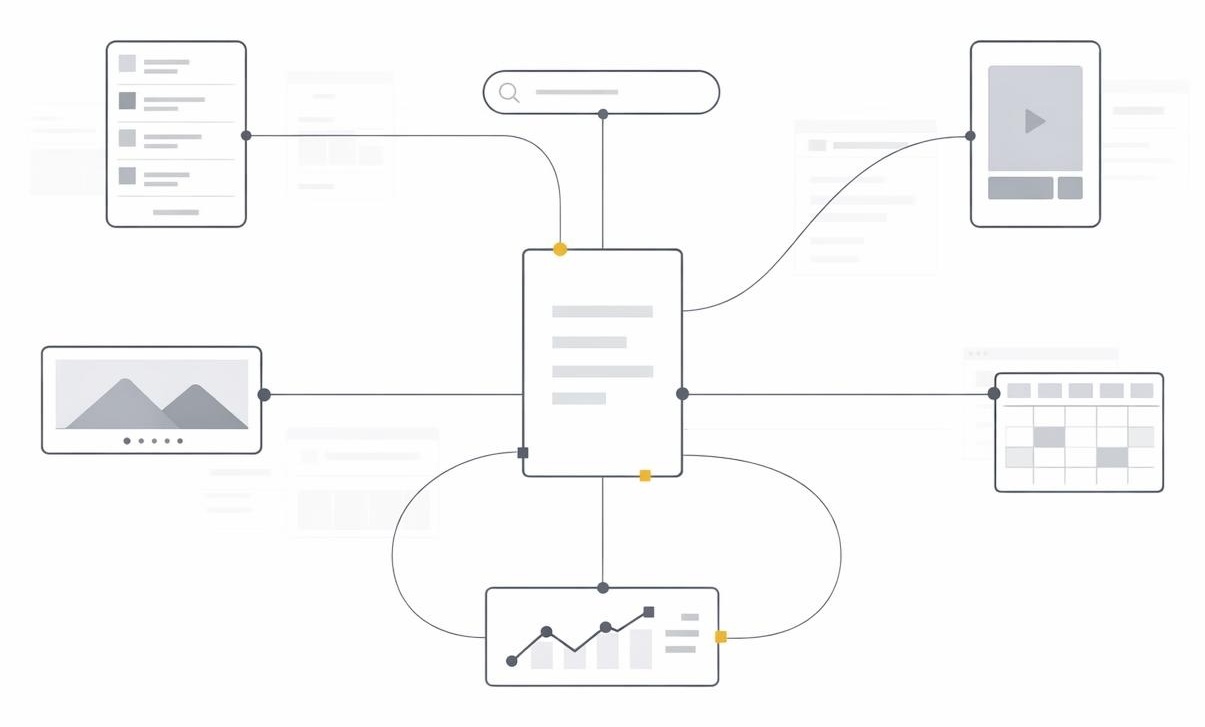
Steps 3 to 5 Turn one idea into social posts, a short video, and a visual breakdown
Repurposing works when each format adds something new, not when it copy-pastes the same paragraph everywhere.
Here’s the trap: a business publishes one blog, then tries to “promote it” with a link and a caption that says the same thing. That’s not distribution, that’s hoping. A connected ecosystem behaves differently. Each piece is its own entry point, designed for how people actually learn.
Start by extracting five to seven social insights from the blog. These are not quotes, they are mini-lessons that can stand alone in a feed. One might name a mistake people keep making, another might reframe a common belief, another might give a single tactical move that creates a quick win. When those insights come from the same pillar, they naturally stay aligned.
To make this concrete, take a paragraph like: “People don’t trust you because of one post. They trust you because they run into the same idea in multiple places and it keeps making sense.” That single paragraph can become three different assets without becoming repetitive. A social post becomes a sharp line like “Visibility isn’t being seen once, it’s being recognized twice,” followed by a quick explanation of what “recognized” looks like. A short video becomes a 30 to 45 second walkthrough of the quiet research loop (AI answer, social scroll, blog visit) and why the second touchpoint matters more than the first. A visual becomes a simple three-box diagram labeled “First encounter, second encounter, decision,” with arrows showing how content creates familiarity over time.
Then script a short video, not as a performance, but as one clear explanation with a beginning, middle, and end. Video builds familiarity fast because tone and pacing carry meaning. It lets the market feel confidence, not just read it.
Finally, create a visual breakdown. That could be a simple diagram, a flow, or a compact model. The point is compression. Some people need to see the structure before they believe the idea is manageable. A visual turns “this is complicated” into “this is organized.”
This is where the Content Sprayer shadow tends to show up. The temptation is to grab a dozen disconnected “content ideas” and spray them across platforms because it feels productive. The ecosystem approach is calmer and sharper, one core idea, multiple expressions, all connected.
When these pieces are done right, they don’t compete. They stack. Someone can discover the social insight first, then see the video, then land on the blog when the interest is real.
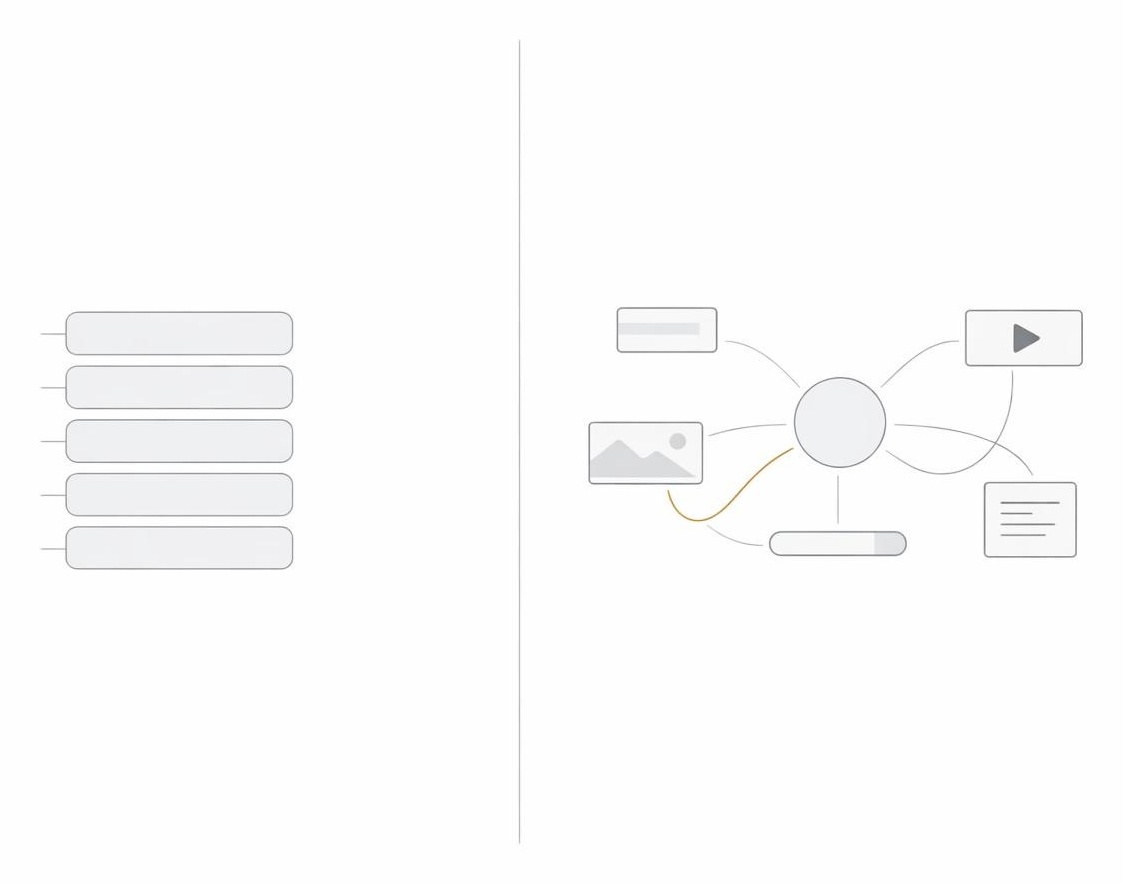
Steps 6 and 7 Interlink everything and publish on a cadence that keeps the signal alive
Interlinking is what turns content into an ecosystem instead of a pile of posts.
Most content dies because it has no edges. It gets published, gets a small burst of attention, and then disappears into the scroll. Interlinking gives it edges. The blog embeds the video, the video description points to the blog, the visual post references the deeper explanation, and the social insights consistently point back to the home base.
This is also where many smart businesses accidentally sabotage themselves. They create good work, but they leave it unconnected, like printing a map and never drawing the roads. The reader should never have to wonder, “Where does this go next?” Each piece should offer a next step that feels helpful, not pushy.
The strongest interlinking doesn’t feel like “go here, go there.” It feels like continuity. A person reads the blog, sees a line like “this idea is easier to grasp visually,” clicks a visual breakdown, and suddenly the concept clicks in a new way. Or someone watches a short video, then finds the blog and thinks, “Okay, this wasn’t just a motivational clip, there’s a real method behind it.” That’s the Architect doing its job.
Cadence is the final multiplier. Not because frequency impresses people, but because consistency creates familiarity. A steady cadence keeps the signal alive long enough for patterns to form, and patterns are what create recognition. Recognition is what lowers doubt.
A realistic cadence is one that survives busy weeks. The point is not perfection, it’s continuity. Challenger energy keeps the focus tight, Architect energy keeps the process repeatable, and that combination is what prevents the Content Sprayer cycle (random output, burnout, silence, restart).
This is the exact problem Inkflare is built to solve for authority builders who don’t have the time, attention, or team to manually run the whole system. Inkflare helps turn real expertise into connected, multi-format visibility that stays aligned, stays active, and compounds instead of resetting every week.
The playbook is not complicated. Choose three themes. Build one strong pillar. Extract multiple entry points. Connect the paths. Publish steadily.
If the next week of content still feels like starting from zero, that’s the signal. The business doesn’t need more ideas, it needs a connected ecosystem that makes the expertise impossible to miss.