Search Everywhere Discoverability in 2026 and the New Rule of Being Legible to Systems
Search Everywhere in 2026: The “City” Where Discovery Actually Happens
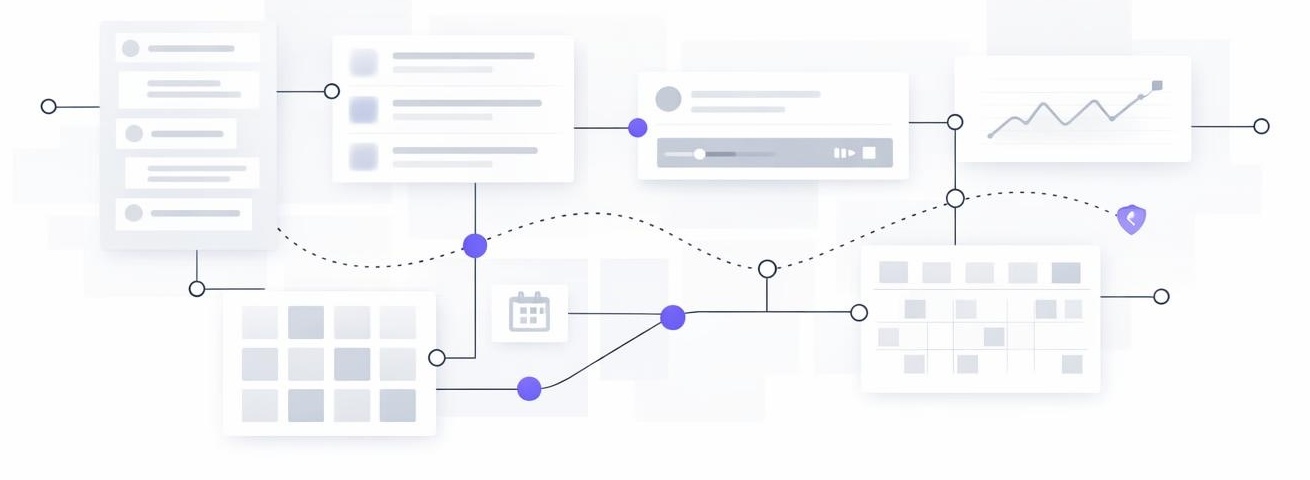
Discovery is no longer a single destination, it’s a city. In 2026, buyers don’t “search Google” and call it a day, they move through a messy, real-world route of AI answers, social feeds, summaries, links, profiles, and web pages until something feels credible.
Picture it like this: AI tools are the smart guides, social platforms are the busy streets, search is the map. Your content is your presence across the city. If the business only exists in one corner, one blog that ranks, one LinkedIn post that popped, one profile that used to be active, it still feels strangely hard to find.
That’s why “Search Everywhere” isn’t a trend, it’s a behavior. Someone asks ChatGPT, Perplexity, or Gemini a question to get oriented. They notice a Google AI Overview while researching. They scroll LinkedIn or Instagram and absorb a few opinions. They click into a blog or landing page to go deeper. They do not experience these as separate channels, they experience them as one continuous learning moment.
The win condition changes with that reality. It’s less about winning a single ranking or a single platform, and more about being encountered repeatedly, in a way that feels consistent, useful, and unmistakably aligned.
Why “Legible to Systems” Beats “Posting More”: Patterns > Individual Posts
“Post more” is advice that sounds productive until it quietly destroys good businesses.
Not because posting is bad, but because effort is being spent in the wrong unit. Systems (and people) don’t evaluate your expertise one post at a time. They infer credibility from patterns. The market reads your body of work the way it reads a person’s reputation: not from one moment, but from what shows up again and again.
This is what “legible to systems” really means. When an AI tool, a search experience, or a social platform tries to understand who belongs in an answer, it looks for repeated evidence that a business is consistently about something. Humans do the same thing, just faster and more emotionally. They skim, they scan, they look for coherence.
Two businesses can publish the same number of posts and get wildly different outcomes. One sounds like a focused mind at work, revisiting a few core ideas from different angles. The other sounds like a brainstorm dump, one idea today, a totally different topic tomorrow, then silence for three weeks.
The painful part is how invisible this feels from the inside. The scattered business often feels busy and sincere. But to the outside world, it reads as noise.
A quick micro-story that plays out every day: a buyer asks an AI tool, “What should be looked for in a consultant like this?” Then they open LinkedIn, search a few names, skim recent posts, and take a mental snapshot. Later they validate again in search or another AI tool. No message is sent. No form is filled. A decision starts forming anyway.
Volume doesn’t win that moment. Recognizable coherence does.
The Simple Model: Surfaces → Signals → Recognition → Trust
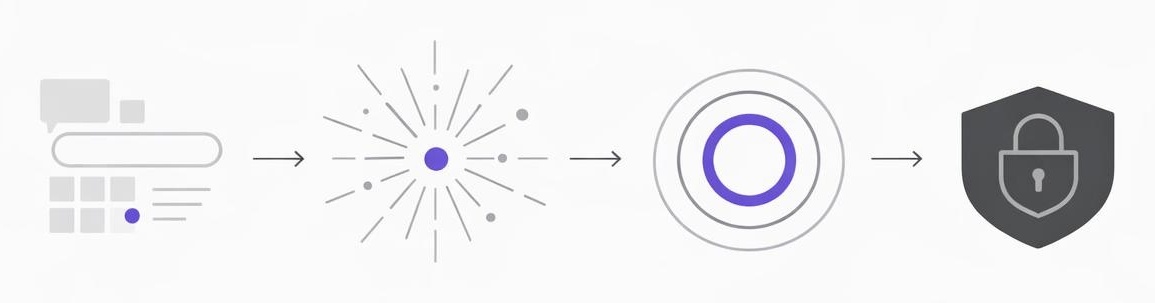
Search Everywhere gets much easier to work with when it’s reduced to a simple chain: surfaces → signals → recognition → trust.
Surfaces are where learning happens. AI answers, AI summaries, social feeds, podcasts, newsletters, blogs, web pages, profiles. These are doors into your world. Buyers will not use one door consistently, which means a strategy built around “just one channel” is fragile by design.
Signals are what your presence emits across those surfaces. Not abstract “engagement.” Real signals: what topics show up, how consistently they show up, whether the examples feel lived-in or generic, whether the messaging stays stable, whether the format mix makes the ideas easier to absorb. Signals are the difference between “interesting post” and “this business clearly owns this space.”
Recognition is the moment that quietly changes everything: “Keep seeing this.” That sentence is not vanity. It’s the psychological bridge between curiosity and confidence. Recognition is what makes a business feel like a familiar reference point instead of a random account.
Trust is what happens next, often before any interaction. Trust is rarely a dramatic leap. It’s a slow release of tension. The buyer stops bracing for disappointment. The content feels current. The thinking feels consistent. The business feels like it actually lives in this problem.
A practical way to see the model: social content creates frequency signals. It shows ongoing presence, it reminds the market the business is active in the category. Blog content creates depth and clarity signals. It gives structured explanations that can be summarized, referenced, and returned to. When both reinforce the same themes, recognition forms faster, and trust builds earlier.
How to Become Legible: Alignment Across Themes, Formats, and Positioning
Becoming legible isn’t about being everywhere manually. It’s about being aligned everywhere that matters.
Most visibility failures don’t come from a lack of expertise. They come from translation breakdown. The business knows what it knows, but the public footprint doesn’t reliably communicate it. The ideas are real, but they aren’t arranged in a way that helps humans or systems connect the dots.
The fix is alignment, not hustle. Here are the five levers that actually change legibility:
- Theme lock. Choose 3 to 5 core themes the business wants to be associated with, then return to them intentionally. The repetition is the point, it creates a pattern.
- Format stack. Use short-form for signal and frequency, long-form for depth and clarity, and a visual format when complexity needs to feel manageable.
- Positioning consistency. Every format should sound like the same business. If one post reads educational, the next reads like a hard pitch, and the next reads like a different brand entirely, the market feels whiplash, not authority.
- Connection rules. Make content refer back to other content. Let ideas link, evolve, and build. That’s how a “body of work” forms instead of a pile of isolated outputs.
- Continuity protection. Avoid the burst-then-silence cycle. Systems and humans read absence as dormancy, even when the business is doing great work behind the scenes.
Notice what’s missing from that list: technical tricks, algorithm worship, writing for robots. The goal isn’t to manipulate a machine. The goal is to make the business easier to understand in public.
This is also where many smart teams get stuck emotionally. Repeating themes can feel boring internally, like saying the same thing again. But the market doesn’t experience your content as a full archive. It experiences it as a few touchpoints scattered over time. Repetition is how the message survives the chaos of real life.
And formats are not “extra work” when they’re aligned. A short post can spark curiosity. A longer article can answer the question behind the question. A visual breakdown can keep someone from bouncing because the idea finally clicks. Different formats don’t compete, they support different moments of trust.
When alignment is real, the city starts working in your favor. The business doesn’t just show up, it shows up in a way that makes sense.
What a Visibility System Looks Like (and Why It’s the Only Sustainable Move)
The hard truth is not that people lack discipline. The hard truth is that modern visibility is heavy without a system. Multiple platforms, multiple formats, consistent themes, consistent voice, consistent presence, it collapses under “spare time” every time.
A visibility system is simple to define: structured themes + connected formats + continuous output, so the light stays on.
This is the Magician move, turning complexity into something that runs. And it needs a little Rebel energy too, refusing the outdated advice that says the only answer is more hustle and more noise.
That’s the lane Inkflare is built for. Inkflare turns real expertise into a connected, multi-format presence across the city of discovery, so a business becomes recognizable and trusted without doing platform-by-platform content marketing as a second job.
The takeaway is clean: in 2026, winning isn’t being seen once. Winning is being remembered.