Do You Need a Visibility System A Decision Guide for Coaches Founders and Small Teams
If online presence keeps showing up as bursts of activity followed by silence, a visibility system is probably needed. Not because discipline is failing, but because the current approach forces constant restarting.
Here’s the decision in plain language: if expertise is real but content only happens when there’s spare time, invest in a system that turns that expertise into continuity. If consistent publishing already happens weekly without stress, leads arrive steadily, and the brand shows up across more than one surface (social plus search plus long-form), keep the current approach and tighten it. The goal is not more posting, it is compounding visibility that does not collapse the moment the calendar gets busy.
This decision guide is for coaches, founders, consultants, course creators, and small teams without a full-time content department. It is not for brands that love content as a hobby, have an in-house team that ships daily, or want to rely primarily on ads for growth.
The real problem is not consistency, it is friction
A visibility problem rarely feels like a visibility problem. It feels like a time problem, an energy problem, a confidence problem, or a priority problem.
A week gets booked with calls. A launch takes over. A client fire pops up. Suddenly the marketing window closes, and posting stops. Not because the expertise disappeared, but because the workflow depended on willpower and spare time. Then the cycle repeats, re-enter the feed with an apology post, promise to be “more consistent,” disappear again.
That pattern has a hidden cost: every return requires reintroducing the work. The audience needs to re-orient. The algorithm needs to re-learn. The buyer needs to re-trust that the brand is active. When content only happens in sprints, the business is not building presence, it is rebuilding it.
A visibility system exists for one reason, to reduce friction between having expertise and being seen for it.
A fast diagnostic, are you compounding or restarting
Compounding visibility feels quiet. It looks like fewer heroic posting days, but more predictable inbound, more recurring recognition, and more “saw this and thought of you” messages.
Restarting visibility feels loud. It comes with spikes, scramble, and a nagging sense of being behind. The posts might even perform well in the moment, but the overall presence still feels thin.
A simple diagnostic is to look at the last 90 days and answer these honestly:
- Did content continue when the schedule got messy, or did it stop entirely?
- Does the audience see a through-line (a point of view), or just whatever was easiest that week?
- If someone discovers the brand today, do they find a connected body of work or a handful of unrelated hits?
- Does content keep teaching the same core ideas across multiple surfaces (social, blog, search), or does it live and die on one platform?
If those answers sting a little, that is not a character flaw. It is a sign the current approach depends on perfect weeks. Perfect weeks are a terrible growth strategy.
Activity is not the same as presence
Presence is what people feel when they are not actively reading a post.
Posting activity is output. Presence is a signal. Strong presence tells the market three things without ever saying them out loud: clarity, continuity, and current thinking.
Clarity means a stranger can immediately understand what the brand helps with, who it helps, and what it stands for. Not the full story, just the sharp edges.
Continuity means the market sees a steady drumbeat of ideas that connect. Not daily posting, but a consistent pattern that makes the brand feel reliably “there.” This is the difference between “saw a great post once” and “this brand keeps showing up with the same sharp point of view.”
Current thinking means the work evolves. It responds to what clients are struggling with, what the category is shifting toward, and what the brand believes now. That does not require chasing trends, it requires staying in conversation. A presence that never updates quietly signals “not in the arena anymore,” even if the business is thriving behind the scenes.
This is where many smart operators get trapped. They confuse volume for momentum. They do a heavy week of posting, then nothing. That is motion, not infrastructure.
For a longer take on the difference between short-term attention and durable recognition, this is worth reading when the timing is right: Stop Chasing Attention and Build Recognition People Remember.
Four ways to solve it, and what each one costs
There are only a few paths available, and each one has an honest trade-off. The goal is not to pick the “best” option, the goal is to pick the option that fits reality.
Manual consistency works when there is enough time, a repeatable workflow, and someone who can carry the voice every week. The cost is friction. The work is never just “write a post.” It is idea generation, outlining, editing, formatting, publishing, repurposing, interlinking, and remembering what was said last month. When life gets busy, the whole machine stops. The biggest tell is this: if the content engine relies on a perfect Tuesday morning, it is not a system, it is a hope.
Agencies work when budget is healthy, leadership can invest time in briefing and reviews, and the brand can tolerate voice drift. The cost is both money and misalignment. Many teams learn this the hard way, the content becomes technically fine but emotionally off. It sounds like marketing, not like the business. A subtle consequence shows up later: the market starts recognizing the style more than the substance, and trust softens because the content feels “produced,” not lived.
Paid ads work when the offer is already converting, margins allow for testing, and the business is comfortable renting attention. The cost is dependency. Ads can be powerful, but the moment spend stops, visibility often drops with it. Ads also do not automatically build a body of work that answers questions, builds credibility, and keeps paying rent long after it ships.
A visibility system works when the business has real expertise, but not enough spare capacity to turn it into consistent content across multiple surfaces. The cost is setting it up correctly, then letting it run. In practice, this looks like turning conversations, frameworks, client patterns, and strong opinions into an always-on stream that stays on-voice and connected. When a busy week hits, the presence does not vanish. It keeps signaling clarity, continuity, and current thinking.
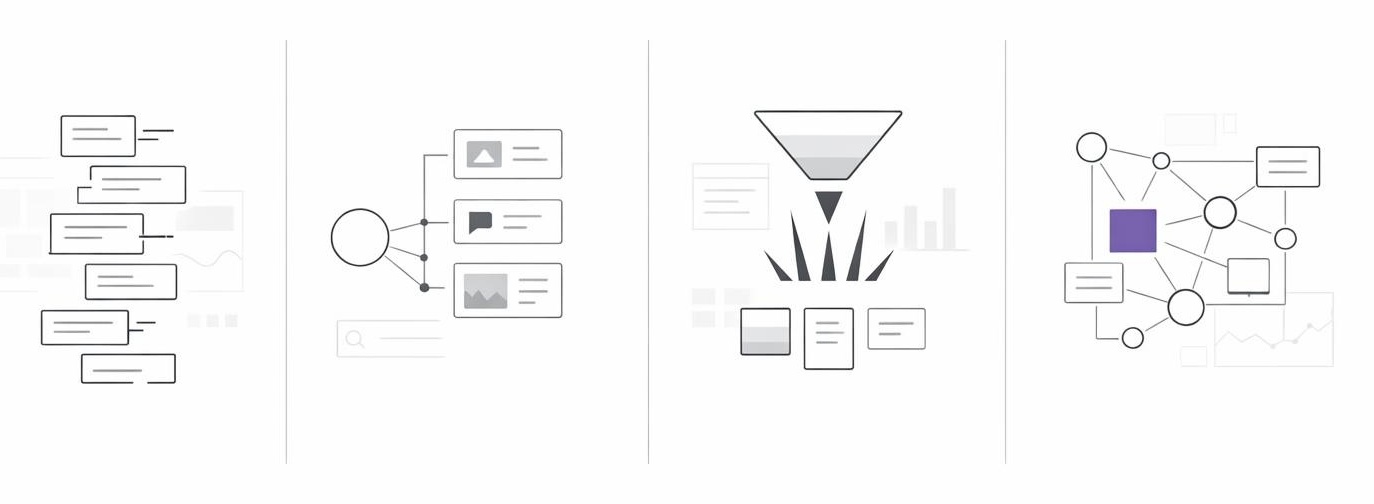
Here is the non-obvious part: most “systems” fail because they optimize for output instead of continuity. They pump out posts, but they do not build a connected ecosystem. The result is more noise, not more recognition.
A real visibility system has memory. It reuses what is true. It reinforces the same core ideas in multiple formats. It creates internal links and conceptual bridges so every new piece strengthens the old ones. That is how content starts behaving like an asset instead of an expense.
What a visibility system actually is, content that behaves like infrastructure
A visibility system is a business asset that turns expertise into a repeatable stream of clear, connected content across the places buyers discover and evaluate authority.
Think of it like infrastructure. Roads make traffic predictable. A content system makes discoverability predictable. The best part is not volume, it is coverage. Someone can find the brand through a social post, then validate it through a blog, then trust it more because search surfaces show consistent answers, not a single lucky hit.
In Jungian terms, the healthiest visibility system runs on three forces.
The dominant archetype is the Builder. It is focused on durable assets, repeatability, and long-term compounding. In decision terms, the Builder chooses a workflow that survives imperfect weeks. It stops betting growth on motivation and starts betting on structure.
The supporting archetype is the Sage. It translates real expertise into clear teaching, so the market trusts the thinking, not just the branding. In decision terms, the Sage turns raw inputs (client calls, sales objections, lessons learned, strong beliefs) into content that makes a stranger feel understood and guided.
The shadow to watch is the Performer. The Performer chases spikes, posts for applause, and confuses engagement with authority. In decision terms, the Performer pushes toward “whatever might hit,” even when it drifts from the core promise. That is how a brand ends up busy online but unclear in the market.
That framing matters because the right decision is not “post more.” The right decision is “build something that keeps showing up even when the calendar does not cooperate.” When the Builder and Sage lead, content becomes infrastructure. When the Performer leads, content becomes a treadmill.
This is the gap Inkflare is designed to close. Inkflare helps expertise-led businesses turn what they already know into continuous, AI-powered visibility across social media, blogs, search engines, and AI-driven discovery surfaces, without relying on random posting or generic content farms. The point is not to sound everywhere, it is to be recognized everywhere.
A practical way to decide is to look at three constraints in the business. Time is the first, if content stops when the schedule spikes, manual consistency is structurally fragile. Voice is the second, if outsourcing consistently dilutes what makes the brand distinct, the long-term cost is trust. Surface area is the third, if buyers discover the brand in more than one place (they do), single-channel posting becomes a bottleneck even when the content is good.
When those constraints are real, a visibility system is not a luxury. It is the difference between always starting over and finally building a presence that holds.
Visibility is not a personality trait. It is an operational choice.