

Build a Recognizable Brand in 30 Days with the 3-Theme Body of Work Playbook
After reading this, it will be possible to turn scattered expertise into a clear, repeatable content system that signals authority in under 30 days. The core move is simple, pick three themes to be known for, write nine “pillar explanations” (three per theme), then publish each pillar in three connected formats and interlink them into clusters so the whole thing compounds.
That sounds straightforward, which is exactly why it’s painful when it doesn’t happen. The real frustration isn’t a lack of ideas, it’s the feeling of being quietly excellent while the internet treats that excellence like it’s optional. A post does fine, a video gets polite engagement, then the momentum vanishes and the week resets like nothing happened.
Most experts are not invisible because they lack knowledge. They are invisible because their knowledge shows up online like confetti, bright for a moment, then impossible to follow.
Why scattered expertise doesn’t build recognition
Expertise can be real and still be forgettable in public. The issue is rarely quality, it’s shape. When content jumps between topics, tones, and platforms without a through-line, the audience can’t form a simple answer to one question, “What is this person or team known for?” If that answer is fuzzy, referrals slow down, inbound stays cold, and every post feels like starting over.
This is where the usual advice quietly fails. “Post consistently” sounds like discipline, but without structure it becomes a treadmill. Random consistency produces random signals. The audience might like individual posts, but they can’t connect the dots into a stable identity, so they don’t retell the story to others.
The deeper cost is emotional. The calendar fills with half-ideas, the drafts pile up, and every platform starts to feel like a different job. The result is a familiar pattern, bursts of energy followed by long gaps, followed by the nagging sense that the market is moving while the brand is stuck.
A body of work solves this because it turns content into proof, not performance. Instead of “Look, another post,” each piece becomes part of a coherent argument the internet can understand, index, and repeat back to the next person.
Step 1 Choose three themes the brand wants to own
Three themes are enough to create range, and few enough to create repetition. Think of them as the pillars of the brand’s worldview, not a list of services. The goal is not to cover everything, the goal is to become unmistakable in a few places.
A useful theme passes a hard test, it can produce dozens of specific points without becoming vague. “Mindset” fails this test for most brands because it balloons into everything and therefore stands for nothing. “Pricing strategy for high-trust services” passes because it has clear edges, clear stakes, and clear outcomes.
To pick themes that actually stick, anchor them to problems that buyers already feel, and to decisions they already have to make. The internet rewards clarity, and the market rewards clarity even more. If the brand’s themes map to moments of decision, the content will naturally attract warmer leads.
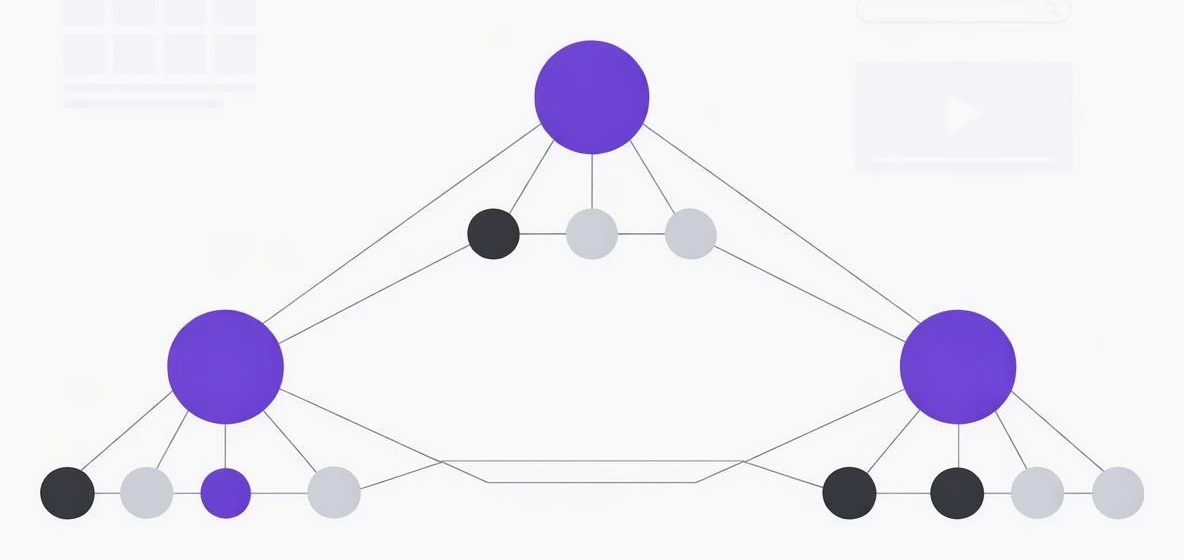
Themes should also be designed to work together. A strong trio creates a triangle, each theme reinforces the others. For example, “positioning,” “offers,” and “distribution” form a system. Any single post can live in one corner while still pointing to the whole.
Step 2 Draft nine pillar explanations that sound like truth, not marketing
A pillar explanation is the “home base” for an idea. It’s the clearest, most complete articulation of a point the brand wants associated with its name. Not a hot take, not a motivational post, a clean explanation that can be repeated across formats without losing meaning.
Create nine pillars total, three per theme. This number is strategic. It’s enough to build depth inside each theme, and enough to create the feeling that the brand has been thinking about this for a long time, even if the content is new.
Each pillar should answer one precise question that real people keep tripping over. Questions like, “What’s the real reason consistent posting still doesn’t create inbound?” or “What makes a content theme ownable versus generic?” or “Why does a single strong explanation beat ten surface-level tips?” force specificity. Specificity creates memorability.
A strong pillar explanation also has a spine. It should include a viewpoint, a simple mechanism (cause and effect), and a practical implication. The mechanism is the part most content skips. It’s easy to say “be consistent,” harder to explain that recognition forms when the same ideas show up in different contexts, close enough together that the audience can pattern-match.
Write these pillars in a way that can be quoted. If a reader highlighted one paragraph and sent it to a friend, it should still make sense. This is where authority begins, not in volume, but in wording that holds.
Step 3 Publish each pillar in three formats that reinforce each other
The format stack is the multiplier. One pillar becomes (1) a social post, (2) a short video, and (3) a blog article. Not because every platform must be fed, but because repetition across formats creates a stronger signal than novelty inside one.
This is also how to stop the “content marketing tax,” the hidden cost of constantly inventing new ideas. The pillar stays the same. The expression changes, and each expression does a different job in the reader’s mind.
Start by treating the social post as a sharp entry point. It should make one claim and create one itch, the kind that makes a person pause because it names something that has been bothering them but hasn’t had clean language yet. That’s the moment attention is earned.
Then use the short video to do what text can’t. A video can carry tone, emphasis, and a tiny lived-in example. It can show what the claim sounds like when it’s coming from a steady point of view, instead of reading like another generic tip. Even 30 to 60 seconds is enough to add presence, and presence is often what turns “interesting” into “trustworthy.”
Finally, let the blog article become the definitive version. This is where the mechanism gets laid out without rushing. It’s where objections can be addressed, distinctions can be made, and the reader can feel the idea click into place. A blog is also the most durable asset in the stack, because it’s structured and explicit, which makes it easier for search engines and AI-driven discovery systems to interpret and surface.
When the three are connected, the system begins to behave like a loop. The video supports the post by adding human clarity, the post points to the blog by giving the next step, and the blog reinforces positioning by carrying the full argument and linking to the rest of the theme. Nothing has to go viral for the signal to get louder over time.
This is also where most teams accidentally waste effort. They publish the three formats, but they publish them like strangers. No linking, no shared language, no consistent framing, which means the internet sees three isolated pieces instead of one cohesive idea expressed three ways.
Inkflare’s approach is built around preventing exactly that kind of leakage. The goal is not more content, it’s more connected content. When expertise is translated into a coordinated set of assets (with consistent framing across social, video, and blog, plus intentional interlinking), visibility stops being a daily fight and starts behaving like a system.
Step 4 Link everything into clusters so the internet can “see” the body of work
Publishing pillars is step one. Clustering is what turns publishing into a system.
A cluster is a small network of connected pieces around one theme. Each pillar blog links to the other two pillar blogs in that theme, and each includes a small pathway to the next theme when relevant. The result is a guided experience, not a pile of posts.
This matters for humans and machines. Humans feel cared for when the next step is obvious. They stop scrolling and start learning, because the content is no longer asking them to do the work of interpretation. Machines reward clear relationships between pages, because the structure suggests topical authority rather than isolated commentary.
The non-obvious benefit is what clustering does to credibility. A single strong post can be dismissed as a lucky swing. A connected set of explanations inside one theme signals something different, sustained thinking. It tells a prospect, without saying it directly, “This isn’t a random opinion. This is a practiced lens.” That’s the kind of trust that forms before contact, which is when the best inbound is decided.
Clustering also clarifies what to do next when the audience is ready. A reader who agrees with one pillar should not have to hunt for the next related idea, or worse, get distracted by an unrelated post from last month. The cluster creates momentum on purpose.
To keep this sustainable, run the playbook on a weekly cadence for 30 days:
- Week 1: Choose the three themes and draft the nine pillars.
- Week 2: Publish the first theme as a cluster (three pillars in three formats).
- Week 3: Publish the second theme as a cluster.
- Week 4: Publish the third theme as a cluster, then tighten internal links across themes.
At the end of 30 days, there is a visible pattern, three themes, nine explanations, and a web of connections that makes the expertise easy to recognize. That is what a “body of work” actually looks like in practice, not a massive library, but a coherent set of signals that repeat with intent.
The bigger win is what happens next. The playbook becomes repeatable. One new pillar per week per theme is enough to keep the signal strong without turning content into a second business. Inkflare is designed for that reality, experts and small teams need a visibility engine that respects limited time while still building durable authority through consistency, multi-format presence, and interlinked structure.
The internet doesn’t reward scattered brilliance. It rewards consistent, connected clarity. The question is not “What should be posted today?” The question is “What should the market learn to associate with this brand, again and again, until it becomes obvious?”