Stop Trying to Be Interesting, Build Coherent Authority That Compounds
Trying to be interesting is a terrible strategy for serious growth. Not because interesting is bad, but because growth is an interpretability problem, not a creativity contest, and “interesting” is a moment, and markets do not buy from moments. Markets buy from signals they can interpret, recognize, and trust.
A great post can earn attention. Only a coherent pattern earns belief.
The ‘Be Interesting’ Trap: Why Spiky Content Doesn’t Compound
Spiky content is what happens when visibility becomes performance. A clever take lands, a contrarian thread gets shared, a carousel hits, and for a few hours it feels like progress. Then the calendar turns, the next idea does not arrive on schedule, and the whole thing resets back to silence.
The quiet cost is not just “inconsistent posting.” It is inconsistent meaning.
When an audience can’t predict what a brand stands for, they can’t place it in their mental map. They may still like a post, even save it, but the trust layer stays thin. The expertise never becomes a default recommendation because the pattern never becomes clear enough to repeat back.
This is the part content advice often skips. Buyers are not scrolling to grade writing quality. They are scanning for reliability. They are asking, often unconsciously, “If this is the person chosen, what will the experience feel like next month when things get messy?” Spiky content answers that question with volatility.
And volatility makes people wait.
Waiting looks like “Great insights, will keep following,” with no next step. It looks like leads who consume but never convert. It looks like referrals that never happen because there is nothing steady enough to point to.
Better Mental Model: Visibility Is Pattern Recognition (Trust Lives in Coherence)
Visibility is less about impressing strangers and more about becoming legible to the right people over time.
Human brains do not trust isolated moments, they trust patterns. The same is true in business. A buyer trying to reduce risk is looking for stable signals: what problems are consistently named, what trade-offs are consistently chosen, what outcomes are consistently prioritized, what language is consistently used to define the work.
That is coherence.
Coherence does not mean repeating the same post. It means repeating the same meaning.
Consider how trust forms in other contexts. A good TV episode can be exciting, but the show becomes beloved when it follows clear rules. A product interface feels “premium” when its patterns are consistent, not when every screen tries to be clever. An investor becomes credible when the thesis is stable, even if each market update is new.
Content works the same way. When a market can say, “This brand always sees the real problem,” uncertainty drops. When uncertainty drops, the expertise feels current and dependable, even if the audience hasn’t watched every piece.
That is why the line matters: people trust patterns more than isolated moments.
Coherence Isn’t Boring: It’s a Signature (Theme vs Script)
Coherence becomes powerful when it stops being treated like a constraint and starts being treated like a signature.
The fear is understandable. If the same idea shows up again and again, won’t it sound repetitive? Won’t people get tired of it? Won’t it feel like saying the same thing on loop?
Only if coherence is confused with copy-paste.
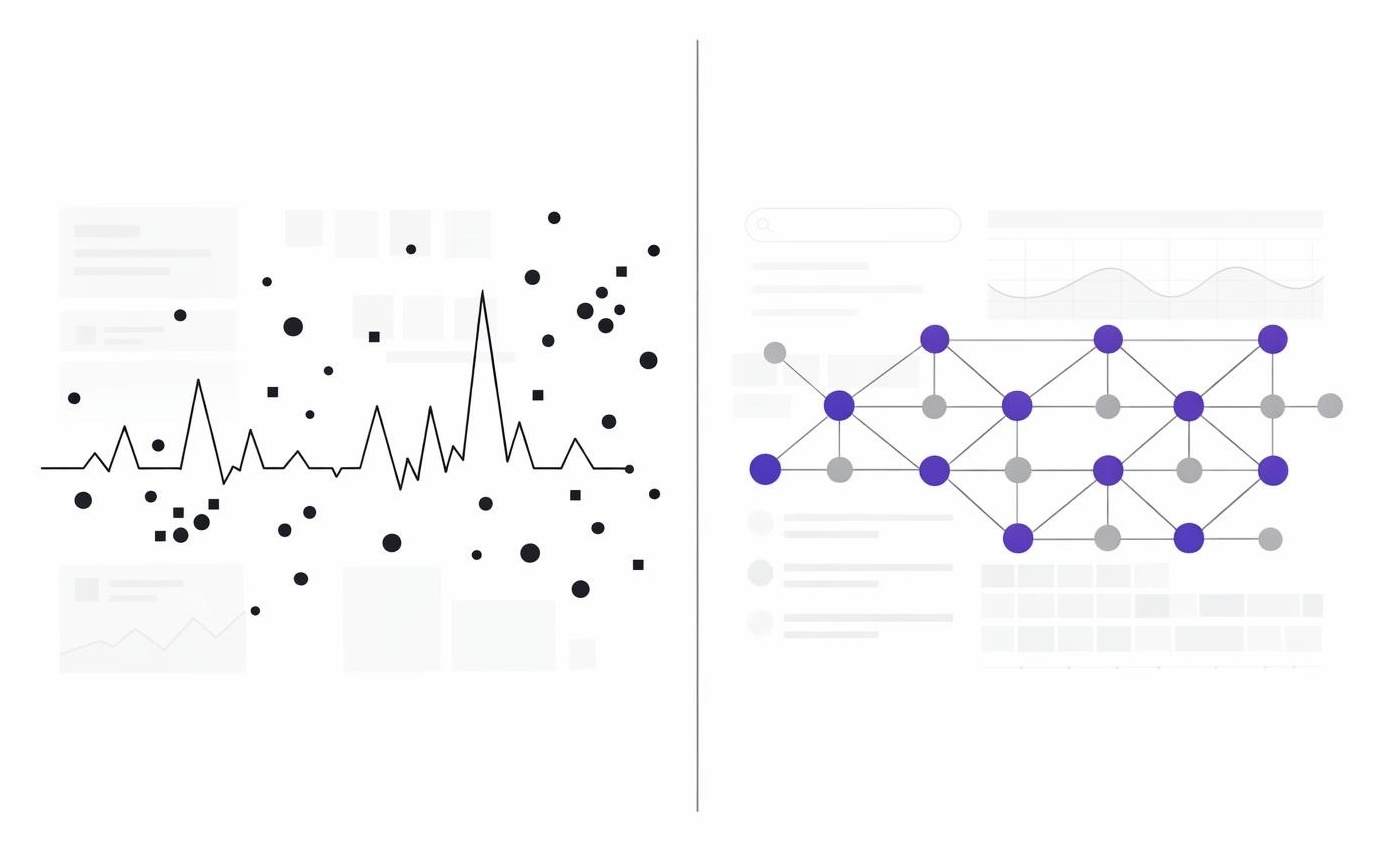
A script is repetitive. A theme is coherent.
A script repeats phrasing, structure, even the same example. A theme repeats a point of view, then proves it from different angles. The words can change completely while the signal stays the same.
That is what strong brands do. They do not reinvent their worldview every week to stay “fresh.” They stay recognizably themselves, then keep finding sharper ways to express it.
Coherence is aspirational because it is rare. Most experts have plenty of insight, but their insight shows up as scattered fragments. Coherence is what turns those fragments into an identity a buyer can trust.
The goal is not to sound repetitive. The goal is to sound coherent.
Why Coherence Wins in 2026: Compounding Across Social, Search, and AI Discovery
Coherence is not just a human trust advantage, it is also a distribution advantage.
Every discovery surface rewards interpretability. Social rewards recognition, the sense that a message “sounds like” a familiar authority. Search rewards topical consistency because it can connect a body of work to a set of problems. AI-driven discovery rewards clarity and repetition of concepts because it needs stable, recurring signals to summarize what a brand is about.
Random posting creates a trail that is hard to follow. Coherent publishing creates a map.
A map is linkable. It is summarizable. It is easy to recommend.
The mechanics are plain once they’re seen. When a body of work uses consistent names for the same ideas, the audience learns faster. When the same pillars show up repeatedly, people can tell what’s central versus what’s a detour. When terms get defined the same way each time, readers stop doing translation work and start building trust.
The same logic applies to machines that decide what gets surfaced. A scattered catalog makes it hard to confidently classify what the brand is “about.” A coherent catalog makes it easier to connect related pages, extract stable takeaways, and match future questions to existing answers. One post is a signal, a cluster is an identity.
This is where many well-meaning creators get punished for being “creative.” They publish wide, chasing novelty, switching topics, switching audience, switching tone, switching claims. Each post might be good, but the collection never forms a clear neighborhood of expertise. The market can’t decide what the brand is the authority on, so it defaults to “interesting,” not “essential.”
Coherence flips that. When the same core ideas recur, when definitions stay stable, when pillars are consistent, the ecosystem becomes easier to index and easier to trust. People know what they are getting, and so do the systems that decide what gets surfaced.
Inkflare’s philosophy lives here: durable visibility is not produced by random acts of posting. It is produced by interlinked, coherent ecosystems that make expertise unmistakable across channels.
The Pattern Portfolio: A Simple Coherence System (That Still Feels Fresh)
Coherence becomes sustainable when it is designed, not hoped for.
A useful way to build it is to treat content like a portfolio of patterns, not a queue of posts. The goal is to create a small set of repeatable signals that can generate endless variations without losing the thread.
Here is a clean “Pattern Portfolio” that keeps content fresh while making the signal unmistakable:
- Core POV: the belief the market should associate with the brand. Not a slogan, a stance. The kind of sentence that shapes decisions.
- 3 to 5 Pillars: the recurring problem areas where that POV applies. These are the neighborhoods of expertise.
- Proof Types: the recurring ways the POV gets validated, for example mini case scenarios, a teardown of a common mistake, a framework, a before-after narrative, or a “what changed” update when the landscape shifts.
- Recurring Formats: the series structures that make publishing predictable, like “myth vs reality,” “teardown,” “playbook,” “buyer uncertainty reducer,” or “AI discovery lens.”
- Threading rules: simple consistency rules, like using the same definitions, naming pillars the same way, and pointing each piece back to one anchor idea so the ecosystem connects.
Notice what this does. The brand is not stuck saying one thing, it is free to say one thing well.
A quick example. If the core POV is “buyers don’t reward isolated quality, they reward interpretability over time,” the variations are endless without becoming noise. One post can critique the obsession with virality. Another can show how inconsistent language increases buyer risk. Another can apply it to pricing (people pay more when the promise is stable). Another can apply it to AI overviews (systems summarize what they can consistently detect). Same POV, new lens.
That is how patterns beat posts. The market starts to recognize the signature, then the signature starts to carry weight.
A 30-Minute Coherence Audit: What to Fix This Week
Coherence does not require a new personality or a bigger content calendar. It requires a tighter signal.
A fast audit can reveal the gap. Look at the last month or two of publishing and ask: could a stranger describe the brand’s point of view in one sentence after reading three pieces? Do the same terms mean the same things across posts, or does the language drift? Do topics cluster into clear pillars, or do they scatter into whatever felt urgent that day?
Then make one practical move: choose the single point of view that deserves to be repeated, name the 3 to 5 pillars it belongs to, and publish the next ten pieces as variations on that theme. Not louder, just clearer.
This is the moment where many experts feel an unexpected relief. The burden shifts from “be interesting again” to “be coherent again.”
Visibility that compounds is not built by chasing the next spike. It is built by becoming recognizable enough to trust. Inkflare exists to make that kind of coherence achievable at scale, turning hard-won expertise into a system that stays active, consistent, and discoverable, even when time and attention are limited.
Choose the pattern, then let the pattern do the work.