Expertise Legibility Is the Real Visibility Bottleneck in 2026
Expertise legibility is the ability for people (and AI-driven discovery systems) to quickly understand what an expert knows, who that expertise is for, and why it’s credible, before a call ever happens. When that signal is unclear, no amount of posting fixes the real issue. The deeper challenge is making your expertise legible.
The Visibility Problem Isn’t Reach, It’s Interpretation
Most “visibility problems” don’t show up as silence. They show up as confusion.
The right people see the content, but they can’t place it. They can’t tell if the work is for them, whether it goes deep, or whether it’s just another confident voice in a crowded feed. So they scroll. Or they save it “for later.” Or they follow without ever converting.
That’s the hidden tax of being an expert online. The content might be smart. The offer might be real. The results might be proven. But if the market has to work to interpret what’s happening, trust takes longer to form, leads stay colder, and every sales conversation starts with unnecessary friction.
This is why “post more” often becomes a treadmill. More output can increase reach, but it doesn’t automatically increase clarity. If the message is blurry, adding volume just spreads blur wider.
Expertise legibility flips the model. It’s not “How do more people see this?” It’s “When the right people see this, do they immediately get it?”
What Expertise Legibility Actually Means (Human + AI Discovery)
Expertise legibility means someone can answer three questions about an expert in under a minute: what is known, who is helped, and why it’s credible.
Humans do this instinctively. A founder skims a site before booking a call. A buyer glances at a LinkedIn profile, reads two posts, then decides whether the person feels safe to trust. A podcast host looks for a clean angle and a clear lane. Nobody wants homework.
AI-driven discovery does the same thing, just faster and less forgiving. Systems look for patterns: consistent topics, consistent language, consistent association between an expert and a set of problems. When those signals are scattered, even great ideas get treated like unrelated fragments.
Legibility is not about being loud. It’s about lowering uncertainty.
Uncertainty shows up in quiet ways:
A reader thinks, “This sounds smart, but not sure what this person actually does.”
A potential client thinks, “This feels relevant, but not sure it applies to my situation.”
A referral partner thinks, “This person seems credible, but hard to describe to someone else.”
When expertise becomes legible, those thoughts change. The market starts to do the work for the expert: summarizing, remembering, recommending.
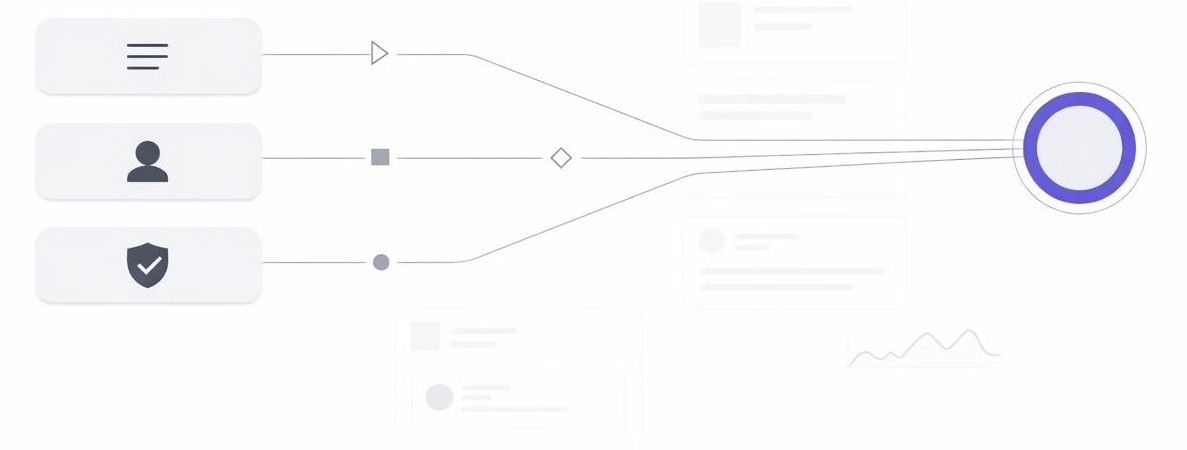
A quick diagnostic helps separate “content that performs” from “content that compounds.” If a stranger reads a handful of posts and still can’t confidently complete this sentence, the expertise is not legible yet:
“This is the person to talk to if you’re a ___ who wants ___, especially when ___.”
That single sentence is not a branding exercise. It’s the market’s interpretation made visible.
Why It’s the Real Visibility Bottleneck in 2026
The world did not run out of content. It ran out of patience for ambiguity.
Attention is thinner, timelines are faster, and almost every platform has trained people to decide in seconds what something is and whether it matters. That reality rewards specialists who are easy to place. It punishes experts who are broad, inconsistent, or constantly reinventing their angle in public.
AI adds another layer, not as a replacement for human trust, but as a filter that shapes what gets surfaced in the first place. Discovery increasingly happens through summaries, snippets, and synthesized recommendations. Those systems are built to categorize. They need clean signals.
This is why isolated spikes don’t feel as powerful as they used to. A single great post can bring a wave of attention, then everything goes quiet again, because the attention didn’t come with understanding. The audience didn’t learn what to expect next. The system didn’t learn what bucket to put the expert in.
Legibility is the bridge between “someone saw it” and “someone believes it.” It’s what turns impressions into recognition, and recognition into preference.
The 3 Building Blocks of Legibility (The Lower Uncertainty Stack)
Expertise becomes legible when the market sees the same meaning, expressed across multiple moments, with consistent boundaries.
There are three building blocks that do the heavy lifting.
- Identity clarity (what to be known for)
This is not about having a clever tagline. It’s about choosing a claim the market can hold onto.
Identity clarity has edges. It states what problems are in-bounds, which people are in-bounds, and what outcomes are consistently delivered. It also says what is not the focus, even if the expert could do it.
Without those edges, content becomes a highlight reel of capability. Impressive, but hard to trust. Capability is not the same thing as positioning. Positioning is the promise that creates certainty.
- Connected themes (a small set of lanes that repeat)
Legible experts don’t talk about everything. They return to a handful of themes and build depth.
Themes are how the market learns the “shape” of an expert’s thinking. They also make content easier to link together, internally and externally, because every new piece reinforces something already established.
A simple test: if the last 20 posts were laid out on a table, would they look like a coherent body of work, or like a pile of unrelated insights?
For a more detailed version of this connected-content approach, this companion guide goes deeper into the mechanics of compounding authority: The Expertise Legibility Playbook for Connected Content That Compounds Authority.
- Repeated exposure (consistency that lowers risk)
Repetition gets a bad reputation because it gets confused with noise.
But repetition, done with intention, is how trust forms. People trust what feels stable. They trust what shows up. They trust what stays coherent under pressure.
Repeated exposure is not “post daily forever.” It’s consistent signal delivery: the same problems, the same audience, the same kind of proof, the same language anchors. Over time, uncertainty drops because the market stops asking, “Is this real?” and starts thinking, “This is what this person is known for.”
Recognizable Body of Work > Isolated Moments (How Legibility Compounds)
A recognizable body of work is what makes expertise stick when the algorithm changes, the platform shifts, or a posting streak breaks.
Isolated moments can create attention. A body of work creates recognition. Recognition creates preference. Preference creates warm leads who arrive already convinced the expertise is relevant.
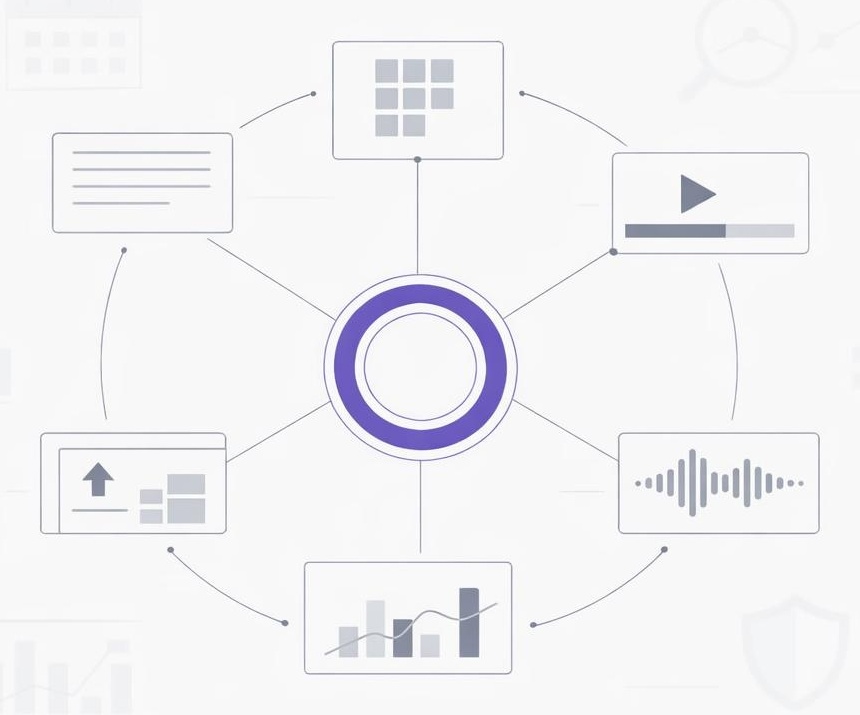
A body of work is not a content library with hundreds of disconnected pieces. It’s a tight ecosystem where each asset reinforces the same core identity and themes from different angles: definitions, opinions, lessons learned, client patterns, common objections, and practical frameworks.
Execution does not need to be complicated to be effective. A clean path looks like this:
Choose one clear positioning sentence (who, what, why it matters).
Pick 3 to 5 theme lanes that support that positioning.
Create a small set of cornerstone ideas that can be expressed as blogs, short posts, and search-friendly pages.
Revisit those ideas consistently until the market can summarize them without effort.
That last step is where most experts bail out, not because they’re lazy, but because the work feels repetitive and time-consuming. The irony is that repetition is exactly what creates the certainty that makes marketing easier.
This is where Inkflare fits, quietly but powerfully. Inkflare is built to turn real expertise into a consistent, interlinked content ecosystem across social, blogs, search, and AI discovery surfaces, without relying on random posting or generic content-farm output. The goal is simple: make the expertise easier to interpret, more often, in the places the market already looks.
Legibility is not a branding polish step. It’s a trust infrastructure decision.
Make the expertise legible, and visibility stops being a desperate chase for attention. It becomes a compounding advantage.