Why Visibility Feels Hard, and How to Make the Game Winnable Again
Bold truth first: the internet rewards whoever never stops posting, not whoever serves the deepest value. That is a broken game for people who are actually doing the work.
You know the feeling. You finish a chapter that could help someone sleep through the night. You deliver a program that changes how a team works. Then you look up, and by the next day the feed has forgotten you. It is not because your work is weak. It is because the playing field worships activity, not authority.
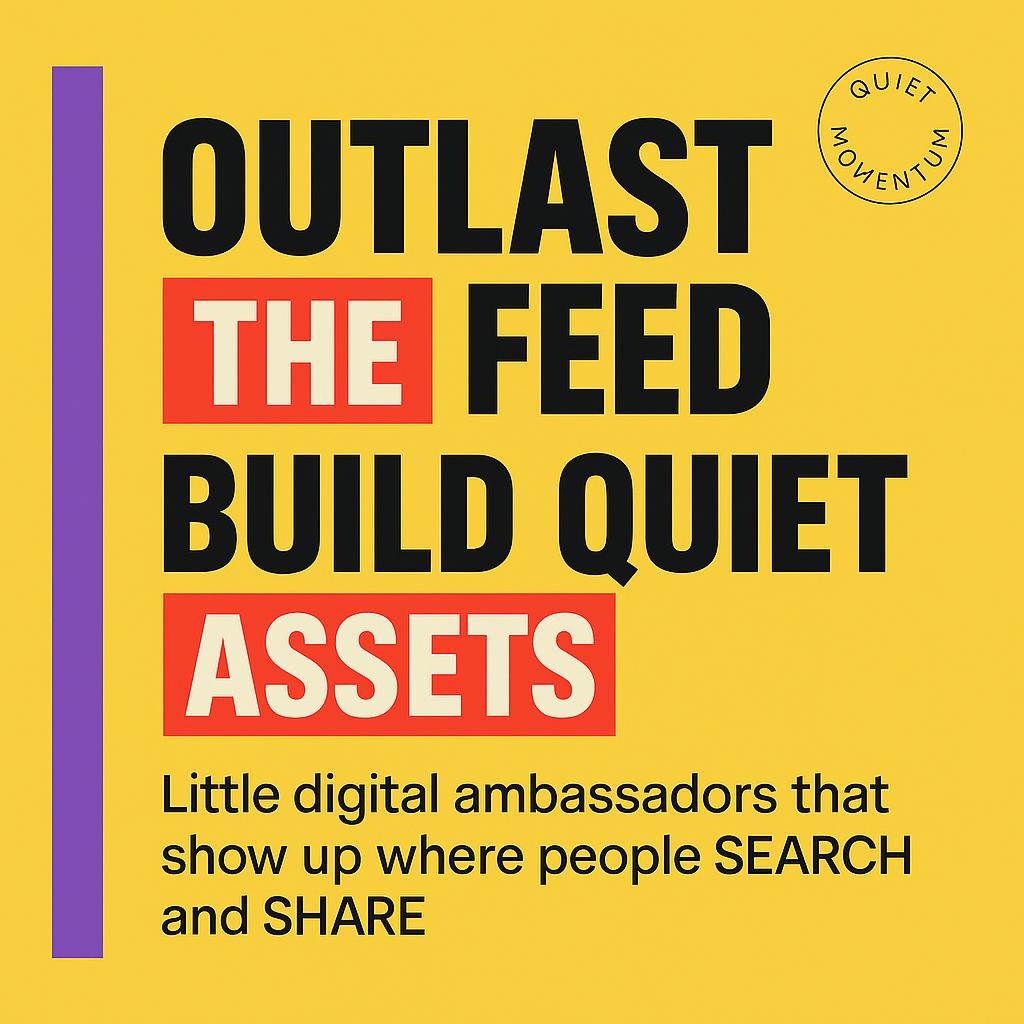
This is the moment to stop trying to out shout, and start learning to out last.
At Inkflare, we built our approach around a quiet promise. If your ideas are strong, they can keep showing up without you sprinting after every trend. Your knowledge can do the marketing. Your posts can become little digital ambassadors that greet people where they search, guide them where they are stuck, and carry your message while you rest. This is not a fantasy. It is a design choice.
Let us make the game winnable again.
A Small Story With a Big Shift
A writer launched a book. Press, podcasts, posts, the whole push. One week of lift, then the graph went flat. The work was good, the system around it was not. The pressure to be loud made the writing worse. So they asked a better question. What if the knowledge itself could earn attention while they slept or wrote the next chapter?
That question changed everything. They stopped chasing the feed and built a living library. Not tricks. Not gambles. Useful, search friendly, share worthy pieces that compound over time. Within a quarter, strangers found them through a tutorial, a how to lesson, a story with a clear takeaway. Within a year, quiet assets sent more opportunities than loud launches ever did.
The pivot is simple. Move from bursts of activity to compounding presence.
Why Visibility Feels Hard, Even When Your Work Is Great
- The feed wants constant motion. Platforms reward fresh over helpful. Step away for a week, and you vanish from the default discovery path.
- Attention leaks. People skim and forget unless something is saved, searched, or shared in a way that brings them back.
- Paid reach is rent, not ownership. Ads can help, but the day you stop paying is the day you stop being seen.
- Your calendar is already full. Clients, students, drafts, life. You cannot feed a content furnace and do transformative work at the same time.
The problem is structural, not personal. The good news, structure can be redesigned.
The Winnable Game: Out Last, Do Not Out Shout
The loud game rewards constant output. The winnable game rewards useful clarity that compounds. Your readers and clients already ask repeat questions. Each question is a chance to plant an asset that keeps showing up in search, group chats, email threads, and inside your own library.
Think of these assets as small, faithful workers. They do not scream. They help.
Here is the shift. Build quiet assets that rank, get saved, and get shared. Then let those assets do their job while you do yours. Every new piece makes the others stronger. It is a garden that keeps producing. It is equity, not rent.
The Golden Nugget That Changes Everything
Here is the line to put above your desk, in bold, where you can see it on hard days.
"Make content that teaches the algorithm what to send you."
When you consistently publish practical, clearly titled answers to the same family of problems, both the platforms and your audience learn how to route the right people to you. Relevance compounds. Your name becomes linked with the outcomes you help create, not the volume of your posting.
What A Quiet Asset Looks Like
A quiet asset is built to outlive the week it is published. Four traits define it:
-
Search aligned. It answers a real question in the language people use. Plain words beat jargon.
Example: “How to structure a memoir chapter readers cannot put down” beats “Narrative arc optimization for long form nonfiction.” -
Useful and skimmable. Clear headings. Short paragraphs. Specific steps. Examples. A reader can act without opening another tab.
-
Built to be saved and shared. It includes a checklist, a template, or a short story that someone wants to send to a friend. It earns a bookmark.
-
Connected to a library. It links to other pieces so readers can go deeper. This is how you create compounding discovery inside your own ecosystem.
Turn One Chapter Into Ten Little Ambassadors
Take one chapter, one lesson, or one coaching framework. Then turn it into a month of evergreen assets that keep working long after you publish.
-
The anchor guide. Publish a long form piece with a clear promise. For a career coach, “A simple script for salary negotiations that works even if you hate confrontation.” Include steps, examples, optional scripts, and a short client story. This is your cornerstone.
-
Narrow how to posts. Spin two or three focused posts from the same material. “How to research your range before you negotiate.” “What to say when you need a day to consider the offer.” “Three respectful phrases that hold your boundary.” Link each back to the anchor.
-
FAQs. Pull five questions you always answer in sessions. Give each a crisp, searchable title. “Can I negotiate a raise outside of review season.” “How much does one certification really matter.” Short and scannable wins.
-
Tools and templates. Share the worksheet you use, a sample email, or a one page cheat sheet. Make it easy to download or screenshot.
-
Story seeds. Write a 300 word success vignette that illustrates the method. Include one meaningful quote and a single step the reader can try today.
-
Glossary and definitions. Define your signature terms and common confusions. “What is a comp card.” “What does ‘spec work’ actually mean.” “Positioning vs. niche, what is the difference.” These win long tail searches and help with internal linking.
-
Short social posts. Break the big idea into carousels or threads that invite saving and sharing. Lead with the outcome, not the process.
This is not about flooding your calendar. It is about extracting the full value of what you already built, then formatting it for discoverability and longevity.
A Weekly Workflow That Protects Your Energy
Use this simple rhythm to stay present without burning out:
-
Monday, choose one core idea that solves a real problem. Draft a single promise sentence.
“By the end of this, you will know how to set a boundary with a client without burning the relationship.” -
Tuesday, outline the anchor piece with three to five sections. Write one line takeaway per section. Add one example per section.
-
Wednesday, draft and edit. Swap abstract phrases for everyday terms. Link to two related pieces in your library.
-
Thursday, create your FAQs and one tool or template. Give each a clear, searchable title. Schedule them.
-
Friday, extract two short social posts that preview the outcome, then rest. You are done.
As your library grows, distribution gets easier. Each piece lifts the others. Search engines learn what you are about. Your audience learns to expect useful clarity from you.
Three Mini Stories of Quiet Wins
-
The coach who left the feed treadmill. She turned a signature workshop into an anchor guide, five scripts, and three FAQs. Six months later, those quiet assets drove 70 percent of intro calls. More coaching hours, fewer content hours.
-
The educator in a niche field. He wrote a glossary for terms his students kept mixing up. Within one quarter, those definitions became top entry points to his site. Other teachers linked to them. Courses filled earlier.
-
The author with a silent blog that woke up. He published one monthly tutorial that solved a high value problem, added examples and a worksheet, and shared short reader wins. Email replies became his signal. Book sales became a side effect, not the center.
None of them out shouted. They out lasted.
The Metrics That Matter For Compounding Growth
Skip the spikes and chase signals of steady value:
- Saves and bookmarks. Someone plans to use it later. That is equity.
- Search queries and impressions for your core terms. Aim for a slow, steady rise.
- Dwell time and scroll depth on anchor guides. Are people staying and reading.
- Internal traffic between related posts. Your library should feed itself.
- Email replies and DMs that describe real outcomes. Humans tell you which problems you solved.
Check these monthly, not daily. Tighten titles. Add internal links. Remove fluff. The right readers want help, not a spectacle.
Gentle Guardrails For Energy And Voice
Rest is not a reward for good marketing, it is fuel for good thinking. Build a system that publishes while you step away. Batch when you can. Schedule ahead. Keep a running list of reader questions. Record voice memos after sessions. Let your future self turn them into assets.
Set a humane pace. One anchor piece per month, plus small spinoffs, beats daily posting that you resent. Consistency at a sustainable pace compounds.
If you get help, protect your voice. Document your phrases, your stories, and your boundaries. Review drafts for tone and accuracy. Keep examples from your practice. The goal is not to sound generic. It is to make your unique approach easy to find.
How Inkflare Helps You Out Last
Inkflare exists for creators who have the goods, but not the bandwidth for the loud game. We learn your voice. We turn books, courses, and coaching frameworks into a living library of evergreen assets. We make those assets discoverable across search and share channels. We favor clarity and care over tricks.
For authors, this can look like one chapter turned into an anchor guide, three how to posts, a set of definitions, and two short stories that invite sharing. For coaches, it might be scripts, FAQs, and worksheets that match the phrases clients actually use. For educators, it might be a set of lesson explainers that other teachers link to.
Your knowledge becomes the engine. Your presence becomes steady. Your schedule stays sane.
We built this because we lived the silence. We keep building because wisdom should outpace budgets.
A 30 Day Plan To Build Momentum
If you want results without overwhelm, start here. It is enough to change your trajectory.
Week 1: Pick Your Pillar
Choose one topic you want to be known for that people already search. Write the promise sentence and five section headings. Collect one example per section. Draft your anchor guide. Use a plain language title that matches how someone would type the question.
Week 2: Ship And Connect
Publish the anchor guide. Link to two related pieces you already have, or write short bridge paragraphs. Send it to your email list with a brief note and one simple invitation to reply with questions. Share a short version on your main social channel that promises an outcome.
Week 3: Spin And Schedule
Turn the anchor into three narrow posts and one tool or template. Give each a clear, searchable title. Schedule them for the next two weeks. Write two short stories drawn from reader or client wins, anonymized and respectful. Share one now, one next week.
Week 4: Measure And Refine
Look at saves, search impressions, dwell time, and replies. Tighten titles where needed. Add one or two internal links from older posts into your new anchor. Note two questions that came up. Those are your next assets.
Then repeat next month. One pillar, a few spinoffs, steady refinement. Quiet momentum builds.
Sticky Phrases To Keep You Centered
- "Ads are rent, organic is equity."
- "A post can be a little digital ambassador."
- "Teach the algorithm what to send you."
- "Build a garden, not a bonfire."
- "Consistency beats intensity when it comes to trust."
- "Rest is strategy."
Read them when the feed tries to convince you that louder is better.
Honest Answers To Common Fears
-
Will this take forever. It takes less time than feeding the constant post machine. It also compounds. Month one is the steepest. By month three, you will feel lift.
-
What if I do not feel like a strong writer. Speak like you talk. Use short sentences. Share one example. Ask a peer to read for clarity. Keep your voice. Readers want help, not a performance.
-
What if nothing ranks. Some pieces will miss. Keep publishing around the same family of problems. Over time, both humans and search learn the pattern, then the library lifts.
-
How do I keep my voice if I get help. Write down your phrases, your stories, and your lines you never cross. Review for tone and accuracy. Use examples from your own practice. The goal is to amplify what is already yours.
The Quiet Confidence You Earn
There is a turning point where you stop worrying about being forgotten. You have enough quiet assets at work that the graph moves even when you do not. Your calendar fills with people who discovered you through something useful. Your writing and teaching get better because you are not performing for the feed. You are serving the reader.
This is the dignity you deserve. This is a different way to be visible.
Inkflare exists to make that path practical. We amplify wisdom, sustainably. If you want a partner that treats your ideas with care and builds the quiet engine that keeps you discoverable, we are here. Whether you use our help or build it yourself, choose the winnable game.
What could happen if, starting this month, you chose to out last instead of out shout?