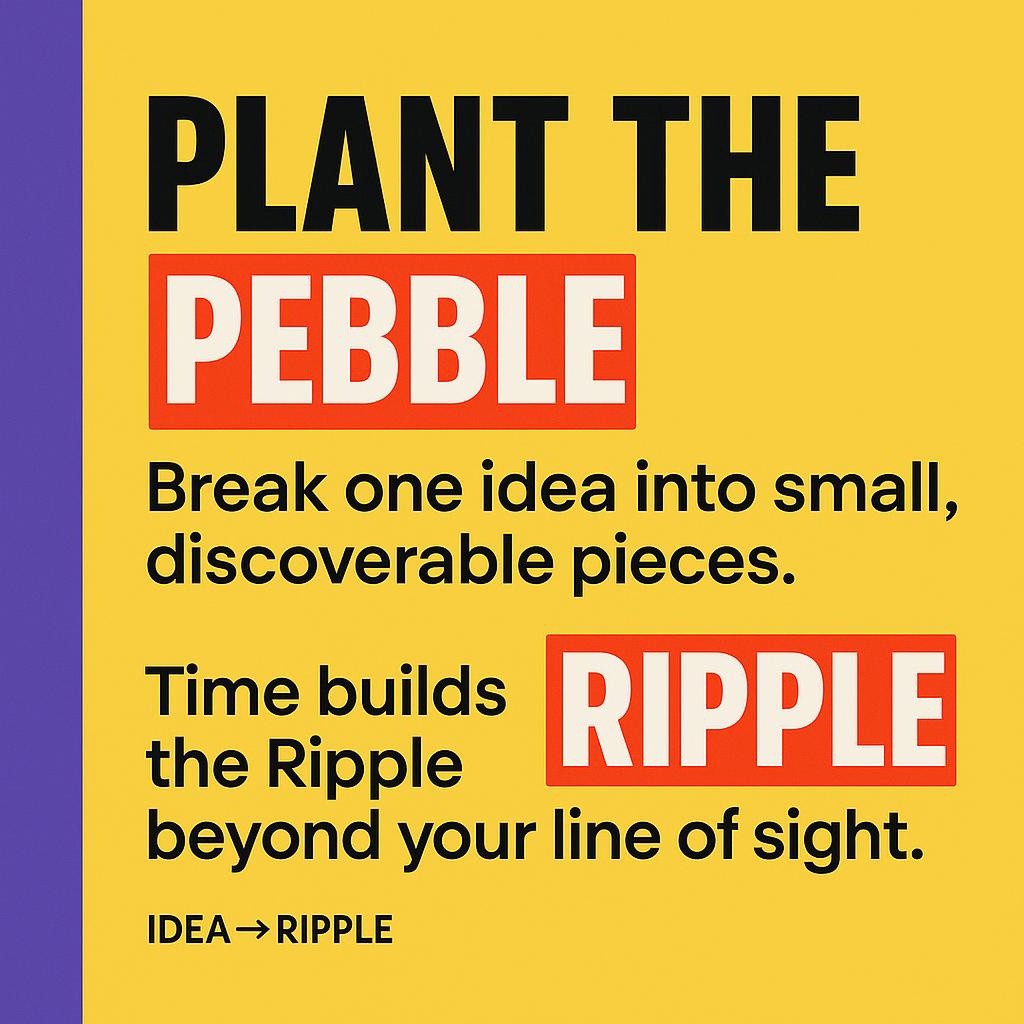
Plant the Pebble: The Ripple Effect of One Idea Shared
Bold truth: one small idea, clearly shared, can travel farther than a big launch with a tired audience.
We learned this the hard way. After pouring heart and years into a book, we watched the launch spike disappear in days. The inbox quieted. The feeds moved on. The work had depth, but depth alone does not guarantee discovery. So we tried something different. We stopped chasing fireworks and started planting pebbles, small pieces of a larger idea placed where people could naturally find them. Weeks later, a teacher in another country emailed a line she had underlined to get through a hard day. Months later, a coach referenced a two minute clip in a client session. The ripple outlived the launch.
That is the power hiding in your work right now. It is also the heartbeat of how we build at Inkflare. We believe wisdom should determine reach, not ad spend. We believe ideas deserve to work while you rest. Most of all, we believe a single, well placed pebble can start a movement of relief, clarity, and change.
What The Ripple Really Is
A blog today might reach someone a year from now. A quote might live in a notebook. A clip might replay when hope is thin. This is the ripple, transformation that begins with one shared idea, repeated in many small forms and allowed to compound over time.
The goal is not viral. The goal is remembered. The author inside you wants to matter in quiet rooms where decisions are made and hearts are tender. The coach inside you wants your clients to hear your voice in the moments that count. The teacher inside you wants your lesson to show up for a student at 2 a.m. The ripple carries your voice to those moments.
The Golden Nugget That Changes Everything
Stop publishing to finish, start publishing to plant. A finished post can be forgotten tomorrow. A planted idea keeps growing. When you plant, you design for discoverability, reuse, and longevity. You break the idea into pieces that people can pick up easily, save, and share. You let time and search do work you cannot do manually.
Say it with us, because it is a freeing rule of thumb: "ads are rent, organic builds equity." Rent can be useful, but equity is what lets your ideas pay you back in attention and trust. Your posts can behave like little workers, going out to meet people while you rest, pointing them back to the deeper body of your work.
Story: A Ripple That Found Its Shore
A leadership coach we know published a long article about difficult conversations. It was smart and humane, and it sank. She nearly gave up. Instead, she pulled three tiny ideas from that long piece.
- A single sentence to open a hard conversation.
- A checklist for a five minute pre meeting ritual.
- A two minute phone voice memo on how to respond when someone starts crying.
Those three pieces began to circulate. People saved them. One manager pasted the sentence into a weekly email. Another shared the ritual in a Slack channel. Someone clipped the voice memo for a team training. Six months later, the original long article was ranking for a useful search term. She had clients mentioning her work without remembering where they first saw it. The ripple turned a quiet launch into steady discovery.
What Readers Secretly Want From You
- A clear path back to the core idea. If they find a sentence on social, they want a link to the deeper post. If they land on the post, they want a way to go further.
- A small piece they can carry. Give them a quote, a checklist, or a diagram in words they can explain to someone else.
- A reason to return. Updates, related posts, and an index or library that respects their time.
If you build these in, your content stops feeling like a one day event and starts acting like a living library.
The Ripple Model, Simple Enough To Remember
- Plant. Publish one small, clear piece from a larger idea.
- Place. Put it where it can be discovered by search, saved by readers, and shared by peers.
- Point. Make every piece point back to the next step in your library.
- Persist. Keep planting small pieces so the library grows while you work on your craft.
Why Small Pieces Travel Farther
- Specificity beats generality. A precise sentence can live in a notebook for years. Long summaries fade.
- Timeless beats trendy. Clear terms that match enduring questions keep catching searchers long after a fad disappears.
- Fragment friendly beats feed friendly. The internet is a puzzle of fragments. If your ideas can be picked up in any order and still help, they will spread.
- Human beats polished. A voice that sounds like a person, not a press release, gives readers permission to trust you.
At Inkflare, this is more than theory. We turn your chapters, modules, and talks into a steady stream of discoverable pieces. We keep your voice intact, your energy protected, and your presence consistent. We exist so you can create while the little workers do their rounds.
How To Plant Pebbles That Build Equity, Not Just Views
1) Lead With One Core Idea
- Name the idea in plain language. If a teen in your family would understand the headline, it is clear enough.
- State a specific promise. For example, The one question that calms a chaotic meeting.
- Keep the first paragraph tight and human. Tell a short story or name the felt problem in one breath.
Reflective question: What problem is your reader trying to solve, in their words, not yours?
2) Break The Idea Into Carryable Pieces
From a single chapter or lesson, extract five kinds of assets:
- One time saver. A checklist, a cheat sheet, or a single page template.
- Pocket quote. One or two lines in your own voice that distill the point. Keep it under 140 characters if possible.
- Micro story. A 150 to 250 word vignette that shows, not tells, the change.
- Teaching clip. A one to three minute audio or video segment that fits a commute or a coffee walk.
- Clarifying diagram in words. A paragraph that draws a picture with language, for readers who think visually.
Reflective question: Which sentence from your draft could someone tape to their wall today?
3) Place Each Piece Where Time Can Amplify It
- Blog and library. Your home base is the library on your site. Every piece points back to it.
- Search and structure. Use clear headings, questions as subheads, and keywords your readers actually type when they are stuck. Think how to, template, example, checklist, and definition.
- Social and saves. Design a few assets that are optimized for saves, not only likes. Saves are the breadcrumbs that tell the platforms to resurface your work.
- Email and evergreen sections. Keep a navigation block in your newsletter that points to your living library. Readers should find what they need without scrolling.
Reflective question: If a stranger landed on one asset, would they know where to go next in your library?
4) Make Your Pieces Portable
- Add a plain text version of quotes and checklists so readers can copy and paste without friction.
- Use filenames and alt text that match the promise of the piece. Portability includes accessibility.
- Provide a short link slug in human language, for example, yoursite dot com slash calm the meeting.
5) Protect Your Energy With A Batching Rhythm
- Work in seasons. Choose a theme for six to eight weeks and plant pebbles around that theme.
- Batch extraction. Spend one session marking sentences and sections that can stand alone.
- Batch assembly. Spend one session turning those marked bits into finished micro assets.
- Schedule once, then rest. Use queues so your library drips out without daily effort.
Reflective question: What theme would feel nourishing to explore for the next eight weeks?
6) Keep The Signal High And The Noise Low
- Cut filler. If a sentence can be shorter, make it shorter.
- Remove disclaimers that weaken impact. Lead with what you believe, then bring nuance.
- Replace jargon with examples. Always give a scene or a use case.
7) Close With A Gentle Next Step
- Offer a related piece from your library.
- Invite a small action, not a pitch. For example, Try the one line opener in your next meeting and email yourself what changed.
- Keep your call to action calm. Urgency belongs to clarity, not pressure.
Example You Can Copy Today
Let us say you are a wellness educator with a chapter on burnout recovery.
- Core idea. Rest is a skill that compounds, not a reward you earn at the end.
- Blog post. Title it Rest that actually restores, a three practice guide you can use this week. Include three short sections, each with a story and a step.
- One time saver. A five minute reset checklist for mid afternoon fatigue.
- Pocket quote. Rest is not time off from life, it is time on for energy.
- Micro story. The morning your body said no, and what listening looked like.
- Teaching clip. Two minutes on what to say to your team when you choose a rest day.
- Diagram in words. Picture your energy like a bank account with auto deposits and auto withdrawals, then show the knobs you can adjust.
Placement Strategy
- Blog and library. Publish the post with clear H2s, a skimmable structure, and an internal link to your larger Rest Index page.
- Search and structure. Include subheadings like burnout recovery practices, five minute reset checklist, and how to talk to your team about rest.
- Social and saves. Share the checklist as a single image with alt text and a caption that invites saving for later.
- Email and evergreen sections. Add a small evergreen block in your newsletter footer titled Practical Rest Library with three timeless links.
How To Know It Is Working
- Saves increase. People save checklists and quotes more than they like them. Track saves as an early leading indicator.
- Search queries match your language. In your analytics, look for the exact phrasing you used in titles and subheads. If a post is being found for the problem it solves, you are building equity.
- Replies refer to micro assets. When readers reference the pocket quote or the two minute clip, you know the pieces are doing their rounds.
- New readers enter on old posts. This is the quiet magic. A year old post brings someone in, and they join the newsletter this week.
Avoid The Traps That Kill Ripples
- Cramming the idea into every channel at once. Plant steadily, not loudly. Consistency wins.
- Over spectacle. Fancy content that drains your energy is not sustainable. Choose simple formats you can repeat.
- Fragmentation without a home base. If your pieces do not point back to a library, the ripple evaporates into the feed.
- Racing the algorithm. Build for humans first, then shape for search. If it helps a real person, the engines will notice.
Voice, Trust, And The Courage To Be Specific
Readers do not need you to be everything. They need you to be specific, present, and human. Your story earns trust when you share the origin moment, the stuck point, and the small action that changed the next week. Your authority grows when readers test a technique and feel the difference. That is why specificity matters. It moves your ideas from interesting to useful, from liked to lived.
The Inkflare Way, And How It Protects Your Craft
- Voice over hacks. We learn your cadence and phrasing so your ideas stay yours. Templates are helpful, but your tone is the trust.
- Organic first. We build your library so search and saves do compounding work. Ads can supplement, but they do not replace equity.
- Rest as fuel. Your best ideas need a rested mind. We keep you visible while you recover, write, and teach.
We built this company after living the problem. As working authors and builders, we felt the sting of silence after launch. We made a promise we intend to keep. Creators should not have to choose between making the work and being seen. So we designed a system that turns your knowledge into steady, discoverable content without draining your energy. "We amplify wisdom, sustainably."
A Short Checklist You Can Apply This Week
- Pick one chapter or lesson that feels central to your work.
- Highlight three sentences that could stand on their own.
- Draft a blog post around a single promise in plain language. Keep it under 1,200 words and make it skimmable.
- Create one checklist, one quote, and one micro story from that post.
- Publish the post on your site. Add clear H2 questions and an internal link to a related index page.
- Share the checklist once, the quote twice, and the story once across the next ten days. Stagger the timing.
- Add an evergreen navigation block to your newsletter pointing to your new post and two old favorites.
- Schedule a 30 minute review next week to look at saves, search terms, and replies.
If you want a head start, Inkflare can take your existing material and produce that suite of assets, in your voice, ready to schedule. Your job is to guide the message. We handle the compounding.
FAQ For Creators Who Prefer Depth Over Hype
What if I do not have time for a blog?
You do not need hours, you need a rhythm. Publish shorter, more often, and let the library grow in layers. Even 600 words can plant a lasting pebble if it solves a precise problem and points to the next step.
What if my audience is small?
Small audiences are intimate. They save, share, and reply. Build equity now so when growth comes, your library is ready to serve. The ripple does not care about initial size, it cares about clarity and placement.
How often should I post?
Aim for dependable, not daily. A weekly post with two micro assets can outperform a flurry you cannot sustain. Reliability builds memory.
How do I keep from sounding repetitive?
Repetition is not the enemy, vagueness is. Rotate angles around the same core idea, then refresh with new micro stories from your work and your readers. Consistent themes are how readers recognize your lighthouse.
A Closing Story To Carry With You
A teacher wrote a line on an index card and kept it on her desk. It came from a blog she found late one night when she was searching for a way to reach a frustrated student. Months later, she shared that line with a new teacher in the staff room. That new teacher repeated it to a student who had lost steam. You will never know their names. But your line, your pebble, made it to their shore.
"Knowledge has no borders." Plant the pebble. Trust the ripple. Choose equity over ephemera. If you are ready to let your knowledge do the marketing, Inkflare is here to be your partner. Your next small post might be the sentence someone returns to a year from now.
A Gentle Prompt To End The Day
What is one sentence from your work that deserves to live on someone’s desk for a year, and what small piece can you publish this week so it has a chance to get there?