
The 30-Day Continuity Loop for LinkedIn and Blog Content That Compounds
The path is simple: turn three core themes into three depth blogs, nine LinkedIn assets, and a connected content network that keeps working after the week is over. The goal isn’t to post more—it’s to stop treating every post like a standalone rescue mission.
Most experts don’t have an idea problem. They have a continuity problem: one week is pricing, the next is mindset, then a client story, then silence. Nothing connects, so nothing compounds. The audience sees activity, but not authority.
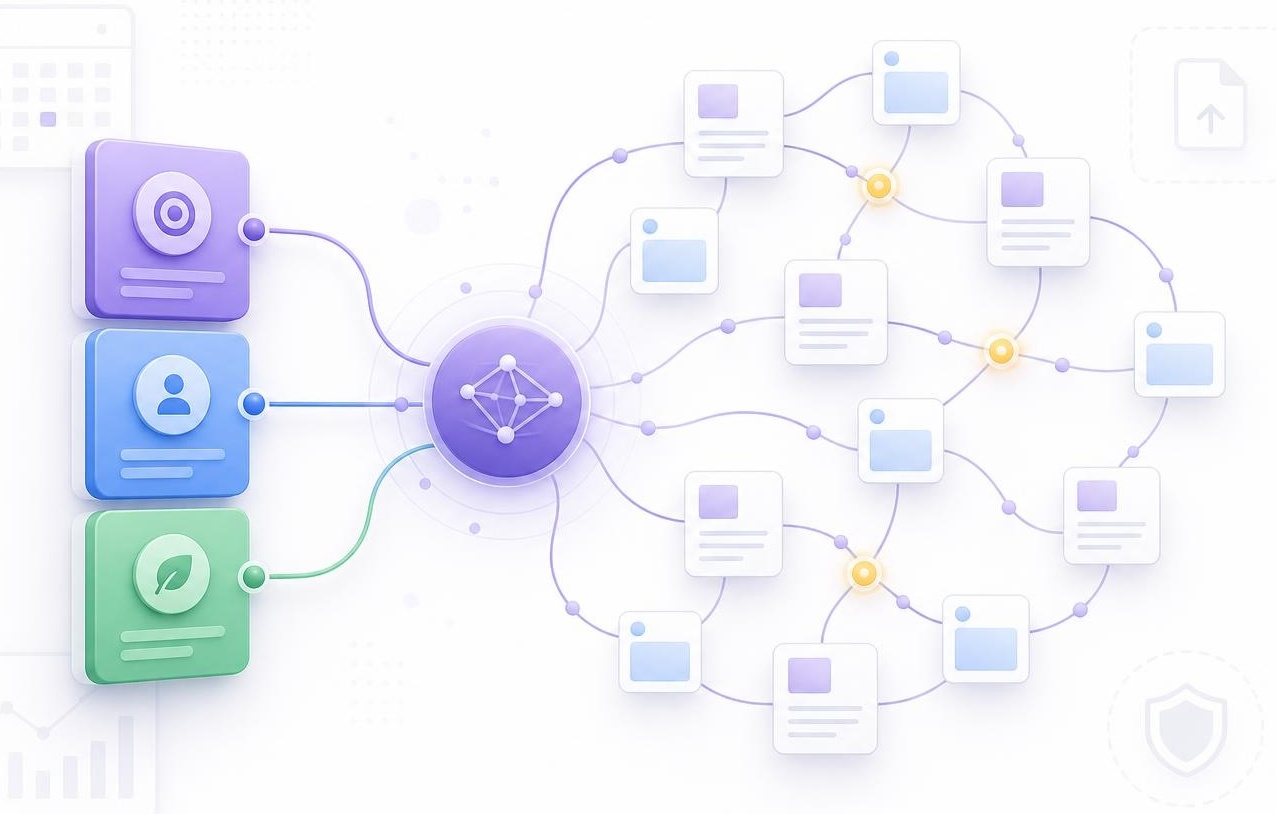
Inkflare’s view is simple: content should behave like an operating system, not a pile of disconnected receipts. The Continuity Loop makes every asset support another asset: a LinkedIn post points to a deeper blog, the blog becomes the reference point, and the next post reinforces the same theme from a different angle.
The Continuity Loop (and why most “consistent posting” still doesn’t compound)
“Be consistent” is good advice until Tuesday afternoon hits and LinkedIn becomes a blinking cursor with an attitude. Consistency without structure turns into a tax on attention—especially for people already running a business.
The Continuity Loop is a chain:
Theme → Depth blog → 3 LinkedIn assets → Links back to the anchor (and across related assets).
The difference between continuity and “repurposing” is roles. Repurposing often means slicing one long piece into smaller ones. Continuity means each piece has a job:
- The depth blog holds the full argument, framework, and examples (the “source of truth”).
- Asset #1 earns attention with a sharp claim.
- Asset #2 teaches the framework fast (carousel/video).
- Asset #3 handles objections or gives the “do this today” version.
What most people get wrong: they assume the feed rewards frequency. It rewards recognition. When ideas connect, your audience doesn’t just consume—they remember. Without those links, a great post gets one day of oxygen and then disappears, while a useful blog sits alone with no feeder content.
The goal for the next 30 days: build a small network where every piece points somewhere.
Step 1: Pick 3 themes that can carry 90 days (not 3 random topics)
Three themes should be strong enough to repeat without becoming repetitive. A theme is not “marketing,” “leadership,” or “AI.” Those are categories. A useful theme has:
- A specific audience pain
- A clear point of view
- Enough depth to generate frameworks, examples, objections, stories, and actions
Examples (adapt to your business):
- Coach: expertise → premium positioning
- Consultant: sales bottlenecks caused by unclear messaging
- Founder: building authority before the market is ready to buy
Each theme becomes a “home base.” Over time, it trains the audience to associate you with a specific problem and outcome—which is what positioning actually is.
A fast test: can this theme produce one depth blog + three LinkedIn posts + one story + one checklist without stretching? If not, it’s probably a topic, not a theme. Topics run out. Themes create a room people keep walking into.
The opposite trap is choosing themes that are too broad (“business growth”). Yes, you’ll never run out—but you’ll also never become known for something crisp. If a buyer can’t repeat what you’re known for in one line, you’re generating noise, not memory.
Step 2: Write 3 ‘depth’ blogs (one per theme) that become the anchor assets
Each theme needs one depth blog because authority needs a place to land. LinkedIn can create interest, but it rarely holds the full argument. A depth blog gives serious readers somewhere meaningful to go next, creates a durable asset for search and AI discovery, and gives every supporting post a place to point.
A depth blog is not an encyclopedia. It’s a clear thesis plus a usable framework:
- State the visible problem
- Explain the hidden cause
- Teach the framework
- Show one concrete example
- Give one next action
Example: if your theme is premium positioning, your anchor might explain why better offers fail when the market can’t quickly understand value—then show a framework for tightening messaging, proof, and constraints.
Use consistent naming across the whole system. If the blog calls the idea “Continuity Loop,” don’t rename it “omnichannel momentum” next week to sound fresh. Fresh labels break recognition, and recognition is what compounds.
Skipping anchors creates a shallow network: posts may earn reactions, but the reader who wants depth hits a dead end. That’s a quiet trust leak—and trust leaks become pipeline leaks.
Step 3: Turn each blog into 3 LinkedIn assets (without rewriting from scratch)
Once the three anchor blogs exist, create three LinkedIn assets from each one. That gives you nine pieces of social content without inventing nine new ideas.
Use the same pattern every time:
- Thesis post (text): the sharp claim people argue with or nod to
- Framework post (carousel/video): the loop, model, or steps made skimmable
- Objection/mistake post (text): “what most people do instead” + fix
Concrete example for a continuity blog:
- Text post: “Consistency doesn’t compound if ideas don’t connect.”
- Carousel/video: the loop from theme → blog → 3 assets → links back
- Follow-up: the real objection—“What if I don’t have time?”—answered with a friction-killer checklist
This isn’t about squeezing a topic until your audience is sick of it. It’s about teaching the same idea at different attention levels. Some people need the argument. Some need the diagram. Some need the checklist. When those ladder together, you look focused—not busy.
That’s the difference between a content farm and a content network: farms chase volume; networks assign roles so every asset strengthens the others.
Step 4: Build the 30-day network (calendar + friction-killer checklist) + where Inkflare fits
Keep the 30-day version intentionally small:
- Week 1–4: publish three depth blogs across the month (one per theme)
- For each blog, publish three LinkedIn assets that point back to it
A simple weekly rhythm:
- Mon/Tue: publish the depth blog
- Next day: thesis post (text) with a direct link to the blog
- Later in week: framework carousel/video (link again)
- End of week: objection/mistake post (link again)
The real enemy isn’t creativity—it’s decision fatigue. Remove decisions before the month starts:
- Choose the three themes
- Draft three blog outlines
- Lock three formats (text / carousel / objection)
- Pick a small “CTA family” (e.g., “Read the blog,” “Save this,” “Reply ‘loop’ and I’ll send the template”)
- Set linking rules: no orphan posts (every asset points to an anchor or the previous supporting post)
A friction-killer checklist can stay painfully plain: three themes, three outlines, three formats, three angles, one CTA family. Complexity looks smart in a planning doc and feels awful by day eight.
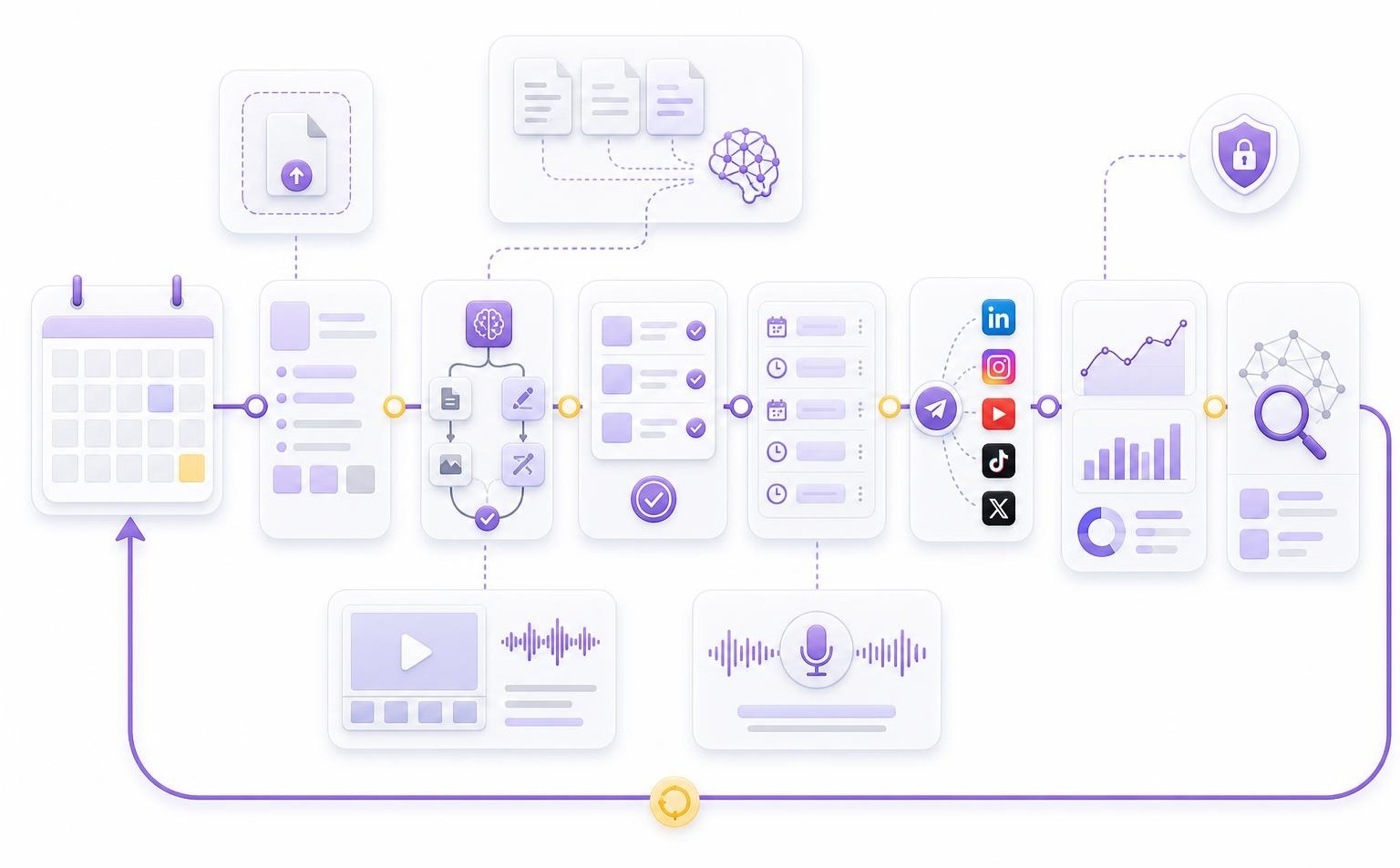
This is where Inkflare fits—not as a machine for flooding the internet with bland posts, but as the continuity engine for expertise-led visibility. Inkflare helps turn expertise into connected blog, social, search, and AI-discovery assets so you stop disappearing between bursts of effort. The value isn’t “more content.” The value is less starting over.
The strongest visibility systems are rarely the loudest. They’re the most connected. If three themes can become twelve linked assets in 30 days, there’s no reason to keep posting like every idea has to survive alone.