Should AI Publish for You or Should a Human Stay in Control
AI should publish for a business only when control, ownership, and accountability are baked into the workflow before anything goes live. For coaches, founders, consultants, course creators, solo experts, and small teams with no marketing department, that’s the difference between consistent visibility and accidental brand damage.
The real question isn’t whether AI can write and schedule posts. It can. The real question is whether the business can trust what happens after publishing—when prospects, clients, partners, investors, and search engines treat that content as the brand’s official stance.
If the system can’t protect the brand when the calendar gets chaotic, it isn’t automation. It’s outsourced risk.
The Answer Up Front: Yes, But Only If Control, Ownership, and Accountability Are Non-Negotiable
Yes—AI can publish. But only if it passes three lenses: control, credibility, and risk.
- Control: Who approves? Where does review happen? Can edits or takedowns happen fast?
- Credibility: Does it reflect real expertise and a consistent point of view—or generic “internet average” advice?
- Risk: What’s the blast radius if something wrong, off-tone, or too-promissory goes public?
The temptation is obvious: inconsistency hurts, so “set-and-forget AI posting” feels like relief. But content farms, random posting, and faceless auto-publishing aren’t strategy. They’re volume wearing a strategy costume.
This guide is built to produce a decision—not a debate—using a simple rule: governed publishing scales authority; ungoverned publishing scales credibility debt. Expect a practical decision tree and a clear do it now / do it later / never outcome.
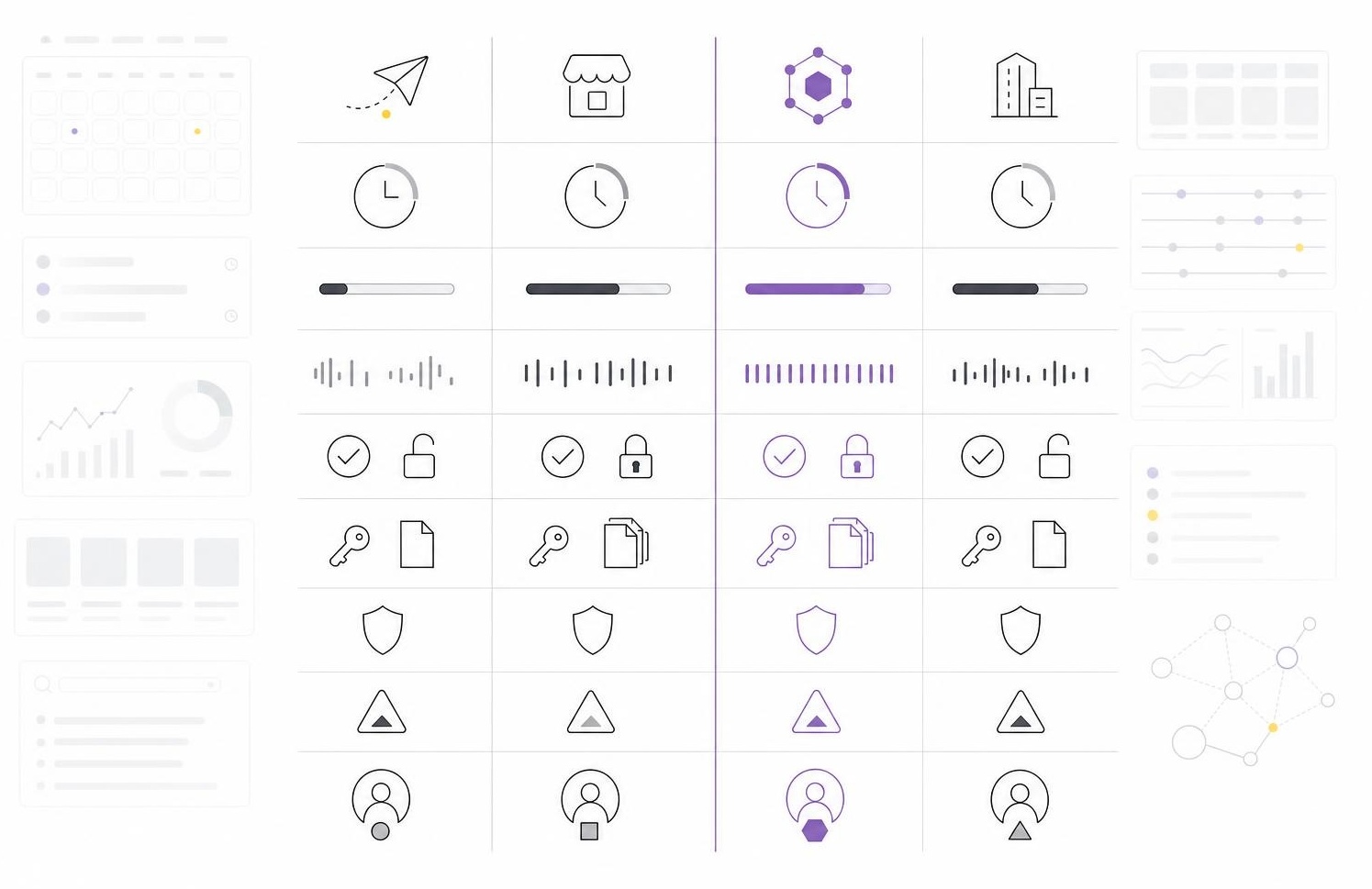
Four Paths to Publishing: DIY vs Agency vs Generic AI Tools vs a Governed Visibility System
Most expertise-led businesses end up choosing one of four paths. Each path pays in time, money, quality, or trust.
1) DIY (manual writing + manual publishing)
Gain: Maximum voice accuracy and direct control.
Risk: Content disappears when delivery spikes.
What breaks at scale: Consistency and energy. Willpower is not a system, so visibility becomes seasonal—strong when time is available, silent when the business is busy.
2) Agency-led content (outsourced strategy + execution)
Gain: Production discipline, editorial structure, and leverage.
Risk: “Polished emptiness” if the agency can’t capture real expertise.
What breaks at scale: Speed and accountability. The business still has to approve, rewrites stack up, and costs climb fast when the message is nuanced or evolving.
3) Generic AI tools (prompt-to-post with minimal governance)
Gain: Speed and low cost.
Risk: Voice drift, shallow claims, accidental overpromising, and “everyone sounds the same.”
What breaks at scale: Trust. Posting more doesn’t help if the content reads like filler, contradicts the offer, or makes claims the brand can’t defend on a sales call.
4) A governed visibility system (AI-assisted + structured approvals + owned assets)
Gain: Output and standards.
Risk: Requires process—no “set it and forget it.”
What breaks at scale: Usually nothing fundamental, if governance is real. This category wins because it treats publishing like operations: clear approvals, constraints, and ownership.
The modern decision isn’t “AI vs human.” It’s ungoverned vs governed publishing.
The Decision Framework: A Simple Scorecard for Control, Credibility, and Risk
Use this scorecard in minutes. If an answer is vague, treat it as a “no.”
1) Control: Can the business prevent mistakes before they go public?
Minimum questions:
- Who approves each asset (named role, not “someone”)?
- Is there a mandatory review step before publishing?
- Can edits happen same day if something is off?
- Is publishing reversible (unpublish/replace) without a fire drill?
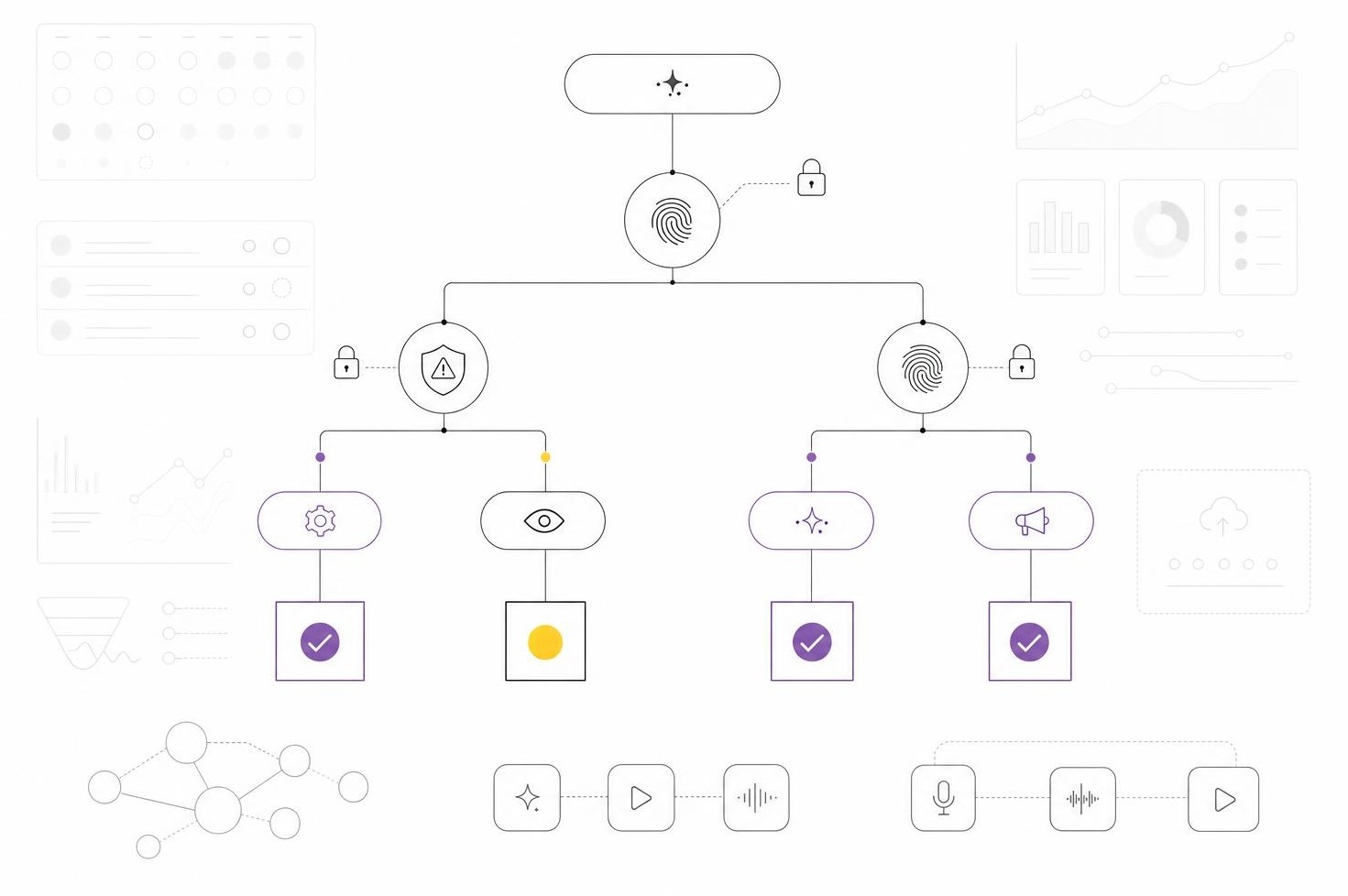
- Is there a clear queue (draft → review → approved → scheduled → published), or is it just “generated and sent”?
If a system publishes first and hopes someone notices later, the brand is gambling with screenshots.
2) Credibility: Can it capture real expertise—not just topics?
Credibility is not grammar. It’s whether the content carries the brand’s fingerprints:
- Clear point of view (what the brand believes and rejects)
- Practical frameworks and decision rules
- Specific examples, constraints, and trade-offs
- Offer boundaries (who it’s for, who it isn’t)
- Responsible claims (no accidental guarantees)
A common failure mode: content that is “true” but useless. The internet has infinite correct advice. Authority comes from specificity, consistency, and defensible claims.
What Most People Get Wrong
Most teams treat AI publishing like a writing decision. It isn’t. It’s an operating decision.
The better question isn’t “Can this tool make content?” It’s: “Can this process protect the public version of the brand when nobody has extra time?”
Because the cost of a bad post isn’t just a cringe moment. It can become:
- A confused prospect who now doubts the offer
- A sales team (or founder) spending calls clarifying, backpedaling, or qualifying harder
- A mismatch between what content promises and what delivery actually does
- A reputation hit that lingers longer than the post itself
The opposite failure is also real: clinging to manual control so tightly that nothing ships. Perfect unpublished expertise builds nothing. The goal is speed with standards.
3) Risk: What’s the blast radius if something wrong gets published?
Pressure-test risk with questions like:
- Would a wrong claim create legal exposure or compliance issues?
- Would it damage client trust, partnerships, or investor confidence?
- Could it reveal confidential information or proprietary methods?
- Would it create a public promise the business must now honor?
High risk doesn’t mean “never use AI.” It means “never publish without governance.”
4) Sustainability: Will it run during launches and chaos?
Sustainability is where good intentions die. Ask:
- Can this run with a small weekly review window?
- Does it still work when the calendar gets messy?
- Is the workload stable—or does it balloon during busy seasons?
For trust-first brands, these are non-negotiable checkpoints to demand from any approach:
- Time commitment: just a few minutes each week to review and approve.
- Ownership: everything generated—blogs, posts, and videos—belongs to the business.
- Data/asset control: the brand, content, and data always remain the business’s.
Inkflare is an example of a governed visibility approach that aligns to those requirements: faster output, but with approval, ownership, and data boundaries treated as core infrastructure.
Interpretation rule: if Risk is high and Control is low, do not allow auto-publishing. Not “be careful.” Just no.
Risk Triggers + Governance Requirements When Auto-Post Becomes a Liability
Auto-posting becomes a liability when precision, privacy, and reputation matter more than volume. Common risk triggers include:
- Regulated claims (health, finance, legal, insurance, medical/wellness)
- Income/ROI promises, “guaranteed results,” or transformation claims
- Sensitive brand positioning (premium offers where trust is the product)
- Investor communications, partnership announcements, PR moments
- Client confidentiality, case studies, or identifiable details
- IP-sensitive methods, proprietary frameworks, litigation-prone industries
Governance isn’t corporate theater. It’s the plumbing that prevents “oops” moments from becoming permanent brand damage. A trustworthy system includes:
- Human approval by default (exceptions are deliberate, not accidental)
- A source of truth (approved offers, positioning, bios, claim boundaries)
- Ownership clarity (assets remain the business’s)
- Data boundaries (what’s stored, trained on, and shared)
- Version history + audit trail (what changed, when, and why)
- Brand voice constraints (do/don’t list, examples, banned phrases)
- An escalation path for unsafe, sensitive, or unusually specific content
The non-obvious cost isn’t “bad writing.” It’s credibility debt: vague posts, soft contradictions, and same-sounding output that slowly makes a sharp brand feel average. Trust compounds slowly and breaks instantly.
Do It Now / Later / Never: The Final Call and the Minimum Safe Setup
Do it now if risk is low-to-medium, there’s a real review step, ownership/data boundaries are strict, and consistency is the bottleneck. This fits time-strapped authority builders who need output without sacrificing standards.
Do it later if positioning is evolving or the quality bar is extreme. Use AI for drafts, outlines, repurposing, and scheduling, but keep publishing behind an approval gate until governance and the source of truth are locked.
Never allow direct public auto-posting if regulatory exposure is high, approval capacity is zero, or reputational tolerance is low. AI can still support internal drafts and research, but publishing needs judgment.
Minimum safe setup: a protected weekly review window, approval before publish, explicit ownership of every asset, and one maintained source of truth for positioning, offers, and claim boundaries.
If a system can create more content but can’t protect the public version of the brand, it’s not saving time—it’s moving risk into a louder room.