Turn One Expertise Into a Coherent Body of Work That Compounds
A coherent body of work is a simple promise repeated with intelligent variation, across formats, over time. It is how an expert becomes easy to remember, easy to recommend, and increasingly hard to ignore, even without posting every day.
This is a tactical playbook built as five steps, moving from a single reputation sentence to a connected set of themes, questions, assets, and continuity rules. The goal is not “more content.” The goal is visibility that stacks, because every new piece makes the older pieces more valuable, and because a coherent signal travels further across search, social, and AI-driven discovery.
Coherence is how authority becomes legible to systems
Coherence is the difference between being “active” and being understood. Plenty of smart people publish often, and still feel invisible, because their ideas arrive like unrelated postcards. Each post might be good, but the collection does not add up to a clear reputation.
Modern discovery does not reward randomness. Search engines, social algorithms, and AI-driven summaries are pattern matchers. They look for repeated signals, consistent concepts, and stable language. When a body of work is coherent, these systems can confidently categorize it, surface it, and connect it to the right questions.
For a coach, founder, consultant, or course creator, this shows up in the only metric that matters, trust. Prospects rarely convert from a single post. They convert after a trail of proof that feels consistent, not accidental. Coherence turns that trail into a story that makes sense, where each touchpoint reinforces the same positioning instead of restarting the introduction.
Step 1 Write the one sentence you want to be known for
A “known-for sentence” is a one-line reputation target that sets boundaries. It clarifies what the work is about, who it is for, and what problem it consistently solves. Without it, content planning becomes a mood board, driven by what feels urgent that week.
A strong known-for sentence is specific enough to exclude distractions, but broad enough to sustain dozens of pieces. It should also sound like something a client would repeat to a friend. If it cannot be repeated easily, it will not travel.
Use this structure: Help (who) achieve (outcome) by (unique mechanism) without (common pain). For example, “Help early-stage SaaS founders earn durable organic demand by building an interlinked visibility system without living on social media.” That sentence is not a tagline, it is a filter. If an idea does not reinforce it, the idea is a distraction.
This is also where the “content factory” trap gets avoided. The point is not to stretch expertise into noise. The point is to aim expertise like a spotlight.
Step 2 Choose three themes that can hold a year of thinking
Three themes create a container that keeps output varied, while staying unmistakably on-brand. One theme is too narrow and becomes repetitive. Five themes invite drift. Three is the balance point for coherence with breathing room.
Each theme should represent a pillar of the known-for sentence, not a trendy topic. Think of themes as the chapters in the market’s mental model of what this expertise covers. A clean test is this: if someone only saw the three themes, would they accurately predict what outcomes are delivered, and for whom?
Here is the contrarian part most content advice skips: “variety” is often a disguised form of fear. Fear of being boring. Fear of repeating a point. Fear of looking like a broken record. But authority is built on strategic repetition. When an expert refuses to repeat the core ideas, the market never learns them, and the systems never index them as a reliable pattern. Consistency is not frequency, it is semantic stability.
Themes work best when they are different “angles of certainty.” One can be diagnostic (why visibility breaks), one can be strategic (how positioning becomes a system), and one can be operational (how execution becomes repeatable). Together, they create a complete worldview that can handle different situations without changing the fundamental message.
Inkflare’s approach fits neatly into this because it is built around compounding signals, not isolated posts. The more the themes stay stable, the more every asset can interlink naturally, and the more authority becomes unmistakable.
Step 3 Map four linked questions per theme
Linked questions are the hidden engine of coherence. They are not random FAQs, they are sequenced questions that a real prospect asks as belief builds. Each answer should make the next question feel inevitable.
For each theme, map four questions that move from surface curiosity to decision-level clarity. Start with the symptom, then the cause, then the method, then the proof or next step. This creates a narrative arc that feels human, because it mirrors how trust actually forms.
A useful way to pressure-test the questions is to imagine a skeptical, busy reader. If question three assumes a belief that question one never earned, the sequence will feel like a leap. Coherence is rarely about better writing, it is usually about better ordering.
One more strategic edge: design the questions so each one “earns” a different kind of trust. One can earn attention (“this names the problem”), the next earns competence (“this explains why”), the next earns leadership (“this offers a method”), and the last earns safety (“this proves it holds up in reality”). That mix keeps the work from sounding like endless tips, and starts sounding like an actual point of view.
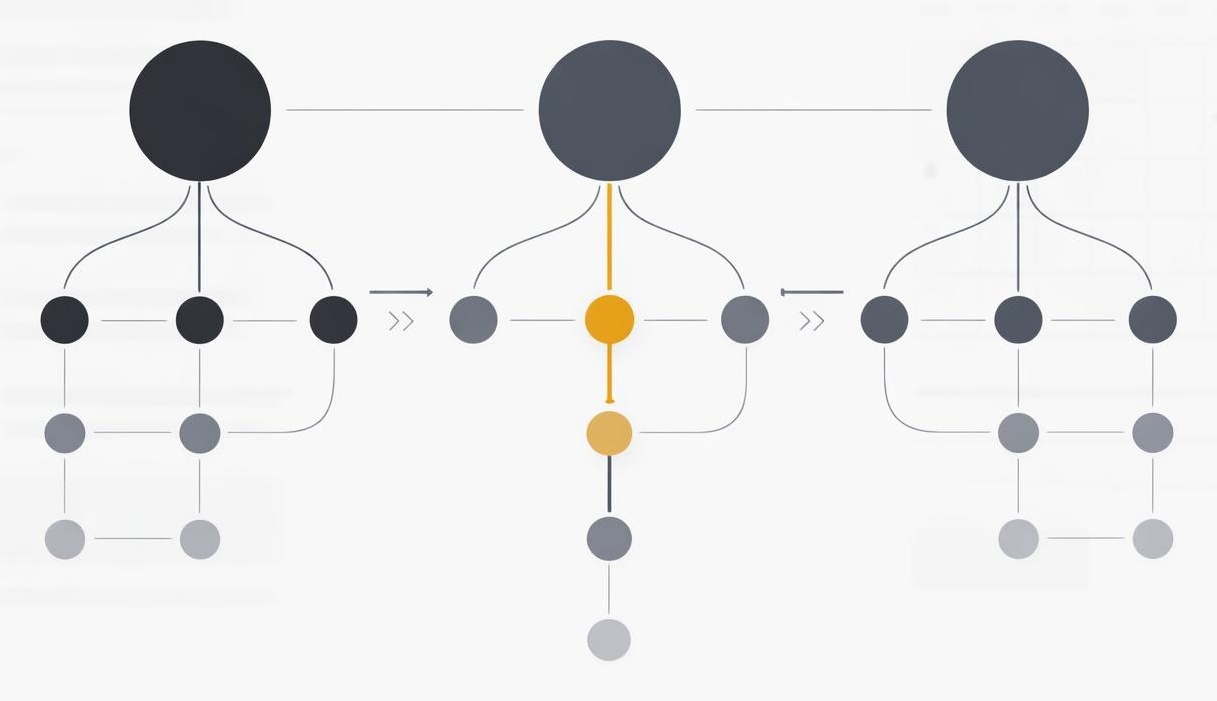
Once the twelve questions exist (three themes times four questions), the content plan stops being a blank page. There is always a next asset, and it is connected to the one before it. That connection is what makes the body of work feel intentional instead of performative.
Step 4 Turn each answer into connected assets that point to each other
A connected asset set is one idea expressed across formats, with each format doing a different job. This is how output scales without inventing new ideas every time.
For each linked question, build a small chain: a core post that carries the full argument, a short video that delivers the sharp takeaway and stakes, a blog expansion or supporting article that adds nuance or an example, and a visual that compresses the logic into something instantly scannable.
This is where conventional advice quietly wastes experts, “Just repurpose everything everywhere.” That sounds efficient, but it often creates copies, not coherence. The better move is sequencing. A video should create urgency and curiosity, not attempt to include the entire idea. The core post should do the heavy lifting, making the logic undeniable. The supporting blog should deepen one slice (an example, a counterargument, a case-like scenario). The visual should make the idea stick in memory.
A concrete example makes the difference clear. Take one linked question like, “Why does consistent posting still not lead to leads?” The core post can explain the hidden cause (incoherent positioning), the video can hit the nerve (posting isn’t a strategy), the support piece can show how coherence changes conversion trails, and the visual can map the chain from “known-for sentence” to “themes” to “linked questions.” Same idea, different roles, one direction.
The operational win is that this is not four separate creative acts, it is one act of thinking with four expressions. That distinction matters when time is scarce. It also makes the system self-correcting, because each format forces clarity in a different way. If the visual cannot be made simple, the argument is probably muddy. If the video cannot land in 60 seconds, the takeaway is probably vague. If the core post cannot hold attention, the stakes are probably missing.
This is also where Inkflare becomes more than a philosophy. Inkflare is built to turn that single act of thinking into continuous, connected visibility across platforms, without relying on scattered, off-brand bursts. The goal is a self-reinforcing content ecosystem, where one strong idea gets published, translated, and linked in ways that compound.

The quiet advantage is compounding distribution. One format rarely reaches everyone. Multiple formats, consistently linked, create more surfaces where discovery can happen, and more internal pathways that keep attention from leaking away.
Step 5 Use continuity rules so search and AI can recognize you
Continuity rules are the small constraints that keep a body of work consistent across weeks, formats, and platforms. Without them, even high-quality content can feel scattered, because the language, framing, and internal connections change every time.
Start with naming continuity. Use the same words for the same concepts, especially the core mechanism in the known-for sentence. If the concept is “interlinked visibility,” do not rename it five different ways across posts. Variety feels creative, but consistency is what makes meaning stick.
Then build structural continuity. Keep a familiar shape inside each theme, and point each asset somewhere logical. A post should naturally reference the next linked question, and a video should naturally point back to the core post, so the body of work becomes navigable instead of disposable.
Finally, keep proof continuity. Use the same standards of specificity each time, the same types of examples, and the same definitions for success. Continuity is not decoration, it is what turns “content” into a recognizable body of work.
Coherence is not a constraint on creativity. It is the thing that allows creativity to compound, because the market can finally tell what this expertise stands for. Pick the one sentence, choose the three themes, map the twelve linked questions, and let each asset support the next. When visibility becomes a connected body of work, disappearing between bursts stops being the default.