This is a decision guide for coaches, consultants, founders, course creators, and small teams with real range, real results, and real frustration, because the market keeps responding with some version of: “Cool… but what do you do?”
This is not for anyone trying to be a general lifestyle creator. Visibility compounds when the market can label you quickly, and trust you deeply.
The core warning is simple: when messaging tries to cover too much, the audience experiences it as unclear. Not because the work lacks quality, but because the brain can’t file it.
Versatility can make the market trust you less
Versatility is a power move in delivery, but it can be a liability in positioning.
A buyer’s first job is not to admire range, it’s to reduce risk. Risk gets reduced through pattern recognition. When someone lands on a profile, a site, or a blog, their brain is scanning for a stable promise: “This person solves this kind of problem for these kinds of people.” When the promise shifts every few posts, the audience doesn’t think “multi-talented.” They think “hard to place.”
This is where many experts get stuck in a painful loop. Content gets created in bursts, driven by whatever feels interesting that week. The output is high effort, but low recall. Conversations start with “So… what do you focus on?” instead of “Here’s the problem that’s been killing us, can you help?”
The hidden cost is emotional. Being unseen online doesn’t just slow growth, it quietly starts rewriting identity. The work is solid, the ideas are sharp, and yet the public signal stays fuzzy. The temptation is to post more, cover more, explain more. That usually makes the signal noisier.
The goal is not to become smaller. The goal is to become legible.
Breadth vs legibility is a trade, so choose the trade on purpose
Positioning is an exchange. Breadth buys flexibility, legibility buys speed.
Breadth means being able to speak to more problems, more markets, more angles. It can work when the audience already trusts you, when referrals carry context, or when a brand has enough reach that people will stick around to learn the “full picture.”
Legibility means being instantly understood. It wins when attention is thin, when buyers are scanning quickly, and when AI-driven discovery is part of the game. Search engines, social feeds, and AI summaries reward patterns. They learn what a brand is “about” through repetition and alignment. When topics are scattered, the system has less confidence in what to recommend.
Here’s what this looks like in the wild. Two consultants can both be brilliant. One says they do “strategy, operations, leadership, mindset, and AI.” The other says they “turn messy service businesses into predictable systems.” The first might be more capable, but the second is easier to refer, easier to remember, and easier to trust quickly. The market doesn’t pay for the full resume, it pays for the clearest promise.
A practical way to decide the trade is to ask one hard question: would a stranger be able to describe the work in one sentence without asking a follow-up question?
If the answer is no, breadth is currently costing too much.
For a deeper look at making multi-talent read as depth instead of randomness, this related guide belongs on the reading list: Make Your Expertise Legible at a Glance and Become the Obvious Choice.
The 2–4 theme rule keeps the brand coherent without feeling trapped
Most experts can sustainably own 2 to 4 core themes at once without breaking coherence.
One theme is clean, but it can feel claustrophobic for people with real range. Five to ten themes feels “authentic” internally, but externally it reads like channel surfing. The sweet spot is a small set of pillars that can carry a long runway of subtopics.
Think of it like a stage, not a cage. The pillars are what the audience comes to expect. The variety lives inside those pillars. A founder might choose “go-to-market,” “positioning,” and “systems.” A coach might choose “behavior change,” “identity,” and “execution.” A consultant might choose “strategy,” “operations,” and “leadership.”
When the themes are right, something surprising happens. Content starts to feel easier, not harder. Ideas stop competing with each other, and start stacking.
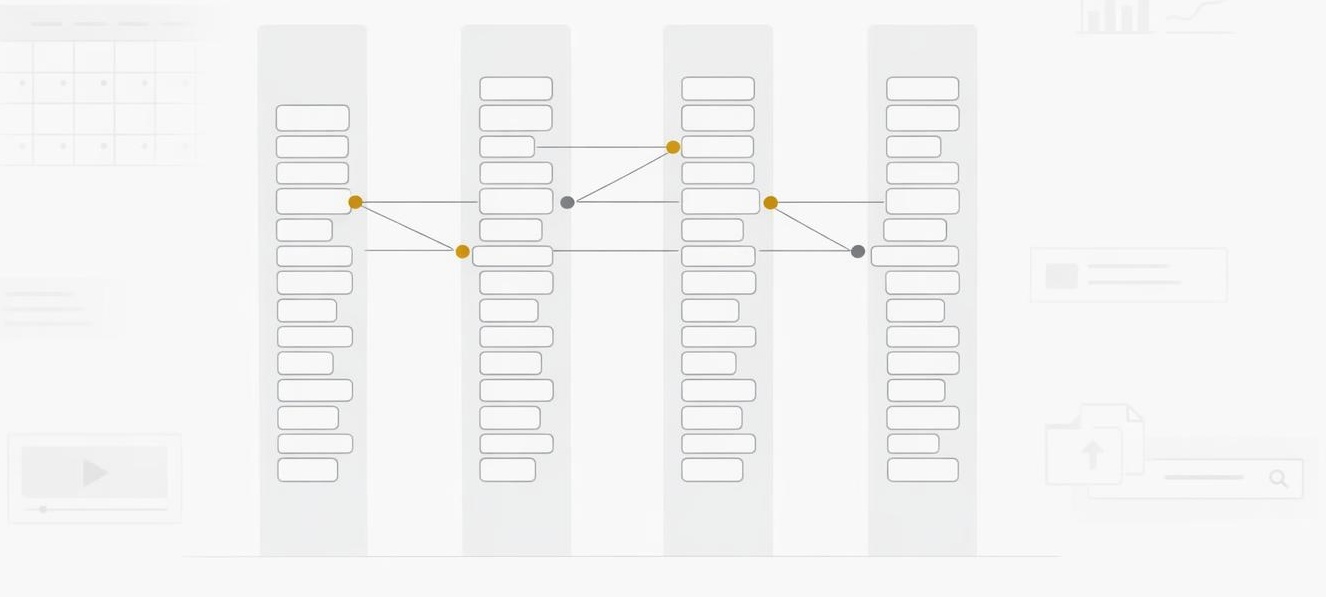
This is also where Jungian brand energy becomes useful, not fluffy. A strong “known-for” lane tends to express a dominant archetype clearly, supported by a secondary archetype, with a shadow that needs boundaries. For Inkflare, the dominant energy is Sage (clear thinking, frameworks, truth-telling, signal over noise), supported by Outlaw (challenging outdated marketing playbooks, rejecting generic content farms, pushing for a smarter future). The shadow to watch is Shapeshifter, because when versatility becomes constant reinvention, the audience feels whiplash.
The reader’s version of this is the same: keep the personality, keep the edge, keep the range, but stop changing the label.
A scoring rubric to pick your themes (and cut the rest without regret)
A good “known-for” lane is chosen, not discovered, and a rubric keeps the decision honest.
The easiest mistake is choosing themes based on what feels interesting. Interest matters, but it’s not the whole game. The other easy mistake is choosing based only on what sells right now, then burning out and resenting the content.
Use a simple 1–5 score for each potential theme, then add the scores. Anything that can’t compete with the top 2–4 becomes a supporting angle, not a pillar.
Here are the four criteria that tend to create a lane that lasts:
- Proof: Is there repeatable, specific evidence of results here (wins, outcomes, transformations), not just opinions?
- Pull: Do people already ask about this, search for it, or DM about it, even if the theme hasn’t been consistent?
- Power: Does this theme connect to revenue or high-stakes decisions, or is it mostly “nice to know”?
- Energy: Could this be talked about weekly without feeling like performing a character?
A quick example: “LinkedIn growth hacks” might score high on pull (people ask), but lower on proof (results vary) and lower on energy (it gets old fast). “Positioning for expertise-led businesses” often scores high on proof and power, because it’s tied to pricing, referrals, and conversion, and it tends to generate endless real-world scenarios without turning into performance. That doesn’t mean hacks can’t show up. It means hacks belong under a pillar, not as the pillar.
A theme that scores high on energy but low on power can still matter, it just may belong as a flavor inside the pillars, not a pillar itself. A theme that scores high on power but low on energy is a warning sign. That road often leads to content consistency that looks good on the calendar and feels awful in real life.
After the top themes are chosen, the cut list needs a reframe. The themes that didn’t make it are not “lost.” They become case studies and examples that reinforce the pillars, occasional contrarian takes that keep the brand human, and bonus content that appears after trust is established.
Nothing gets erased. It just gets organized.
Coherence is not repetition, it’s compounding trust
Coherence means the audience can predict the category, not the script.
A common fear shows up right here: “Won’t this make the content repetitive?” That fear is valid, because nobody wants to sound like a broken record. But repetition is only a problem when it’s shallow. Coherence is what happens when the same core idea gets expressed through different situations, different objections, different examples, and different depths.
This is where the rubric and the 2–4 theme rule pay off in a practical way. Once the highest-scoring themes are chosen, every week has a clear answer to “what should be posted?” without forcing the same post in different words. A single pillar like “positioning” can show up as a teardown of a confusing homepage, a story about why referrals dried up, a breakdown of pricing resistance, or a simple one-sentence brand promise exercise. Same lane, different angles, real variety.
The market doesn’t punish coherence. It rewards it.
People remember patterns. They share patterns. They buy from patterns. The expert who keeps changing the message might feel fresh internally, but externally they keep resetting the relationship. The expert who holds a lane starts to feel inevitable.
This is also where execution breaks down for busy teams. Choosing the lane is step one. Sustaining it across platforms without burning out is step two, and it’s where most “good decisions” quietly die, not because the strategy was wrong, but because the calendar wins.
Inkflare exists for that second step. When the themes are clear, Inkflare can help turn them into continuous visibility across blogs, social posts, search, and AI discovery surfaces, without relying on random posting or last-minute inspiration. The point is not more content. The point is an interlinked ecosystem that keeps reinforcing what the brand is known for, so the market (and the machines that surface recommendations) get consistent signals they can trust.
The decision framework is simple: pick 2–4 themes your audience can remember, score them honestly, and let everything else serve those pillars.
A useful next step is writing one sentence that a stranger could repeat after a 10-second glance, then holding that sentence steady long enough for the market to catch up.