The real problem isn’t lack of expertise, it’s online invisibility
The hardest part about being a serious expert is that expertise does not automatically translate into being seen. A coach can deliver real client breakthroughs, a founder can build a product that solves an urgent problem, a course creator can teach a topic with uncommon clarity, and still get overlooked online. Not because the work is weak, but because the work is not discoverable.
“Visibility” is often treated like a personality contest or a scoreboard of followers. That framing misses the point. Real visibility is practical: the right people can find the right ideas, quickly understand what the brand stands for, and trust that the expertise is credible. That kind of clarity produces outcomes that matter, inbound conversations, warmer leads, higher trust, and more resilient growth.
Invisibility creates a quiet tax. It pushes great businesses toward expensive shortcuts (ads that stop working when spending stops) or slow, unpredictable channels (referrals only, networking only). It also creates a nagging sense of falling behind, because everyone else seems to be “showing up” while the calendar is already full. The issue is rarely motivation. The issue is that content has been positioned as endless manual labor, instead of a system.
Why smart experts still disappear online (and why “post more” fails)
Most advice about content boils down to “be consistent,” then quietly ignores the reality of running a business. Consistency is not a character trait, it is a capacity problem. When content depends on spare time, spare time becomes the strategy, and the strategy collapses the moment client work, product work, or life gets busy.
The next trap is fragmentation. Each platform asks for a different format, a different cadence, and a different set of creative decisions. Writing a blog, trimming it into social posts, turning it into a video script, remembering to link related ideas, and then repeating that process weekly is not “simple repurposing.” It is a second job, and the cognitive load alone is enough to make even capable teams stall.
Then there is the temptation of generic AI content. It promises speed, but it often produces copy that sounds like everyone, says little, and builds nothing. Search engines and AI discovery systems learn patterns. When content is vague, repetitive, or disconnected from a coherent point of view, it becomes harder to rank, harder to cite, and harder to trust. Volume can actually dilute authority when every post feels like it could have come from any brand.
The deepest reason “post more” fails is strategic. Random content does not create authority. Authority comes from coverage and connection, covering a topic in a structured way and linking ideas together so both humans and machines can understand the brand’s expertise. Without that interlinked structure, content behaves like single-use posts, a short spike of attention, then silence.
The better model, a strategic content ecosystem that compounds authority
A better approach treats content as an ecosystem, not a queue of posts. An ecosystem is a set of connected assets that reinforce one another: a few core themes the brand owns, supporting pieces that answer specific questions, and channel-specific formats that point back to the same expertise. Instead of “What should be posted today,” the operating question becomes “What should the internet learn about this brand over the next 90 days?”
This model compounds because it builds recognizable depth. Search engines look for signals that a site consistently addresses a topic with clarity. AI-driven discovery surfaces look for language that is specific, attributable, and repeatedly supported across related content. Humans look for coherence, when the blog, social posts, and long-form explanations all feel like they come from the same mind, with the same standards.
A strategic ecosystem also solves a trust problem that most content strategies ignore. Prospects rarely convert after one post. They convert after multiple touchpoints that confirm the same thing: the brand understands the problem, explains it without fluff, and has a point of view worth following. An ecosystem creates those touchpoints by design, so discoverability does not rely on a single viral moment or a single high-ranking page.

Inkflare is built around this ecosystem logic. It is not a “post generator” and it is not a random scheduling tool. Inkflare focuses on interlinked, authentic content that reinforces expertise across channels, so visibility grows because the strategy is sound, not because the brand is chasing attention.
How Inkflare makes visibility feel simple, the 10-minutes-a-week loop
Sustainable visibility requires a rhythm that can survive a busy week. Inkflare’s operating promise is straightforward: keep the account owner in control of voice and quality, while automating the heavy lifting that normally breaks consistency.
The loop starts with learning the brand voice, how the brand explains ideas, what it avoids, what it emphasizes, and how it wants to sound across formats. That matters because “authentic” is not a vibe. Authentic is consistency of language, perspective, and standards, even when output scales.
From there, Inkflare turns a clear strategy into execution across channels. Content is created in multiple formats (blog, social, video, podcast-ready scripting where relevant), with each piece designed for the platform it lives on. The work is not treated as isolated deliverables. It is planned to connect, so a blog can support SEO, social posts can drive discovery, and the overall body of work can build topical authority that AI systems can recognize.
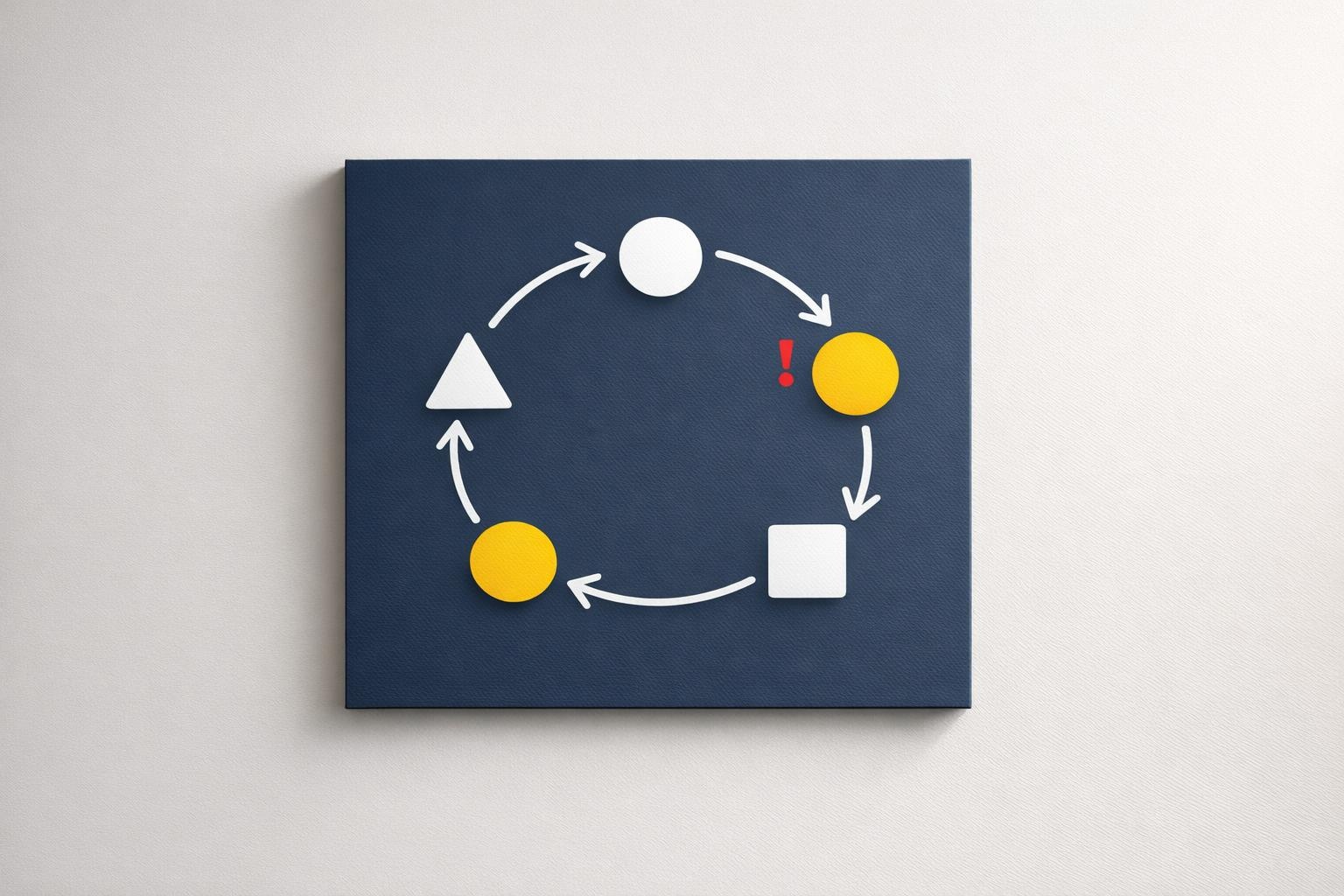
The weekly commitment is intentionally small. Instead of spending hours drafting, formatting, and scheduling, the account owner reviews and approves what Inkflare has prepared, typically in about 10 minutes. That keeps the brand’s standards intact while removing the constant pressure to create from scratch. The result is content that ships consistently without turning marketing into an all-consuming project.
What durable, organic visibility replaces (ads dependency, agency drag, content chaos)
When visibility becomes a system, the business stops negotiating with volatility. Paid ads can be useful, but they are not a foundation. Costs rise, performance swings, and growth becomes dependent on continual spending. A content ecosystem built for organic discovery creates a different kind of asset, one that keeps working even when attention is elsewhere.
This also changes the agency equation. Agencies can produce good work, but many teams end up paying for process overhead, meetings, revisions, and deliverables that do not connect into a coherent strategy. The brand gets output, but not compounding. Inkflare is designed for the gap most experts actually live in: no dedicated marketing staff, limited time, and a need for consistent authority building without a bloated workflow.
Most importantly, it replaces content chaos with clarity. Instead of juggling a dozen disconnected tactics, the brand builds durable discoverability across the places prospects actually look: search results, social feeds, and AI-driven answers. The payoff is not vanity metrics. The payoff is trust that grows with every connected piece published.
The choice is simple. Keep treating visibility like a recurring emergency, or adopt a system that makes expertise easier to find, easier to trust, and easier to scale. Inkflare exists for the second path.