Build a Garden, Not a Billboard: What Organic Marketing Really Means
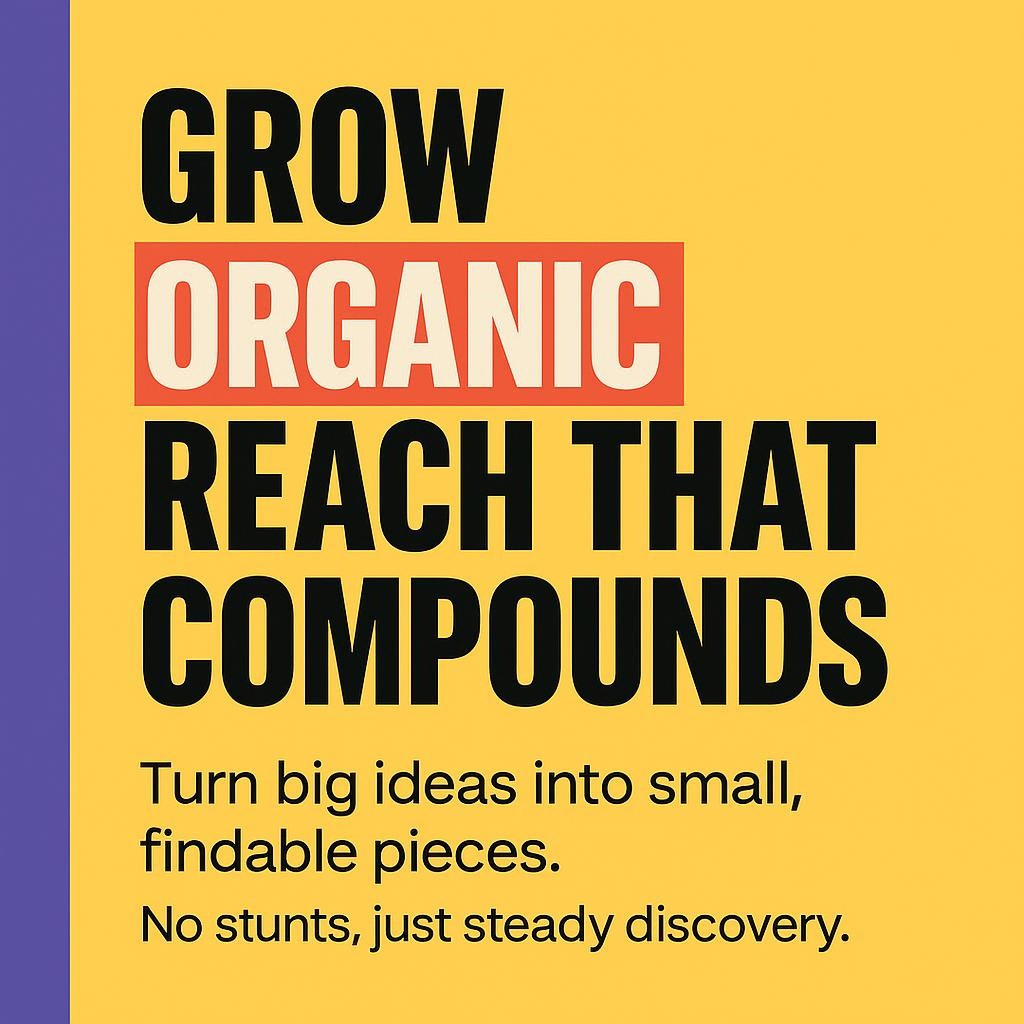
Most creators are paying rent on attention when they could be building equity. That single shift changes everything. A rented burst of clicks is loud, then gone. A body of work is quiet, then steady, then strong. One shouts from a billboard. The other feeds people you care about.
At Inkflare, we felt the sting when a book that took two years to write got twelve days of attention, then fell into the feed. That pain shaped our promise. We help your knowledge work for years, not days. No stunts. No dance trends. Just useful ideas, packaged into small, findable pieces that keep showing up when people need them.
"Ads are rent, organic builds equity." Rent has a place. You do not own it, and it stops the moment you stop paying. Equity grows slowly, then suddenly, and it belongs to you.
Why Organic Marketing Wins Over Time
Organic is not a tactic. It is a way of building. Each piece is a seed. Some sprout next week. Some in six months. Together they form a living library that helps the right person at the right time.
What this gives you:
- Staying power, not launch spikes.
- A familiar voice that people trust.
- A system that works while you rest.
The goal is simple. Become the person who gently shows up in the moments that matter. Your work leaves the launch calendar and enters people’s real lives.
A Quiet Story With A Big Shift
A coach we admire launched a program on burnout recovery. She ran eight days of ads. The spike was real. So was the crash. When she turned the ads off, the attention vanished, and so did her energy.
She chose a new path. Each chapter became small, useful pieces people could find any time. One post on the difference between tired and depleted. A two minute video on Sunday anxiety and the nervous system. A one page guide for her signature exercise. None of it went viral. All of it was findable.
Three months later, search queries brought a steady trickle. People typed real questions like “why am I so tired on Sunday afternoon” and found helpful answers. Trust grew. When she opened enrollment again, there was no panic. There was ground under her. That is the feeling we work for.
The Transformation You Can Own
Paid marketing buys speed. Organic builds staying power. The transformation is this: from chasing attention to being remembered for your help.
Organic marketing in practice:
- Package your wisdom into small, search friendly pieces that answer one clear question.
- Publish on a calm cadence so your library grows and your voice becomes familiar.
- Connect your pieces with simple next steps so people can go deeper with you.
- Track leading signals like saves, search queries, watch time, replies.
This is quieter than trends, and kinder to your energy. Done well, your work keeps working when you log off.
The Metaphor That Makes It Click
Your knowledge is not one big thing to launch. It is a tree that feeds people across seasons. The trunk is your book, course, talk, or framework. The branches are chapters and modules. The leaves are short posts, clips, quotes, checklists, and clear answers to questions people actually type.
Once you see a tree, you stop pushing one heavy message through busy feeds. You start harvesting. You plant where people are already looking. Time, search, and saves do quiet work for you.
What Organic Marketing Really Means, Step By Step
Every piece of content has a job. Think of each one as a small worker that goes out to help the right person at the right moment.
1) Focus On One Idea
- Pick one real problem your reader has today.
- Promise one outcome they can feel or measure.
- Keep the language simple. Clarity beats clever every time.
Example:
- Problem: “I finished my book and have no audience.”
- Outcome: “Turn one chapter into two weeks of search friendly content.”
- Image: “Plant one seed a day. Let the garden do the compounding.”
2) Slice Your Big Idea Into Findable Pieces
Take one chapter or module. Carve it into a small cluster.
- Skimmable article that answers a question people actually Google. Use a clear title, a short intro, three steps, and a gentle next step.
- Two minute video that demonstrates one technique. Speak to one person, not a crowd.
- Carousel or thread that shows a before and after. Make each slide short and useful.
- One page checklist or worksheet. Make it printable and helpful without you present.
- Quote card that captures the one line you want them to remember.
This is not flooding the feed. It is surrounding a single topic so people can enter anywhere and keep going.
3) Make It Search Friendly Without Losing Your Voice
- Title like a librarian, not a poet. “How to outline a memoir you will actually finish” travels farther than metaphors.
- Use everyday terms in subheads and alt text. People search their language, not yours.
- Answer the question fast, then go deeper. Earn attention by solving the problem first.
4) Build Simple Pathways Between Pieces
Your aim is not to go viral. It is to be useful and easy to follow.
- Link the article to the checklist, the checklist to the short video, the video to a deeper guide or a call with you.
- Use one line bridges. “If this helped, grab the 1 page worksheet.” “Want help doing this live, workshop it with me here.”
5) Protect Your Energy With A Calm Cadence
Consistency beats intensity. Pick a rhythm you can keep without resentment.
- Choose one core discovery channel, like blogs or videos.
- Choose one connection channel, like a weekly email.
- Batch create. Write when you have energy, publish on a timer.
- Let rest be part of the system. Quality rises when you are not drained.
6) Track Signals That Predict Momentum
Likes are noisy. Look for intent.
- Saves and bookmarks show people want to keep your work.
- Search queries and keyword lift show compounding discoverability.
- Watch time and scroll depth show engagement with the whole idea.
- Replies, DMs, and forwards show trust.
Watch the curve over quarters, not weekends.
The Hidden Costs Of Billboards
Buying reach can be helpful, but rented attention should not be the plan. Here is what it often costs:
- Your voice gets diluted to fit trends, not sharpened to fit your reader.
- Your calendar fills with launch cycles, not learning cycles.
- Your well of energy drains faster than it refills.
Most of all, you do not build assets that work while you rest. A billboard shouts, then fades. A garden feeds, then reseeds.
Turn One Chapter Into Eight Weeks Of Content
Imagine a chapter titled “Designing a Learning Habit You Can Keep.” You teach educators and course creators. Your aim is learning without burnout. Here is a calm plan you can run right now.
Week 1, Awareness
- Article: “Learning habits that stick for busy adults.” Three steps, 800 words.
- Clip: 90 seconds on consistency versus intensity.
- Carousel: “5 friction points that kill new habits and how to remove them.”
- Question: “What habit fell apart last time, and why.”
Week 2, Problem Solving
- Article: “Lower cognitive load so practice feels doable.”
- Worksheet: One page habit design template with triggers, micro steps, and a backup plan.
- Email: A short story about your own habit that failed, what you changed.
Week 3, Proof
- Case study: One client’s 30 day micro learning routine. Share process and result.
- Clip: A short reflection from the client, or your summary with permission.
Week 4, Deepening
- Article: “Use your environment to protect your attention.”
- Thread: “4 questions I ask when a habit stops working.”
- Invite: “Workshop this with me here.” Link to your cohort or office hours.
Repeat for the next chapter. Momentum will feel peaceful when your ideas travel in small, helpful packages.
What Makes Organic Work For Years
Three anchors hold the garden together.
- Repetition with variation. "You will feel bored before your audience feels familiar." Return to your core ideas often. Change the angle. Keep the heart.
- A library mindset. Organize by problem, not by date. Turn your archive into a tool.
- Patient compounding. Search remembers. Saves resurface. People share quietly. The curve is slow, then it bends.
Avoid These Common Organic Mistakes
- Vague titles that hide the promise. Name it clearly.
- Overstuffed posts that try to do five jobs. Give each piece a single job.
- No internal links or next steps. Help readers keep going.
- Inconsistent publishing that resets discoverability. Find a baseline you can keep.
- Measuring the wrong things. Track search, saves, watch time, replies.
If you spot any of these, do not scold yourself. Simplify. Shorten. Clarify the job. Plant the next seed.
A Simple Weekly Workflow You Can Steal
Use this when you sit down to create. It is simple on purpose.
- Choose one slice of your work that solves a real problem.
- Draft one skimmable article with a clear title and three steps.
- Pull out one quote and one checklist from the article.
- Record one two minute clip that shows the key step.
- Link them together and schedule across two weeks.
- Track saves, search terms, watch time. Note what resonates.
- Rest. Then repeat with the next slice.
Two hours a week, done steadily, builds a body of work that keeps working after you log off.
Rest Is Part Of The System
Creators often tie worth to output. That path leads to burnout and thin work. Rest is not a luxury. It is fuel. When your organic system runs, your message keeps moving while you are offline. You get time for the deep work only you can do. You show up generous, clear, and human.
How Inkflare Helps You Stay Visible Without Burnout
Inkflare exists to make this peaceful engine real. We help authors, course creators, coaches, and educators turn long form work into a steady stream of discoverable content, while protecting the voice you worked hard to build.
- We learn your tone so pieces sound like you.
- We map chapters and modules into reusable patterns so each new seed is fast to plant.
- We optimize for search and saves so your work is easy to find when it matters.
- We publish on a cadence that respects rest. Your best ideas need oxygen.
Think of us as the partner who keeps the light turned outward. While you write, teach, or coach, your library keeps welcoming new people in.
Short Answers To Questions Creators Ask
How often should I post?
As often as you can keep your energy clean and your voice clear. A steady baseline beats a burst. Protect the cadence you can keep.
What if my posts do not take off?
That is normal. Many seeds sprout later. Make each piece useful, link it to the next step, and let time and search do their work.
Do I need to be on every platform?
No. Choose one discovery channel and one connection channel. Grow your library there. Expand only when the system feels light.
The Lighthouse, Turned Outward
"A post written in Los Angeles can spark change in Nairobi, because knowledge has no borders." The internet can be noisy, yes, and it can also be honest. People look for help when they need it. If you build a living library, if you turn your lighthouse outward, your work will be there when they come.
Organic marketing is a long game that respects your craft and protects your energy. It levels the field so wisdom, not wealth, decides who gets seen. It is a choice to build equity in your ideas, to plant seeds that outlive the launch cycle, and to partner with a system, like Inkflare, that keeps your garden healthy while you rest.
You get to decide how you grow. If you are tired of paying rent on attention, plant one seed this week. One clear, useful piece that helps one real person. Then another next week. The ground will hold you. The garden will remember. And one day, you will look up and see your work feeding people you have not met yet.
What seed will you plant today?