Your Voice Outlasts Any Algorithm: A Love Letter to the Way You Tell the Story
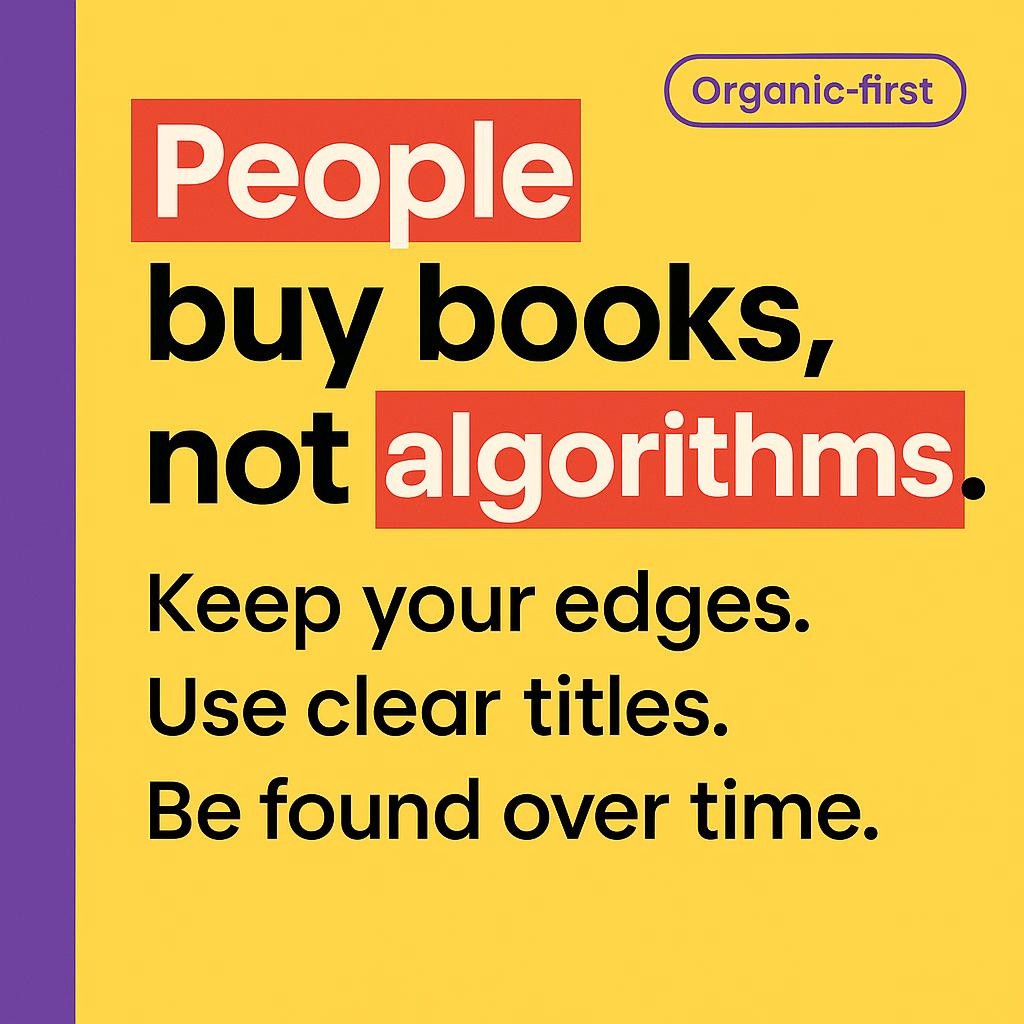
“Algorithms do not buy books, people do.”
One Tuesday afternoon, a coach we know posted two pieces. The first was a clean list of ten tips, tidy and safe. The second was a short memory about a client who cried during a career session, because the job that looked perfect on paper felt like a suit two sizes too small. Guess which one filled her inbox for a week. The tips post got polite likes. The story sparked replies, saves, shared DMs, new clients. It kept resurfacing for months, long after the algorithm moved on.
This is a love letter to the edges of your voice, the parts that do not fit a template. We write as the team behind Inkflare, partners to authors, coaches, course creators, educators, and thought leaders who want their work to outlive launch week. If you remember one idea, let it be this: the right reader recognizes you by your edges, not your polish. Preserve them.
Why Voice Outlasts The Feed
You do not control the feed. You do control your presence. Tactics expire, voice compounds. “Ads are rent, organic builds equity.” The post you pay to promote disappears when the budget ends, the piece that carries a true signature story keeps getting discovered, linked, and recommended.
Think of your work as a lighthouse. When your content points inward, it blinds you. When you turn it outward, shining on the problems your reader wrestles with at 2 a.m., it becomes a steady signal that draws people in, again and again, across seasons and platforms.
The Hidden Shift That Changes Everything
- You do not need to chase attention, you need to earn memory.
- People remember what moves them, not what pleases the algorithm.
- Voice, specificity, and service build long shelf life.
The Golden Nugget: Keep The Edges
The decision that changes everything is to keep the oddly specific, emotionally honest detail that only you can write. The date stamp on the hospital bracelet. The shaky voice during a first keynote. The moment you almost quit. These edges reveal the lived experience behind your expertise.
- Do not sand down the splinters that prove you were there.
- Do not trade specificity for scale. Scale follows specificity.
- Do not outsource your voice to trends. Trends can help you travel, they cannot make the map.
As one author told us, “I thought my readers wanted answers. Turns out they wanted a witness.” Keep the witness.
What Is A Signature Story, And Why It Works
A signature story is a true, portable narrative that carries your worldview. It shows your reader who you are, what you value, and how you help. It does not need to be dramatic. It needs to be honest and useful.
A strong signature story:
- Names a real moment, the scene your reader can see.
- Connects that moment to a lesson, one step they can use.
- Ends with a gentle invitation, a next move to try today.
Your signature stories become the spine of your presence. They make your teaching memorable and your guidance trustworthy.
Signature Story Mining: A Field Guide
Use these prompts to surface stories without sanding them down. Write one page for each.
- The Origin Moment: When did you first feel the problem you now solve? Who was there? What did the room smell like?
- The Near Quit: When did you think, “I am done”? What kept you going for one more day?
- The Unexpected Teacher: Who changed your mind, even a little? What did they say, word for word?
- The Visible Scar: What is a mistake you can name without flinching, and what did it teach your clients or readers?
- The Small Win That Changed The Curve: What tiny shift produced outsized results, and how can someone repeat it tonight?
- The Unpopular Truth: What do you believe that many in your field avoid saying? Where did that conviction come from?
- The First Reader: Who was the first person your idea helped, and what transformation did you witness?
Keep the sensory detail. Keep the original quotes. Name exactly what you learned. That is the edge.
Write For Search, Speak To A Person
Clarity is kindness to search, and it is not your enemy. You can title for discoverability and write for humanity at the same time. Use plain language in your titles, then let your story sing in the body.
- Lead with the topic and outcome, then add the hook in parentheses.
- Use the words your reader types, not jargon they skip.
- Place one keyword near the front of the title, then test variations.
Examples:
- How To Find Your Signature Story (A 15 Minute Field Guide)
- Content Repurposing For Authors (Turn One Chapter Into 12 Assets)
- Organic Marketing For Coaches (A Simple Weekly System That Compounds)
Keep your headlines honest. No bait, just a clear promise and a true delivery.
From One Chapter To Many Doors
Your book, course, or framework is a tree that can keep yielding. One chapter can become a month of content that welcomes people through different doors.
A Simple Repurposing Workflow
- Extract the core promise of the chapter, one sentence.
- Identify three moments, one origin, one near quit, one unexpected teacher.
- Write a teaching post that names the problem, dispels a myth, and offers one repeatable step.
- Write a story post that shows a real person going from stuck to progress, using your method.
- Turn one key idea into a one minute video, speak to the camera, one takeaway.
- Convert the idea into a carousel, headline plus one clear step per slide.
- Write a search friendly blog, plain language title, scannable subheads that match common queries.
- Send an email version with a personal intro and a gentle ask, reply with your stuck point and I will respond.
You are not repeating yourself. You are building doors to the same room.
Fast Drafting Tip
Record a voice memo telling the story to a friend. Transcribe, then trim. Keep the sentence that makes you feel something. That line is usually the spine.
Build A Living Library That Works While You Rest
Great content is a team of little workers that keep going after you log off. When you publish a clear, story-backed piece that answers a real question, it keeps attracting readers who are searching later. You are building a living library, not chasing a spike.
- Create pillar posts that answer core questions in your niche.
- Link related posts, so readers can walk a path.
- Add a simple next step to each piece, reply, download, watch, or book.
- Keep a cadence you can sustain, weekly is strong, biweekly is steady, monthly is better than bursts.
Rest is the fuel. The system should publish while you recover. You are not a content machine. You are a guide.
A Month Of Resonant Content: Week-by-Week Plan
Week 1, Story And Search
- Publish a signature story that names a specific turning point.
- Publish a companion blog that answers the search question tied to that story, for example, “how to choose a niche as a new coach.”
- Record a one minute video that highlights the insight and invites a comment.
Week 2, Teaching And Proof
- Publish a teaching post with one myth, one method, one move.
- Share a proof moment, a screenshot or quote from a reader who applied the method.
- Turn the method into a carousel, one action per slide.
Week 3, Conversation And Email
- Post a question that invites lived experience, what belief kept you stuck last year?
- Send an email letter that expands the story and invites replies.
- Publish a search friendly blog that gathers the best responses into patterns and advice.
Week 4, Refresh And Reach
- Refresh an older piece with a new intro and clearer subheads, repost with context.
- Record a short Q and A video answering the most common reply.
- Publish a resource page linking all pieces from the month, a mini library.
Repeat with a new chapter or module. Compounding starts here.
The Quiet Metrics That Matter
Vanity metrics shout. Quiet metrics build your body of work.
- Saves and bookmarks, your content is becoming a reference.
- Search queries, your language is aligned with what readers ask.
- Watch time, listeners are staying with you to the end.
- Replies and DMs, you are sparking conversation, not just commentary.
- Return visitors, your library is doing its job.
Look for compounding over quarters, not days.
When AI Helps, Keep Your Hands On The Wheel
AI can accelerate, it cannot author your story. Use it as a respectful assistant.
- Let AI outline, you write the lines that only you can write.
- Feed it your own stories, not generic prompts, so it learns your cadence.
- Ask it to simplify subheads, not flatten your voice.
- Give it the rough cut, keep the edges.
This is how Inkflare works with creators. We learn your voice, honor your edges, and turn your work into a living library that keeps showing up for the people who need it. We operate like a partner, not a noisy tool. We chase the algorithms so you can focus on impact. We deliver professional grade presence at a fraction of agency cost, so visibility never becomes a luxury purchase.
Three Small Stories With Big Reach
- The Author Who Almost Cut The ICU Scene: She thought the hospital detail was too raw. She kept it. Readers wrote, “I felt seen for the first time.” Her podcast invitations doubled within two months.
- The Educator With Chalk On Her Sleeve: She posted a photo from the last day in her classroom, chalk smudge on her black dress, and wrote about leaving to build curriculum for kids who learn out loud. That single post kept resurfacing every semester, bringing in district leaders and parents.
- The Coach And The Unpopular Truth: He said, “If your morning routine takes three hours, it is avoidance.” It was firm and kind. That line traveled. He booked out with clients who were tired of hacks and ready for change.
Each story had an edge. Each edge became a magnet.
The Inkflare Way: Presence That Protects Your Energy
You have already done the hardest part. You built the knowledge. Now it deserves to travel, sustainably.
- We amplify wisdom, sustainably. We help you convert chapters, modules, and frameworks into blogs, emails, carousels, and short videos that keep working while you rest.
- We keep you organic first, because equity beats rent. Your library grows, your presence compounds, your energy is protected.
- We preserve your voice, because the way you tell the story is the asset. Our system learns your cadence and keeps your edges intact.
- We design for discoverability, plain language titles, search friendly structure, clean subheads, real questions answered clearly.
Inkflare exists so creators do not have to choose between creating and being seen. Built by working authors who felt the sting of silence after launch, we asked a different question: what if the knowledge itself could do the marketing? The answer is a calm, consistent presence that respects your craft and honors your time.
Prompts You Can Use Today
Save this section. Return to it whenever you feel flat.
Story Prompts
- The sentence I was afraid to write, and why I wrote it anyway.
- The moment a student taught me my own lesson.
- The first time my method failed, what I changed the next day.
- The belief I inherited that I no longer carry.
Teaching Prompts
- One myth my clients bring, and one move that replaces it.
- The simple checklist I wish I had ten years ago.
- Three questions to ask before the next step.
- A five minute exercise that changes the next five days.
Search Friendly Prompts
- How to start [your niche] without [common fear].
- [Your method] explained in plain English.
- The best way to [desired outcome] when you only have 30 minutes.
- What to do when [specific stuck point] happens.
Distribution Prompts
- One sentence that invites reply, tell me the moment you almost quit.
- One resource round up, the three posts to read if you are starting here.
- One community question, what is one unlearning you are proud of this year?
FAQ: Simple Answers To Common Creator Questions
How often should I post?
Choose a cadence you can keep, weekly is strong, biweekly is steady, monthly is better than bursts. Consistency compounds.
What if I feel boring?
You are close to your own story, so it feels normal. Keep the sensory details. Readers experience it as new.
How long should my posts be?
Make the point, then stop. Short or long can work if it is clear, useful, and rooted in a moment that matters.
How do I know a story is ready?
Read it out loud. If you feel a catch in your voice, the line stays. If your eyes slide off a sentence, trim it.
Your Voice Is A Garden
Treat your work like a garden that produces beyond one harvest. Plant signature stories with clear titles, water them with teaching that is simple and generous, and let them grow into a library that feeds readers you will never meet in person. Some will find you through a search at midnight. Some will arrive because a friend sent them your story with a note, this is exactly what you needed.
When we say knowledge has no borders, we mean it. A post written in Los Angeles can help a reader in Nairobi by morning. The ripple begins when you keep the edges and tell the story like only you can.
Write the scar, not the bandage. Title clearly, not cleverly. Publish consistently, not constantly. Rest like it matters, because it does. Your voice will outlast any algorithm.
What story are you finally ready to tell, edges and all?