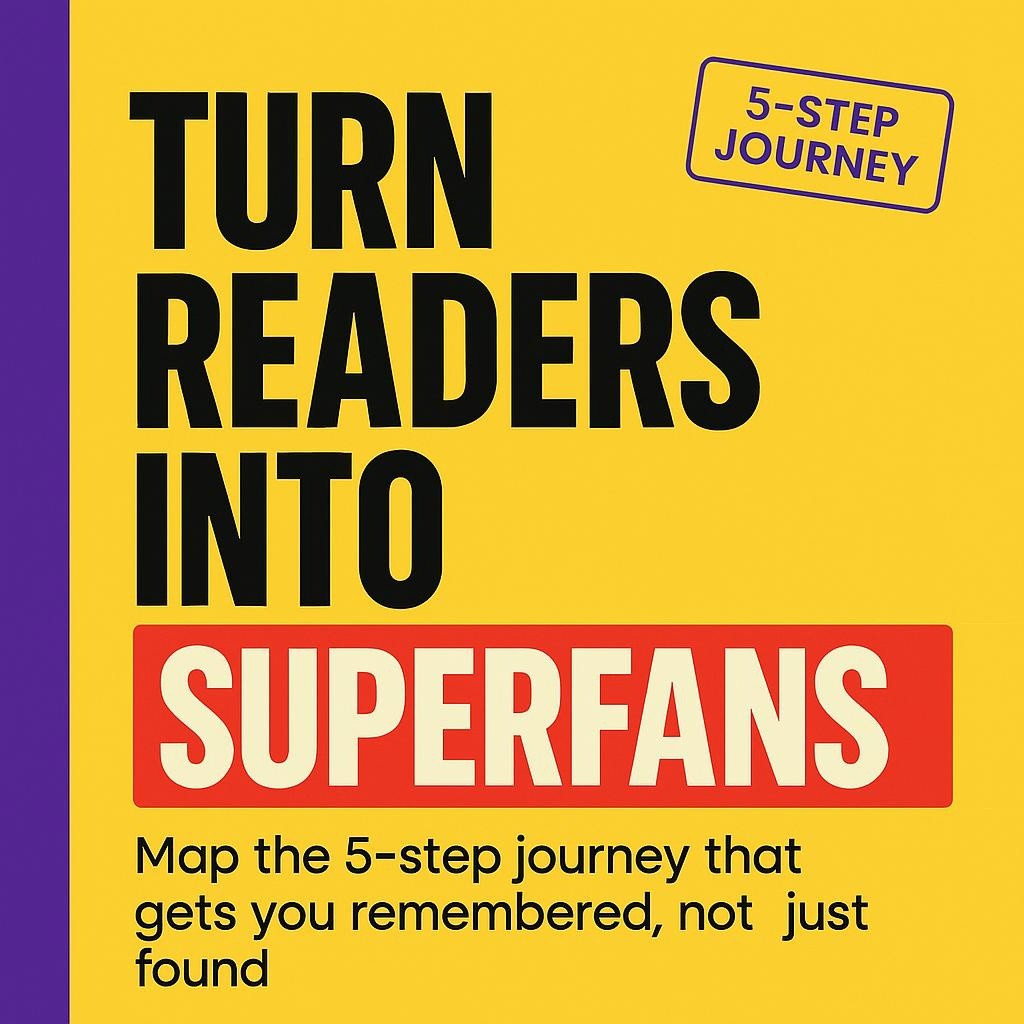
From Stranger to Superfan: Map the 5‑Step Journey That Turns Readers into Ambassadors
Bold truth first. Discovery is not the goal. Memory is. The internet can find you once, but the people you change will remember you often. If you want your book, course, or coaching to travel, you are not chasing eyeballs, you are building a path that turns a stranger into a superfan.
At Inkflare, we learned this the hard way. After finishing our own books, we saw the spike, then the silence. That sting forced a better question, what if the knowledge itself could do the marketing, quietly, consistently, even while we rested. We built the system we wished existed. It starts with a simple map of five stages every reader walks, Awareness, Engagement, Trust, Conversion, Advocacy.
This is not a growth hack. It is a humane workflow for authors, coaches, educators, and experts. It respects voice, honors rest, and lets growth feel like an extension of your craft. “Ads are rent, organic builds equity.” This guide shows how to build that equity, one stage at a time.
The 5 Stages Readers Actually Walk
- Awareness, I see you and I get your promise.
- Engagement, I stay because you kept your promise.
- Trust, I feel safe because you help before you ask.
- Conversion, I choose the next step because it fits my needs.
- Advocacy, I share your message because it helped me help someone else.
If you only begin with three pieces this week, start here:
- One question answer blog that solves a real problem in 700 to 1200 words.
- One reflective post that names the feeling behind the problem.
- One save worthy checklist that makes the solution portable.
Stage 1: Awareness, Be Easy to Notice and Easy to Understand
Awareness is not attention, it is orientation. A new reader should answer two questions in seconds, what do you help with, and for whom.
What to Publish
- Conversation starter posts, ask a simple, specific question your reader already asks.
- Skimmable blog intros, define the problem, name the stakes, preview the promise.
- Shareable snippets, quote cards and bite sized visuals that carry one clear idea.
How to Write It
- Clarity over poetry. Use concrete words that pass the five second test.
- One promise per piece. Choose one idea and land it.
- Title plainly. Your headline is a promise, not a puzzle.
Examples
- A coach publishes, “The 3 questions that tell you if your niche is too broad.” The first 60 words define the problem. The next 200 give the questions. The CTA invites a save.
- An author posts a quote card, “Confusion is not a niche, it is a tax you pay for unclear positioning,” with a one line caption and a link to a deeper blog.
Natural CTAs
- Save this if it helps.
- Share with a friend who is stuck on this decision.
- Read the full breakdown here.
Inkflare makes this stage simple. It pulls quotable lines from your chapters and turns a single idea into many small, useful posts. Think of each as a lantern that lights the way back to your main body of work.
Stage 2: Engagement, Earn the Linger
Engagement is earned by usefulness and rhythm. If Awareness says I see you, Engagement says I stayed because you kept your promise.
What to Publish
- Explainers and how tos that answer one specific question.
- Short problem to progress stories from your practice, name the before and after in three beats.
- Polls or short questions that seed conversation. You are not fishing for comments, you are listening for language.
How to Write It
- Skimmable structure. Use H2s, short paragraphs, and bullets so value is clear in 15 seconds.
- Evidence by example. Do not claim it works, show a tiny case, even a personal one.
- Open a loop. End with a next question your reader wants to explore.
Examples
- An educator breaks down, “How to turn one lesson into a month of posts,” then links to a full plan. If you want a deeper plan for authors in particular, read our companion guide, Repurpose One Chapter into 4 Weeks of Content for Authors at https://inkflare.ai/2025/09/10/repurpose-one-chapter-into-4-weeks-of-content-for-authors/.
- A thought leader posts a two minute read, “Why I stopped chasing algorithms and started chasing clarity,” with one practical change readers can try today.
Natural CTAs
- What part was most useful, I will expand it next week.
- Want the template, grab the checklist here.
- Add your version in the comments, we will feature a few.
Inkflare keeps your voice intact while cutting longform into snackable posts. Your message does not bend to trends, it becomes easier to engage with.
Stage 3: Trust, Prove Care, Not Just Concept
Trust comes from calibration. When you help consistently, name the hard thing with care, and ask for right sized commitments, people feel safe.
What to Publish
- Reflective posts that name the emotion under the problem.
- Open notes from your process, what you tried, what failed, and what you learned.
- Smart roundups with your lens, not as a gatekeeper, as a guide.
How to Write It
- Keep the spotlight on the reader’s progress. Your story is a bridge, not the destination.
- Use generous language. Offer agency, “Here are three ways to try this at your pace.”
- Offer a gentle next step. The step should be useful on its own.
Examples
- A coach writes, “I do not ship every week because I am a machine, I ship because I rest like it is part of the work.” Then shares a two line rest ritual and a download for light weeks.
- An author posts a behind the scenes note, “It took 28 drafts to write chapter seven,” plus a picture of the messy middle. The lesson is patience and a simple drafting checklist.
Natural CTAs
- If this helped you feel seen, save it for later.
- Reply with the part that hit home, I will meet you there in the next post.
- Here is a free chapter or lesson that expands this idea.
Inkflare automates a weekly cadence, so your voice shows up even when you are deep in client work. Consistency communicates care. Care is how trust compounds.
Stage 4: Conversion, Make the Next Step Feel Like Relief
Conversion is not a trap, it is a fit check. When the right reader arrives, your offer should feel like a breath out.
What to Publish
- Offer explainer pages that read like a conversation, what it is, who it is for, how to start.
- Case snapshots with outcomes and context, short and honest.
- Comparison guides that help readers choose, even if the best fit is not you.
How to Write It
- Lead with outcomes, not features.
- Do the math for them, time saved, mistakes avoided, momentum gained.
- Remove risk, include a simple guarantee or try first step.
Examples
- A course creator publishes “Is this for you,” with three green flags, three red flags, and what to do in each case.
- An author offers a book plus workbook bundle and shows a one week sample plan for using it.
Natural CTAs
- Start the trial, then reply with your goal for the week.
- Book a 15 minute fit check, no slides, just your questions.
- Read the quick start, then choose your path.
Inkflare turns your book or curriculum into a living library that keeps enrolling, teaching, and inviting, without a hard sell. It delivers professional grade presence at roughly one fiftieth the agency price, so budget stops deciding who gets seen.
Stage 5: Advocacy, Equip People to Carry Your Message
Advocacy begins when people feel proud to share your work because it helped them help someone else. Do not ask for favors. Give them tools.
What to Publish
- Share packs, a folder with quote cards, a one page summary, and a short video script people can adapt.
- User features, spotlight a reader’s application and let them tell the story.
- Community rituals, monthly Q&A, office hours, or a prompt that unites people around the mission.
How to Write It
- Make attribution easy, include your handle, site, and a one sentence bio on each asset.
- Keep assets editable, use Docs or Canva templates to lower the barrier.
- Choose generosity over control, set simple guidelines and permission to make it theirs.
Examples
- An educator releases a “teach this tomorrow” kit with slides, a warm up question, and a 20 minute checklist.
- A coach builds a referral letter template that clients can personalize in 2 minutes.
Natural CTAs
- If this helped, pass it to one person who needs it today.
- Feature your version, tag us so we can celebrate you.
- Host a 30 minute circle using this agenda, we will share it with the community.
Inkflare turns your signature concepts into shareable formats, then shows you which ones travel. Each asset is a seed. You plant a few, the community grows the garden.
The Weekly Content Map You Can Keep
Your time is precious. Use a steady rhythm that moves readers through all five stages without burnout. Start with three anchors, then let them multiply.
Weekly Anchors
- One question answer blog, 700 to 1200 words. Choose a high intent question your reader would type into search. Use a clear intro, a numbered solution, and one short story.
- One reflective post, 250 to 600 words. Name the feeling under the problem. Offer one reframe and one gentle step.
- One save worthy checklist, 5 to 9 items. Make it printable or easily saved. Write each item so it can stand alone as a snippet.
Daily Distribution, 30 to 45 Minutes
- Monday, Publish the Q&A blog. Pull three quotable lines and one 15 second audio or video. Add a skimmable table of contents.
- Tuesday, Post a snippet that leads to the blog. Ask one specific question. Stay to listen.
- Wednesday, Publish the reflective post. Pair it with a simple image or voice note. Invite replies with a prompt.
- Thursday, Release the checklist as a one page download and a carousel. Encourage saves and shares.
- Friday, Share a tiny case snapshot, one before, one change, one outcome, one sentence. Invite the community to post their versions.
- Weekend, Rest or lightly reshare the strongest piece. Your archive works while you replenish.
Monthly Refresh
- Bundle your best snippets into a public share pack.
- Record a 5 to 10 minute overview that ties the month’s theme together.
- Update one evergreen article with new examples or FAQs. This compounds search equity.
Feed your anchors into Inkflare, then schedule the derivatives in minutes. You keep your voice. Inkflare handles format, timing, and consistency.
The Golden Nugget, Let the Work Market the Work
If you remember one thing, remember this, the most ethical, sustainable growth comes from the work itself doing more of the marketing. Not gimmicks, not grind, not paid bursts that vanish, a library of helpful pieces that compound. A Q&A blog becomes a trusted bookmark. A checklist that saves an hour becomes a favorite share. A reflective post that names the hard feeling becomes a moment of belonging. String those together and you build a path, not a pitch.
“Ads are rent, organic builds equity.” Rent might have a place, but equity is what lets you step away without disappearing. Every piece can be a “little worker” that greets new readers while you sleep. That is not hustle. That is care, turned into a system.
A Quiet Launch, A Louder Purpose
Alina and Arin wrote their books with hope in their chest and clarity in their hands. Launch day felt like a mountain top. The week after felt like a fog. They could not outspend the attention economy. They could out care it. They started small, chapters became Q&As, which became checklists, which became posts that sounded like them. People began sharing, not from urgency, from usefulness. It felt honest. That arc is baked into Inkflare, a partner that keeps creators visible while they live their lives.
The result is not just reach. It is dignity. You do not need to become a content machine. You can be a teacher again. A writer again. Someone whose ideas outlive the launch cycle and travel farther than you could push alone.
Simple Templates You Can Use Today
1) Question Answer Blog
- Title, use the exact question your reader would Google.
- First 60 words, define the problem, the stakes, and the promise.
- Body, break the solution into 3 to 5 steps with subheads.
- Story, add one short example that proves the steps in real life.
- Close, offer a small next step or a downloadable checklist.
Prompt, what question did a reader, client, or student ask you this week, and how did you answer it in three steps.
2) Reflective Post
- Hook, name the feeling under the problem in one line.
- Insight, offer one reframe or story that lifts the weight.
- Step, give one next action that can be done in 10 minutes.
- Invite, ask a gentle question to start a conversation.
Prompt, what do your readers blame themselves for that is actually a systems problem, and how can you relieve that pressure.
3) Save Worthy Checklist
- Title, action oriented and specific, “7 steps to ship a post in 60 minutes.”
- 5 to 9 items, each starts with a verb, each doable in one sitting.
- Footer, include a short link to the deeper guide and your name.
Prompt, what weekly task still feels heavy, and what would make it light.
CTAs That Feel Natural, Not Pushy
- Awareness, “Save this if it helps,” “Share with one person who needs it today.”
- Engagement, “Want the template, grab it here,” “Tell me which part to expand next.”
- Trust, “Reply with your context, I will send a tailored suggestion,” “Here is a free chapter that goes deeper.”
- Conversion, “Start the trial and send your goal for the week,” “Book a 15 minute fit check, no pressure.”
- Advocacy, “Teach this to your team with this pack,” “Tag us with your version, we will spotlight a few.”
Common Mistakes That Leak Momentum
- Vague positioning. If your promise is fuzzy, no funnel will save it. Sharpen your who and your why in one sentence.
- Too much content, not enough clarity. Publish less, edit more. One clear piece beats ten scattered ones.
- No saveable assets. If nothing is easy to keep or pass along, advocacy stalls. Make checklists and one pagers.
- All ask, no give. If every post pushes, trust breaks. Use a give to ask ratio that honors your reader.
- Inconsistent cadence. Disappearing resets the relationship. Use a system that posts while you rest.
SEO That Serves People First
Search is not a trick, it is a listening tool. When you answer real questions clearly, you serve the human and the algorithm.
- Titles as questions. Use the exact phrasing readers use.
- H2s that guide skimming. Think table of contents for busy minds.
- Plain language. Write at an accessible level so your ideas travel.
- Internal links. Connect related pieces so one visit becomes a journey. If you are an author, pair this guide with Repurpose One Chapter into 4 Weeks of Content for Authors at https://inkflare.ai/2025/09/10/repurpose-one-chapter-into-4-weeks-of-content-for-authors/.
- Evergreen updates. Each quarter, add one new example or FAQ to signal freshness without rewriting the whole piece.
Quick FAQ, Real Questions From Real Creators
What if I am starting from zero
- Begin with one Q&A blog per week. Use your inbox and client calls to pick topics. Momentum matters more than volume.
How do I know what to say next
- Listen to saves and replies. Saves signal usefulness. Replies signal resonance. Let those guide your next post.
What if I hate self promotion
- Promote the problem you solve and the outcomes you enable. Your work is the hero. You are the guide.
How do I protect my energy
- Batch your anchors, then let a system like Inkflare repurpose and schedule. Rest is not the enemy of growth, it is the engine.
What makes people share
- Clarity, usefulness, and identity. People share what makes them look helpful, thoughtful, or aligned. Write for that.
Your First Week, A Simple Start
- Pick one high intent question your readers ask. Write the Q&A blog using the template above.
- Draft one reflective post that names the emotion behind that question.
- Create one checklist that helps someone act in 10 minutes.
- Feed them into Inkflare, schedule the derivatives, and protect your writing time.
- Link your blog to the author focused companion on repurposing chapters, if that fits your work today. Here it is again for convenience, https://inkflare.ai/2025/09/10/repurpose-one-chapter-into-4-weeks-of-content-for-authors/.
You do not need 2,000 pieces. You need a few dozen that work like a team. Each one carries the others. Each one builds equity.
When your work becomes a living library, the right people find you, learn from you, and carry your message farther than you could push alone. That is the point. Not to be loud, to be lasting. Not to chase algorithms, to light the path for someone behind you.
One question to close, what is the one idea you could teach this week that would still help someone a year from now, and how can you publish it today in a way that is easy to remember and share.