Stop Renting Attention: Build Equity with Organic Content That Works While You Rest
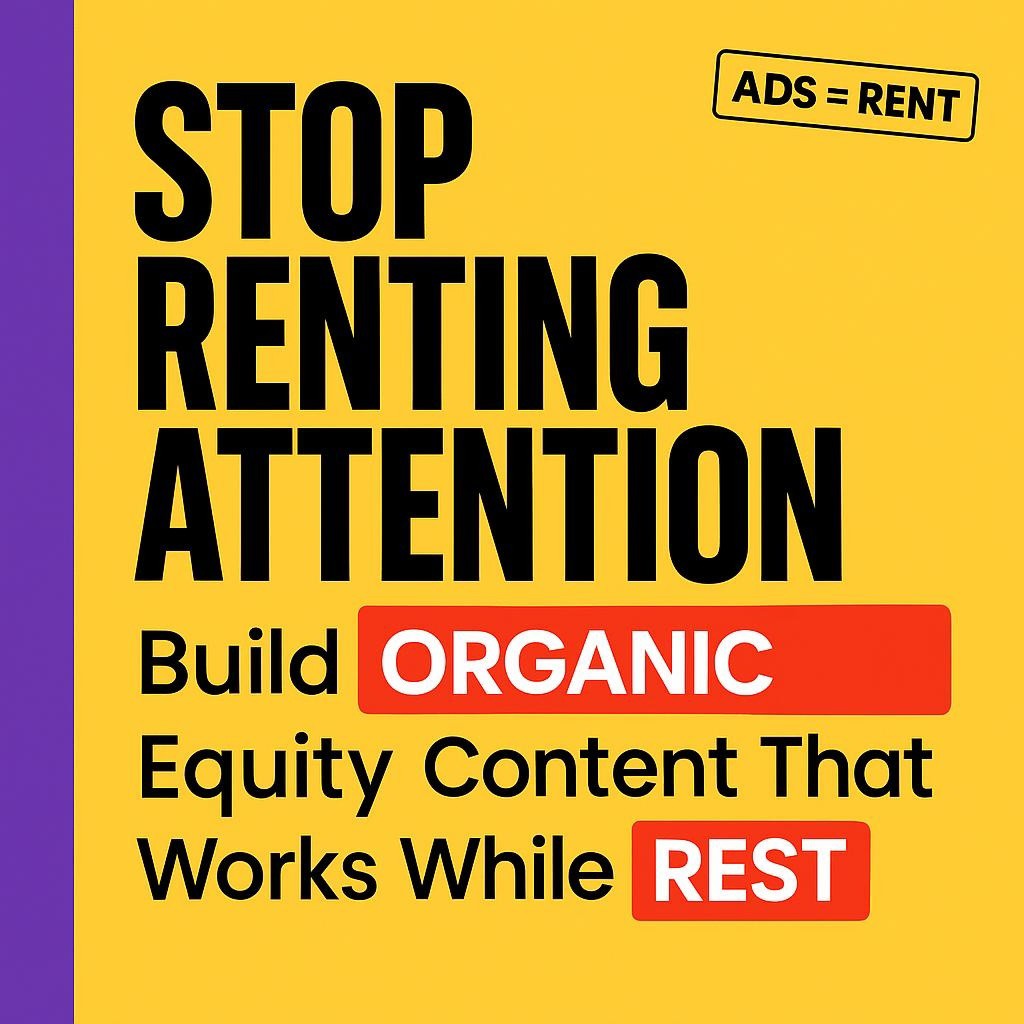
Ads are rent. Organic builds equity. If you have ever watched traffic surge for a week then vanish, you already know the feeling of paying for a hotel room. It is clean and exciting, then checkout comes fast and you have nothing to show for it. Your ideas deserve a home you own. The kind that gains value while you sleep.
We built Inkflare after learning this the hard way. We wrote work we believed in, paid for small ad sprints, rode the spike, then saw the line fall back to zero. One night, Alina said, “If our books keep disappearing after launch, the problem is not our ideas. The problem is that the internet only remembers what it can find.” That changed everything. We stopped renting attention and started building equity with content that keeps paying dividends long after the publish button.
This guide shows you how to do the same. You will learn how to prioritize discoverable blogs and short videos, avoid algorithm panic, and protect your creative spark. Most important, you will design energy saving systems so your presence grows even when you are off screen. Because “rest is a creative superpower.”
Build Equity, Not Spikes
- Ads are rent. You pay, you appear, you stop paying, you vanish.
- Organic is equity. You invest once, you get found many times.
Think of each blog post and short video as a little worker that never clocks out. One piece might bring five readers this week, then fifty next month. One short might answer a question today, then meet a thousand more searchers a year from now. That compounding effect is the quiet miracle of organic content. It is not glamorous like a big ad blast. It is better. It keeps showing up.
What organic content does that ads cannot
- Creates a searchable footprint for your ideas
- Builds trust through helpful, repeated touchpoints
- Works across time zones and seasons
- Multiplies through saves, shares, and links
- Protects your energy and budget
When you own a growing library, you are not begging the algorithm for favors. You are furnishing a house where readers feel at home, then telling the map apps where it is.
The Golden Nugget: Turn Knowledge Into a Living Library
Treat your knowledge like a garden with perennial plants. You do not plant once for one dinner. You plant so the bed yields again and again.
You already have more seeds than you think. One chapter, one lesson, one coaching framework can become multiple assets that compound. If you want a blueprint to start right away, use our companion guide, Repurpose One Chapter into 4 Weeks of Content for Authors. It replaces fragile ad spikes with sustainable, compounding visibility, so your work keeps showing up while you recharge. Here is the link: https://inkflare.ai/2025/09/10/repurpose-one-chapter-into-4-weeks-of-content-for-authors/
A Small Story With Big Truth
Maya is a leadership coach. She spent Sundays making graphics, then paid to boost posts on Fridays. When a platform changed its feed order, her reach evaporated. She called us tired and unsure. We asked what she wanted most. “I want clients finding me while I am leading workshops,” she said.
We built a three month plan that hinged on two assets per week. One blog designed to rank for a question her clients search. One 45 second short that delivered the same idea. Topics came from client notes, not trends. She wrote for searchers who typed things like “how to give feedback without crushing morale” and “leading when you are younger than your team.”
It was not instant fireworks. It was better. After six weeks, the blog on feedback brought 20 visitors a day, then 40, then 70. The short showed up in YouTube search. In month three, a director found her through the blog, booked a call, and signed a six month engagement. She stopped renting attention. She invested in little workers that keep walking people to her door.
What To Publish For Compounding Reach
There is a lot you could publish. Focus on what compounds.
Discoverable Blogs That Answer One Intent
Your blog is your anchor. Write posts that answer a single, clear question your ideal reader would search. People do not search for cute metaphors. They search for help.
- Pick one intent per post. For example, “how to validate a course idea with 10 email subscribers.”
- Use a clear title that matches the search. “How to Validate Your Course Idea With Only 10 Subscribers” is stronger than “Validation Secrets for Brave Creators.”
- Structure for skimmers. Use headings, short paragraphs, and bullets.
- Show your method with a tiny case or step.
- End with one small action. Invite a checklist or a 15 minute workflow.
Follow simple SEO basics. Put the key phrase in the title, one subhead, and your intro. Answer the question upfront, then deepen. Link to related posts. Refresh each year with a new example.
Short Videos That Compress One Useful Idea
Short videos are discovery engines when they are clear and helpful. Keep them under 60 seconds. Riff off the same blog idea so your assets reinforce each other.
- Open with the problem. “Your course idea feels fuzzy, here is a 3 step test with just 10 subscribers.”
- Deliver steps fast. Do not pad.
- Use subtitles and a steady shot. Consistency beats polish.
- Close with a soft next step. “The full steps are in my blog. Link in bio.”
Publish on YouTube Shorts and one other platform. Let search do the heavy lifting. When a short resonates, pin it and consider expanding into a longer video.
Beat Algorithm Panic With Calm Systems
Algorithms change. Humans keep searching. Anchor your strategy in what does not swing.
- Focus on intent. Solve the problem better than most.
- Track leading indicators. Saves, shares, search impressions, watch time.
- Repurpose your best ideas. One proven post can feed new shorts, carousels, and a refreshed blog.
- Choose a cadence you can hold for a year. Weekly beats daily then burnout.
- Remember your aim. You want authority that lasts, not a surge that disappears.
When panic rises, imagine a bucket with holes. Paid spikes pour water in, then it leaks out. Organic content, combined with time, seals the holes.
Protect Your Spark, On Purpose
You are not a content machine. You are a maker with finite energy. The secret is not hustling harder. The secret is systems that protect your voice and keep you visible.
- Build a voice bank. Save your phrases, metaphors, and examples.
- Batch in small windows. Two 45 minute sprints can outline a post and script a short.
- Reuse formats. Pick a repeatable post shape and a simple short template.
- Automate the boring parts. Schedule, collect ideas in one place, use tools that keep your tone steady.
- Create recovery rituals. Walks, reading, unhurried mornings. Guard them like deadlines.
“Rest is a creative superpower.” It is also a marketing advantage, because rested you writes the kind of piece that gets bookmarked and shared.
A Weekly Rhythm That Compounds
This cadence works for authors, coaches, educators, and course creators.
- Monday, Pick one search intent from real questions. Draft a working title that matches the query.
- Tuesday, Outline the blog in four sections. Add one concrete example to each.
- Wednesday, Draft a 45 second short from the blog. Script the hook and steps.
- Thursday, Publish the short. Upload the blog with internal links and a clear call to action.
- Friday, Repurpose one paragraph into a newsletter and one carousel.
- Weekend, Rest. Skim comments on Monday. Note what to clarify next.
This rhythm adds two little workers to your library each week. After a quarter, you will have 24 assets. After a year, you will have a living library that attracts the right people while you live your life.
For a step by step plan to turn a single chapter into weeks of assets, use our related guide: Repurpose One Chapter into 4 Weeks of Content for Authors, https://inkflare.ai/2025/09/10/repurpose-one-chapter-into-4-weeks-of-content-for-authors/
Choose Topics People Actually Search
You do not need fancy tools to start. You need to listen well.
- Mine your inbox and DMs. What questions repeat, what words do they use.
- Review your calls. Clip the parts where clients ask how to do something.
- Search your own terms. Study top results. Notice what they missed.
- Build a simple glossary. Words you use often, defined clearly. Each word can become an article and a short.
- Track a small set of phrases. Pick five core problems, then make two assets for each.
Start with listening, then layer light keyword checks later. The best ideas begin with your audience, then get tuned for search.
The Anatomy Of A Blog That Ranks And Resonates
Use this as a checklist. Keep it simple. Keep it humane.
- Promise. State the problem and the outcome in plain words.
- Proof. Share a tiny example or a number people can feel.
- Path. Teach the steps with clarity and care.
- Pitfalls. Name the common mistakes, then show the fix.
- Practice. Offer a small exercise or template.
- Pulse. End with a question that invites a reply.
This shape helps readers and skimmers. It also supports time on page and completion.
The Anatomy Of A Short That Draws Searchers
- Hook in 2 seconds. “Your ad stopped working, here is how to get found while you rest.”
- Steps in 15 to 40 seconds. Three steps, one example, one line per step on screen.
- Close in 5 seconds. “Save this, then grab the checklist in the link.”
Resist the urge to cram. Leave room for the viewer to process. Clarity travels farther than cleverness.
Energy Saving Systems That Keep You Visible
Systems reduce decision fatigue and protect your best work. Start here.
- The Idea Shelf. One place to drop questions and sparks.
- The Pillar Map. Three to five themes for the next year. Every idea must serve a pillar.
- The Outline Template. A reusable blog outline with standard headers.
- The Short Script Card. One card with Hook, Steps, Close. Fill it fast, record without fuss.
- The Refresh Calendar. Every 90 days, refresh the three posts that drive the most traffic.
- The Archive. A simple page that lists your best pieces by topic.
If you want help, Inkflare was designed to act like a partner. It learns your voice, maps your pillars, and turns chapters and lessons into a steady stream of discoverable posts and shorts. It is professional grade presence at roughly one fiftieth the agency price, and it keeps you visible even while you rest.
Immediate Steps You Can Take Today
Pick one. Do it now, then let it work for you.
1) Turn One Chapter Into A Month Of Assets
- Copy the chapter’s central promise into a document.
- Pull three questions readers ask before, during, and after that promise.
- Write one post for each question with a clear, search friendly title.
- Script three shorts, each answering one question in 45 seconds.
- Publish one post and one short this week. Queue the rest.
For a full walkthrough, use this guide: https://inkflare.ai/2025/09/10/repurpose-one-chapter-into-4-weeks-of-content-for-authors/
2) Build Your Glossary In Two Hours
- List 15 terms you use in your work.
- Define each in two sentences.
- Pick three that matter most to clients, then expand each into a 700 to 1200 word post and a 45 second short.
3) Create The “Start Here” Hub
- Write a short page that links to your five most helpful posts and three most helpful shorts.
- Add it to site navigation.
- Link to it at the end of each new post and in your short descriptions.
4) Draft A Monthly Refresh Plan
- In your analytics, find the top three posts by search traffic.
- Improve headings, add one new example, link to a related post.
- Republish with the same URL.
5) Record Three Shorts In 30 Minutes
- Pick one pillar.
- Write three hooks that state a problem and the outcome.
- Outline three steps for each.
- Record them back to back without overthinking.
Real World Examples By Creator Type
- Author. Turn a chapter on habit formation into “How to Build a Habit in 14 Days Without Tracking Apps,” plus a short with three steps. The blog earns search traffic for months. The short gets saved, then shared.
- Coach. Distill your intake questions into “Nine Coaching Questions That Reveal Your Blindspots,” plus a short that demonstrates one question in action. Prospects arrive warmed up.
- Educator. Build a glossary of key terms for your subject. Each term becomes a post with a classroom example and a practice prompt. Parents and students find you through search.
- Course creator. Release a mini module as a public post, “Validate Your Course Idea With 10 Subscribers,” with a short that shows the email template. DMs shift from “what is your course about” to “I tried your template, can we talk.”
These are ordinary assets built with care. They keep bringing the right people to you. They let your best ideas travel farther than you can push alone.
Common Mistakes That Drain Your Energy
- Publishing for peers, not buyers. Teach the person you help, not the expert you admire.
- Vague titles. If your reader cannot find it, they cannot benefit from it.
- Inconsistent cadence. A burst, then silence, resets momentum.
- Overproduced videos. Clear beats cinematic when your goal is discovery.
- Waiting for perfect. Imperfect and published beats perfect and invisible.
Each mistake is a hole in the bucket. Patch them with clarity and consistency.
Why This Matters More Than Metrics
Yes, organic content drives traffic and revenue. There is a deeper reason to build equity. You worked hard to distill wisdom that can help people. When your work disappears after launch, the world loses options it needs. A blog post written in Los Angeles can spark change in Nairobi. Knowledge has no borders, but it needs a path. Organic content lays that path.
At Inkflare, we hold a simple conviction. Marketing can be a faithful extension of your ideas, not a distraction from them. If the internet remembers what it can find, your job is to make your best ideas easy to find. That is not hype. That is stewardship.
Your Next Move
Choose one idea. Turn it into a discoverable blog and a 45 second short. Publish them this week. Let them work while you rest. Then do it again next week.
“Ads are rent. Organic builds equity.” If this sentence sticks, your strategy changes. You will invest in the workers that never sleep, and you will protect the rest that keeps you creative. Your future readers are already searching. Meet them with something you own. Then go for a walk.