Charity vs Philanthropy vs Mutual Aid in 2026 A Clear Decision Map for Ethical Giving
If the need is urgent, choose charity and give now. If the goal is long-term opportunity, choose philanthropy and fund capacity. If the need is local and relational, choose mutual aid and share power close to home. This guide is for people who want an ethical, practical way to decide where to put money, time, and expertise without getting trapped in guilt or optics. It is not for anyone seeking a single “best” label to prove moral worth, because real help is rarely a purity test. A blended approach is often the most honest option.
A practical map: what charity, philanthropy, and mutual aid each do best
Charity, philanthropy, and mutual aid solve different problems, and confusion usually starts when one tool is forced to do another tool’s job.
This confusion has a cost. A person can stand at the edge of a giving decision and feel a tightness in the chest that looks like “being thoughtful,” but is really moral anxiety. The mind runs in circles. Will this help or harm? Will it be enough? Will it look naïve, or worse, performative? When giving becomes a referendum on identity, action stalls and someone else’s need keeps waiting.
Charity is urgent relief. It is the brace that keeps the structure standing during an earthquake. When someone is hungry tonight, displaced by a fire, or facing a medical emergency that cannot wait, charity is often the most ethical choice because it reduces suffering fast. A clean example is disaster relief funding, or a food bank that can distribute meals within hours.
Philanthropy is long-horizon capacity building. It is less like a bandage and more like reinforcing the foundation so the next storm does less damage. Philanthropy is a strong fit when the goal is to expand opportunity, build institutions, fund research, or open pathways that last. A clear example is a scholarship fund, a workforce pipeline, or sustained support for mental health clinics that train and retain staff.
Mutual aid is reciprocal community support. It is neighbors carrying weight together, not as saviors, but as people bound by shared vulnerability and shared power. Mutual aid fits best when needs are local, trust is relational, and help moves through consent and proximity. A concrete example is a community fund covering rent, rides to appointments, diapers, or grocery money, often with the recipients shaping what “help” actually looks like.
The tension many people feel in 2026 is real. Giving can start to feel like a stage, or a referendum on character. This map offers a calmer truth. The ethical question is rarely “Which label is superior?” The ethical question is “What kind of help protects dignity in this specific moment?”

The dignity lens: using Maimonides to choose the most ethical form of help
A dignity-first lens turns giving into a kind of craftsmanship, measured not only by outcomes, but by how human beings are treated along the way.
Maimonides offered a hierarchy of giving that still cuts through modern noise, especially the temptation to confuse control with care. One line is worth placing like a cornerstone: “The eighth and highest level of giving is to help someone to become self-reliant.” Read as a dignity principle, it suggests a practical aim for ethical support. Preserve dignity. Increase agency. Reduce unnecessary dependency. Balance power.
A non-obvious trap lives here. When giving feels stressful, the stress is often not about money, it is about identity. The mind quietly asks, “What kind of person am I if this is not perfect?” Under that pressure, it becomes tempting to buy certainty by buying control, to prefer methods that keep distance and decision power on the giver’s side. The dignity lens flips the priority. The goal is not to feel pure, the goal is to help in a way that lets another person stay whole.
This lens also protects against a common misunderstanding. Urgent relief is not “less ethical” by default. When a person is in danger, when eviction is imminent, when medication is out of reach, quick support can be a form of deep respect. It communicates, “Life matters right now.” At the same time, long-term empowerment can become unethical when it removes voice from the people it claims to serve, or when it treats human lives as projects to manage.
A few quiet questions can help choose the most ethical form of help, even when the situation is messy. Who holds decision power, the giver or the receiver? Is consent present, or is help being imposed? Does this support stabilize someone through a crisis, strengthen a capacity for the future, or share resources in a way that builds community resilience? Does the method protect privacy and dignity, or does it unintentionally demand performance, gratitude, or access?
These questions align naturally with the values carried through the book Thriving! by Rand Selig: integrity that does not cut corners, responsibility that follows through, empathy that does not take over someone else’s story. Giving becomes less like a spotlight and more like a steady lamp, aimed at the next safe step.
What is changing in 2026: mutual aid momentum, DAF growth, and trust in giving
The giving landscape in 2026 is louder because trust and speed are being negotiated in real time.
Mutual aid networks have grown in many places because people have learned, sometimes painfully, that formal systems can be slow, inaccessible, or uneven. When a community builds a rapid response channel, money and support can move at the pace of real life. The strength is proximity. The risk is inconsistency if the network lacks clear norms, safeguards, or sustainable capacity.
Donor-advised funds (DAFs) have also become more common as a giving vehicle, partly because they offer structure, tax advantages, and a sense of intentional planning. The strength is stewardship. The risk is distance, especially when convenience becomes a substitute for relationship and accountability.
This is not a story of heroes and villains. It is a story of trade-offs. Speed versus oversight. Proximity versus scale. Transparency versus convenience. For readers who want a values-based way to think about “give now” versus “set aside and plan,” this companion guide can add helpful nuance: Donor-Advised Fund or Give Now A Values and Impact Guide for 2026.
Modern tools can serve ethical giving well, as long as they are guided by a dignity-first decision process instead of driven by anxiety, trend, or applause.
The decision framework: choose by urgency, proximity, and the change horizon
An effective giving decision becomes easier when it is treated like crossing a threshold, one deliberate step at a time.
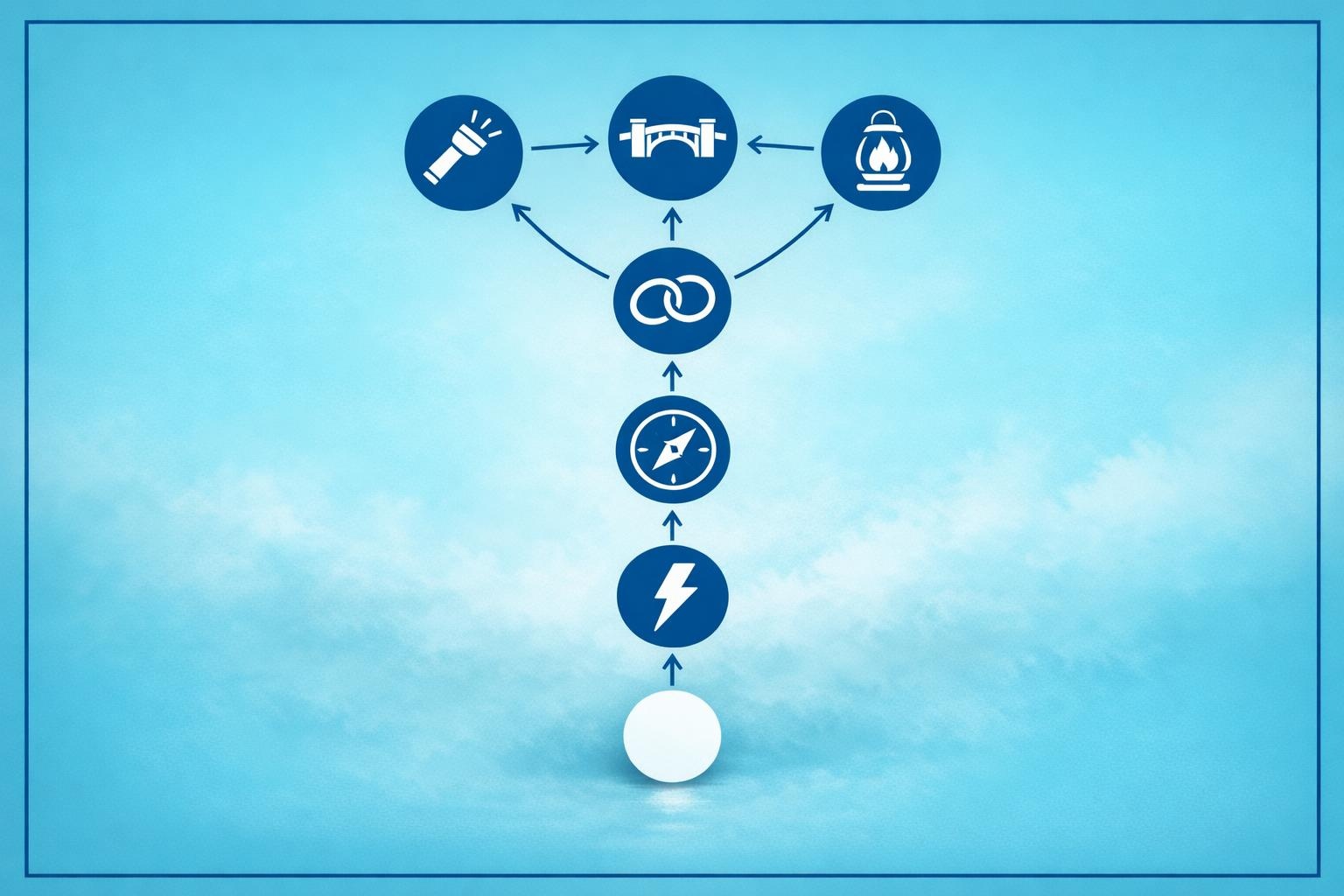
Start with a simple orientation. Picture three kinds of light. A flashlight for immediate danger, a lantern for long nights, and sunrise for the slow work of rebuilding. Charity often acts like the flashlight. Philanthropy often acts like the lantern. Mutual aid often acts like a shared fire in the center of a community, tended together.
This five-step checklist keeps the decision practical without turning it into a moral math problem:
- Name the urgency: Is the need today, this month, or this year?
- Name the proximity: Is this a neighbor, a local community, a national issue, or a global crisis?
- Name the change horizon: Is the goal symptom relief, capacity building, or systems change?
- Name the relationship model: Is this one-way support, or reciprocal solidarity with shared decision-making?
- Choose the best-fit lane: charity, philanthropy, mutual aid, or a blended approach.
A few scenarios show how the map works without forcing perfection.
If there is a medical emergency and time is the enemy, charity is often the clearest choice. A direct payment for medication, a hospital social work fund, or a vetted emergency grant reduces immediate harm. Dignity is protected when the process is simple, private, and respectful.
If a family is facing food insecurity that is both urgent and recurring, a blend often fits best. Charity can cover meals this week. Mutual aid can offer relational support, rides, childcare swaps, or shared resources that reduce isolation. Philanthropy can strengthen the local food system, fund job training, or support policy work that reduces the frequency of crisis.
If the desire is to support youth mentorship, philanthropy may be the best anchor. Long-term programs rely on training, supervision, safety practices, and steady funding. Mutual aid can complement that anchor through local networks that match volunteers and reduce barriers for families.
If the concern is housing advocacy or re-entry support after incarceration, the change horizon matters. Charity may stabilize someone through a gap month. Mutual aid may rebuild belonging through community. Philanthropy may fund legal support, employers willing to hire, and programs that remove structural barriers.
“Effective giving” is not one thing. Sometimes it means effective relief. Sometimes it means effective empowerment. Sometimes it means effective community resilience. The win is not finding the perfect identity as a giver. The win is choosing the right form of help for the real need, then learning and adjusting as more becomes visible.
How to give money, time, and expertise without losing the thread of dignity
Ethical giving stays ethical when it remains connected to dignity at every scale, whether the gift is $20, an hour, or a skill earned over decades.
Money
With charity, money works best when it moves like first aid, fast, clear, and respectful. That usually means choosing channels built for urgent distribution, then checking practical realities such as how quickly funds reach people and what barriers exist for those applying. With philanthropy, money becomes patient capital for human capacity, scholarships, training pipelines, community health staffing, or long-term research that strengthens the load-bearing beams of society. With mutual aid, money often does the most good when it stays flexible and receiver-led, guided by community norms that protect privacy, consent, and follow-through.
A simple portfolio approach can reduce decision fatigue. Consider setting aside one portion for immediate relief, one portion for long-horizon capacity, and one portion for local resilience through mutual aid or community organizations. Any amount can matter, especially when given consistently and with care.
Time
Time given through charity often looks like volunteering where urgent operations need hands, distribution, logistics, crisis hotlines, and the unglamorous work that keeps doors open. Time given through philanthropy tends to be slower and steadier, mentorship, governance, program evaluation, and long-term relationship building that helps strong programs remain strong. Time given through mutual aid is often the simplest and most intimate form of solidarity, showing up, checking in, driving someone to court, bringing groceries without fanfare, and staying connected after the first wave of urgency passes.
Expertise
Expertise can be a powerful gift, and it can also become heavy if it takes over. In charity, expertise helps when it removes friction, translating forms, simplifying processes, improving safety, or reducing the invisible costs that make help hard to access. In philanthropy, expertise can strengthen training, measurement, and strategy without turning people into numbers or forcing a single theory of change onto complex lives. In mutual aid, expertise is best offered as an option rather than a takeover, helping a community fund create safer intake practices, clearer guardrails, and transparent accounting while leaving decisions in community hands.
Across all three lanes, the same thread matters. Let saviorism stay out of the room. Let transparency, consent, and recipient voice stay in. Ask what is actually needed, then follow through with the same integrity that made the commitment in the first place.
The map is simple on purpose. Choose the lane that matches the moment, keep dignity at the center, and let effectiveness be measured by real relief, real agency, and real human steadiness.
For anyone who wants ongoing guidance on living with integrity and building a life that reflects real values, the audiobook of Thriving! by Rand Selig is available now, narrated by Rand Selig. Use an Audible credit to get it free, then hear the ideas carried in the account owner’s own voice, alive with emotion and insight. Do not just read the words, feel their cadence, their warmth, their clarity. Order today, then let the next step toward mindful thriving sound like something true.