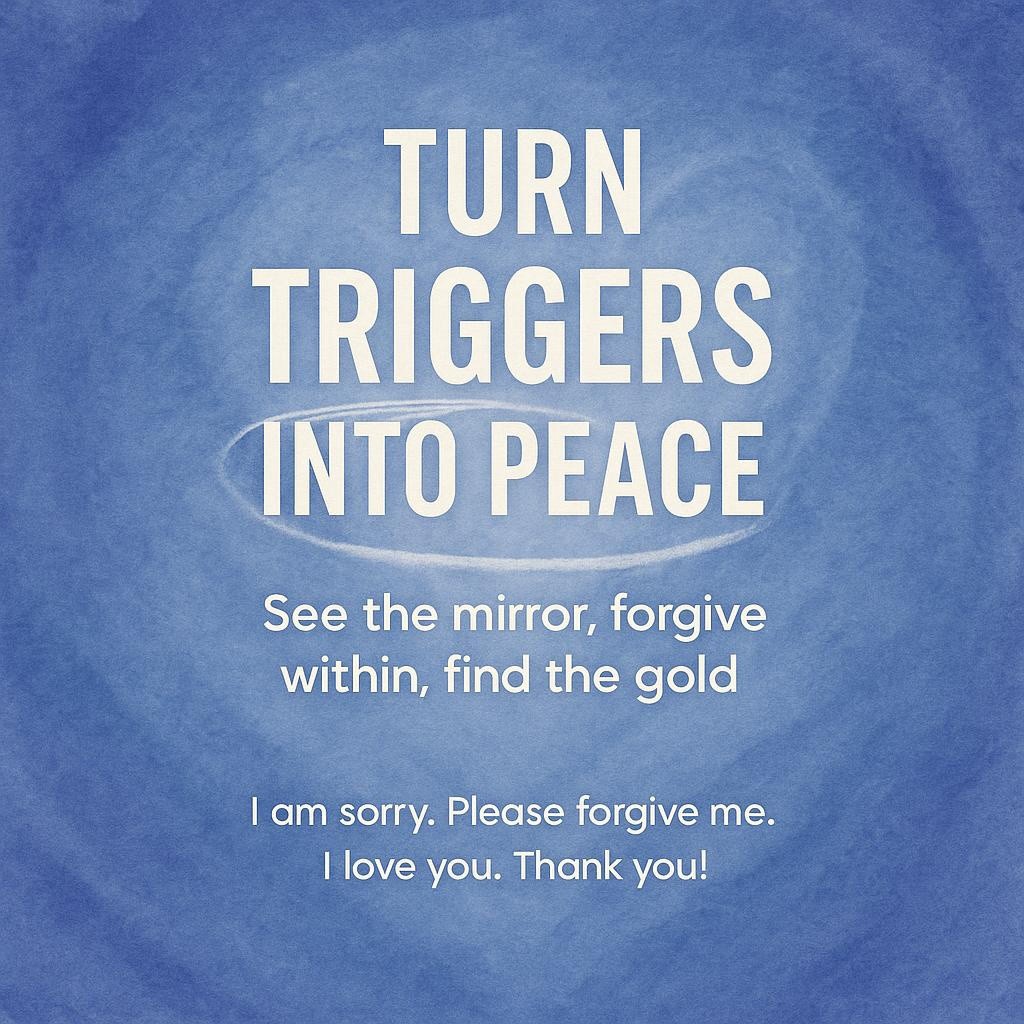
Shadow To Gold: Turning Triggers Into Freedom With One Counterintuitive Move
You feel the heat rise, the jaw clench, the urge to react. Then a quiet reminder lands: when we point a finger, three fingers point back. In Karen Lee Cohen’s Let’s Be Peace: 20 Unique Paths to Healing Yourself and Spreading Peace in the World, that image is not a scolding, it is a doorway. Instead of fixing the person or problem out there, we turn inward, find what the moment mirrors in us, forgive it, and discover the “gold nugget” it was guarding. That move brings real relief and steadier choices, one person at a time.
Why this counterintuitive shift works
Let’s Be Peace treats peace as something we generate on the inside, then naturally express through our thoughts, words, and actions. The book’s contributors return to the same theme: take responsibility for your experience, choose self trust over victimhood, and let forgiveness restore your balance so you can act with clarity. As one teacher in the book says plainly, “Peace demands forgiveness,” because holding on to blame keeps us stuck and tired. When we forgive, we become free enough to do what is actually needed next.
The hidden gold inside your trigger
In the book the “three fingers” metaphor becomes very practical. When you judge a person or event, look for the part of you that recognizes the same pattern. That part may be hidden because of shame. When you acknowledge it and heal it, the tension eases and a “gold nugget” appears. Often it is a strength you forgot you had, like discernment or self trust. This is not agreement with harm. It is the inner cleanup that makes your outer boundary clearer and kinder.
A simple 4 step practice for when you are triggered
These steps weave together guidance from the book’s contributors so you can use them the next time a trigger flares.
1) Locate the trigger in your body
Name what stung. Then feel where it lives in your body and place a hand there. Give it a few breaths. Several voices in Let’s Be Peace teach that peace is anchored in the heart, not the mind, so even five focused minutes matter. This gentle attention starts to melt the charge and brings you back to yourself.
2) Name the mirrored trait
If three fingers point back to you, what is the part in you that knows this pattern? The book encourages looking for the root inside. Seeing the shadow part, even if it feels uncomfortable, is the key that opens the door.
3) Accept without agreement
The book is clear that forgiveness does not mean agreeing with what happened. You are addressing the part inside you, acknowledging it and letting it soften, so you can respond from steadiness instead of reactivity. Acceptance here ends the inner fight and returns your power to choose.
4) Harvest the “gold”
When the shadow softens, the gold appears. It might be courage, clarity, or a renewed ability to set a calm boundary. The book describes this as finding a gold nugget in your own chest, a freedom that instantly changes how you show up with others.
Seal the shift with ho‘oponopono
Let’s Be Peace highlights the ancient Hawaiian practice of ho‘oponopono as a beautiful forgiveness tool. Quietly repeat these four sentences to the part in you that is hurting: “I am sorry. Please forgive me. I love you. Thank you.” The book notes that this does not mean you agree with the behavior that triggered you. You are clearing the inner mirror so that your outer action is clean, firm, and compassionate.
A story that widens your view
The book includes a short story about a farmer who meets every turn of fate with the same response, “Bad luck, good luck, who knows?” A lost horse returns with a herd. A broken leg spares a son from conscription. The lesson is to stay open. The shadow to gold move builds that openness in real time, so you do not lock yourself in a narrow story about what a moment means. You meet what is here, then choose your next step from calm.
Practical support you can feel this month
- Quick resets for your body and mind: Try a few cycles of 4 7 8 breathing, which the book includes among its daily tools. Even short, steady counts before or after ho‘oponopono help your nervous system settle so the shift sticks.
- Compassionate boundaries: Forgiveness frees energy. With more space inside, you can say yes or no without heat, and follow what truly resonates with your inner guidance. The book continually points you back to your “gut” as a reliable compass.
- Discernment you can trust: The text emphasizes checking in with your heart. Does this choice serve your highest good and the highest good of all, yes or no? If yes, explore. If not, move on. Simple questions like these keep you out of reactivity and inside your values.
The deeper purpose behind this practice
Karen Lee Cohen’s mission is steady and encouraging, be peace inside so we heal the world one person at a time. The book turns that mission into small, repeatable actions that anyone can test, keep, or let go of. The contributors echo a few core moves again and again, set the intention to be peace, make time to listen within, forgive yourself and others, and trust your inner signals. In plain language, the book invites you to choose what resonates and discard what does not, then reassess as you grow. No one is the guru of your life but you.
You do not need perfect conditions to begin. You only need the willingness to see what a trigger reflects, forgive the part in you that knows it, and carry forward the gold you just found. As one contributor reminds us, “Peace demands forgiveness.” If a trigger appears today, will you try this and see what opens in you, and around you?