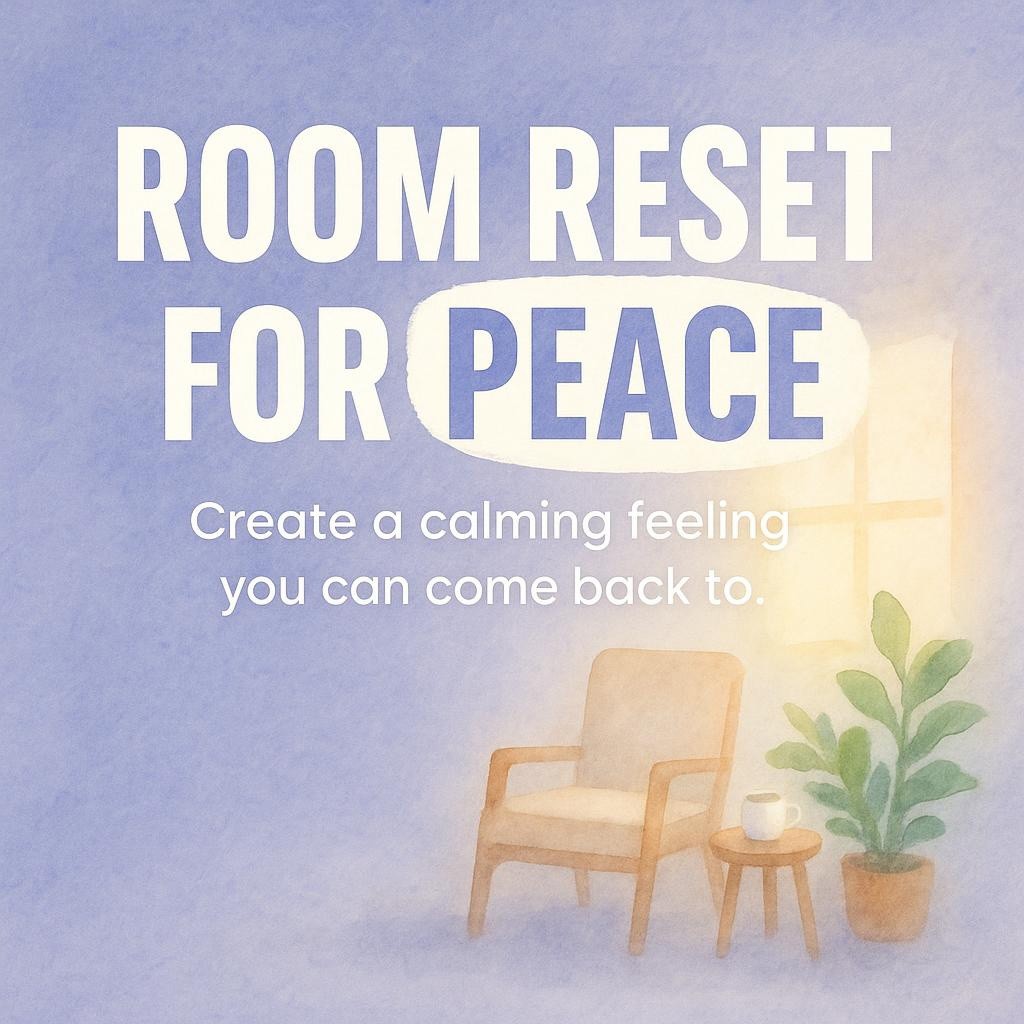
Be What You Want to Have: A Feng Shui–Inspired Room Reset That Calms Your Nervous System
If you want more peace, start with one brave truth: your space is part of your practice. Feng shui teacher Tricia Shea says it plainly, “Be what you want to have.” And she gives the most helpful reframe for stressed-out humans who think they need a total home makeover: “It isn’t about decorating … it is about creating a feeling.”
This post will help you reset one room so your body can settle, your mind can clear, and your conversations can soften, without chasing perfection.
Why your environment can either steady you or scramble you
“Let’s Be Peace” carries a simple promise: when you find peace inside, you don’t have to force it outward, you radiate it. The book says that when you find peace inside, you “radiate peace, calm, and a sense of well-being that becomes infectious.”
That matters because peace is not just a private experience. It leaks into:
- how you speak when you’re tired
- how you respond when someone disagrees with you
- how you decide when you’re under pressure
One contributor describes how peace shows up as something others can feel, almost like a “field.” On property that had been “energetically aligning,” visitors would arrive and immediately feel it, and even the animals would respond differently, resting instead of scattering.
So yes, the inner work matters. And your space can support that inner work by helping you return to a steadier feeling again and again.
The core principle: peace is a feeling first, not a concept
Kellee Ratzlaff puts it in a way that cuts through overthinking: peace “doesn’t happen in the mind. It happens in the body, peace is anchored and expressed from the heart, not from the mind.”
Tricia Shea’s feng shui lens matches that. Feng shui, she says, is “information presented with a purpose and a plan.” The purpose is “to create positive feelings within your environment.” The plan is “to notice how you feel within your environment and make adjustments.”
That means the goal isn’t a “perfect” room. The goal is a room that helps you come back to the feeling you’re trying to live.
A 5-step room reset (simple, gentle, repeatable)
Pick one space: bedroom, kitchen, office, or even a single chair that you use a lot. Then walk through these five steps.
1) Choose the feeling you want the room to teach your body
Before you move anything, decide what you want to feel in that space.
Try one word: peace, well-being, calm, harmony, safe, clear.
This matters because, as the book repeats in different ways, intention sets the direction. One contributor calls intention your energy’s “GPS,” something that helps you stay on track throughout the day.
2) Ask the simplest feng shui question: “How do I feel in here?”
Stand in the room and notice what’s true, without judging yourself.
Tricia’s plan is straightforward: notice how you feel, then adjust. The point is not to follow someone else’s rules. The point is to listen to your own response.
If you don’t know what you feel, borrow a question from the book’s “mental hygiene” practice: “Are my thoughts in alignment with true peace?” Then ask the room the same thing: Does this space support true peace for me, or does it pull me away from it?
3) Make one adjustment that supports a “welcoming” feeling
Tricia says, “A well Feng Shui-applied space feels welcoming.”
So make one change that helps the room feel more welcoming to you.
Keep it personal. Keep it small. In the book, Tricia shares that she once taught feng shui clients “how colors can create emotions.” You don’t need to repaint your walls to use that wisdom. You just need to pay attention to what you see and how it lands in your body.
4) Create a “quiet sanctuary space” inside the room
If peace is anchored in the body, your room needs at least one spot where you can actually drop in.
Kellee describes “holding a quiet sanctuary space for ourselves” and “tuning in… to feel that peace that’s always in there.” She also makes it practical: give yourself even five minutes a day to unplug from outward distraction.
Choose one place in the room where you can sit, breathe, and be with yourself, even briefly. The power is not in making it impressive. The power is in making it available.
5) Use breath to install the feeling (so the room becomes a cue for peace)
The book offers simple breathing tools you can return to without overcomplicating it:
- 4-4-4-4 breathing (inhale 4, hold 4, exhale 4, hold 4)
- 4-7-8 breathing (inhale 4, hold 7, exhale 8)
It also offers a direct practice for peace: breathe peace into your body, and breathe out what is not peace (judgment, anger, resentment).
You can also work with a single word the way Kumari Mullin describes: think the word until you can feel it, then let it become a real felt experience. She describes “consciously setting my space,” then calling in the frequency of “well-being” with breath and simple sentences until a shift happens.
This is where “Be what you want to have” stops being a nice quote and becomes a lived skill.
How a calmer room can lead to calmer conversations and clearer decisions
When your internal state is steadier, your words change.
The book points out that the way we think tends to show up in the way we speak, and that respectful, nurturing self-talk can make it easier to communicate with others that way too.
And when it’s time to decide, the book offers a grounded approach: breathe deeply, ask yourself the question, then feel in your gut. If it feels good, proceed. If you’re unsure, wait and ask again. If your gut feels off-balance, that’s information too.
A space that helps you breathe, settle, and listen makes those steps easier to follow in real life.
Make it a practice (because peace responds to consistency)
One contributor says she kept hearing the phrase: “Be the practice.” Not dabble. Not halfway. Practice.
So keep it simple:
- Pick one room.
- Pick one feeling.
- Make one adjustment.
- Return to your breath daily.
If you want a final question to carry with you, let it be this: What feeling is my space helping me practice, and is it the feeling I want to spread?