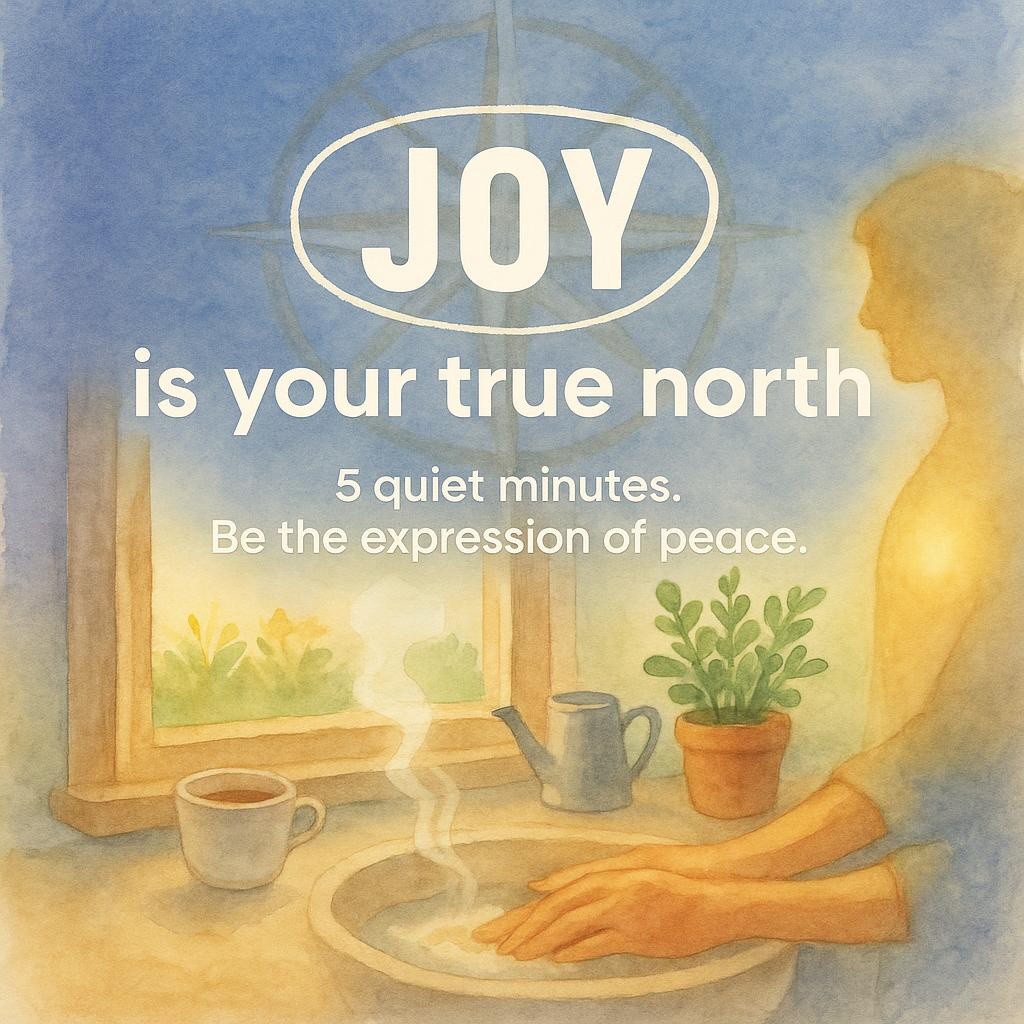
Joy Is Your True North: Design a Peace Routine You’ll Actually Keep
I used to wait for peace to show up when life got easier—when the inbox shrank, the dishes were done, the noise outside settled. It didn’t. What changed me was much smaller: five quiet minutes in the kitchen, hands in warm water, breath steady, heart listening. That tiny moment didn’t fix my life. It changed my direction.
The One Intention That Rewrites Your Day
Let’s Be Peace: 20 Unique Paths to Healing Yourself and Spreading Peace in the World is a circle of real voices—healers, teachers, coaches—curated by Karen Lee Cohen. The message is simple and brave: start inside; let it ripple out, one person at a time .
Begin with one intention: be peace. As one contributor shares, set a single aim to “be the expression of peace,” then give yourself even five minutes to unplug each day. If sitting still is hard, let peace find you while you pull weeds, wash dishes, or love on your pet. The quiet moment is how you touch the peace already in you .
Five Minutes Is Enough
You don’t need a retreat. You need a repeat. Many voices in the book point to micro-moments—brief walks, a cup of tea, a breath break, or simply sitting on the porch—because “a few minutes can make a world of difference” .
Choose Your Compass: Joy
When the day feels loud, choose direction over drama. One teacher’s line keeps ringing in my ears: “Tune into the joy, because the joy is the flashlight. The joy is the true north on a compass.” Let your next small choice tilt toward what brings real joy. It’s not selfish. It’s guidance .
Make Peace Personal (So It Sticks)
This is not a one-method book. It’s a toolkit you fit to your life—and you’re trusted to be your own best doctor as you do. Karen calls it honoring your inner GPS: trust yourself, gather the teammates and practices that feel right, and keep choosing what helps you feel steady inside .
Here are three tiny add-ons that make a peace routine easy to keep:
- Body-based yes/no: Breathe. Ask your question. Feel your gut. If it feels steady, move forward. If it feels off, wait. This “gut check” is quick and surprisingly clear .
- Five-breath reset: Try 4-4-4-4 or 4-7-8 breathing. Count on your fingers in the car or before a meeting. Teach your body what calm feels like so it can find it faster next time .
- A quiet ask: If it fits your path, invite your guides or angels to sit with you for a moment. Even the asking softens the mind and opens the heart. Karen shares how trusting her inner guidance (and yes, her angels) supported calm, wise choices about health and life .
The Hidden Gem Most People Miss
Peace is allowed to evolve. Karen invites you to “embrace what resonates and discard what does not.” Check in with your intuition often. Edit your tools as you grow. No guilt if something stops working—just honest revision, again and again .
The Deeper Shift: What Peace Asks Of Us
These practices do more than calm your day. They change your story. One chapter names the truth we often avoid: “Peace demands forgiveness… Peace is who we are.” Forgiveness frees the energy you’re spending on old pain, so you can live the person you already are inside .
Design Your 5‑Minute Peace Routine
- Set your one intention: “I will be the expression of peace.” Write it on a sticky note where you’ll see it.
- Pick your five minutes: during dishes, watering a plant, before you open email—tie it to something you already do.
- Add one step that fits you:
- Dosha‑aligned tweak: If you follow Ayurveda, add a calming layer that matches you—warm tea, slower breath, a gentle stretch. The book points to Ayurveda as a practical lens for personalizing without overthinking it .
- Angel ask: Whisper, “Sit with me,” then breathe .
- Body yes/no: Ask, “What would bring me a little more ease right now?” Follow what feels steady .
- Keep it repeatable: Your only goal is that it feels good enough to want to do it tomorrow .
What Changes When You Choose Peace On Purpose
- Your body learns safety. Five breaths, many days, become a strength you can feel .
- Your choices get kinder and clearer. When your gut says no, you stop pushing yourself to say yes. When joy points left, you go left .
- Your presence spreads. This is the promise of the book: inner peace radiates outward—home, team, community—“one person at a time” .
The One Idea To Carry With You
Be peace first, then act.
Try this today: choose a five‑minute moment, breathe on purpose, and let joy point the way. Then ask, softly and honestly: What would it look like to be the expression of peace for the next hour?