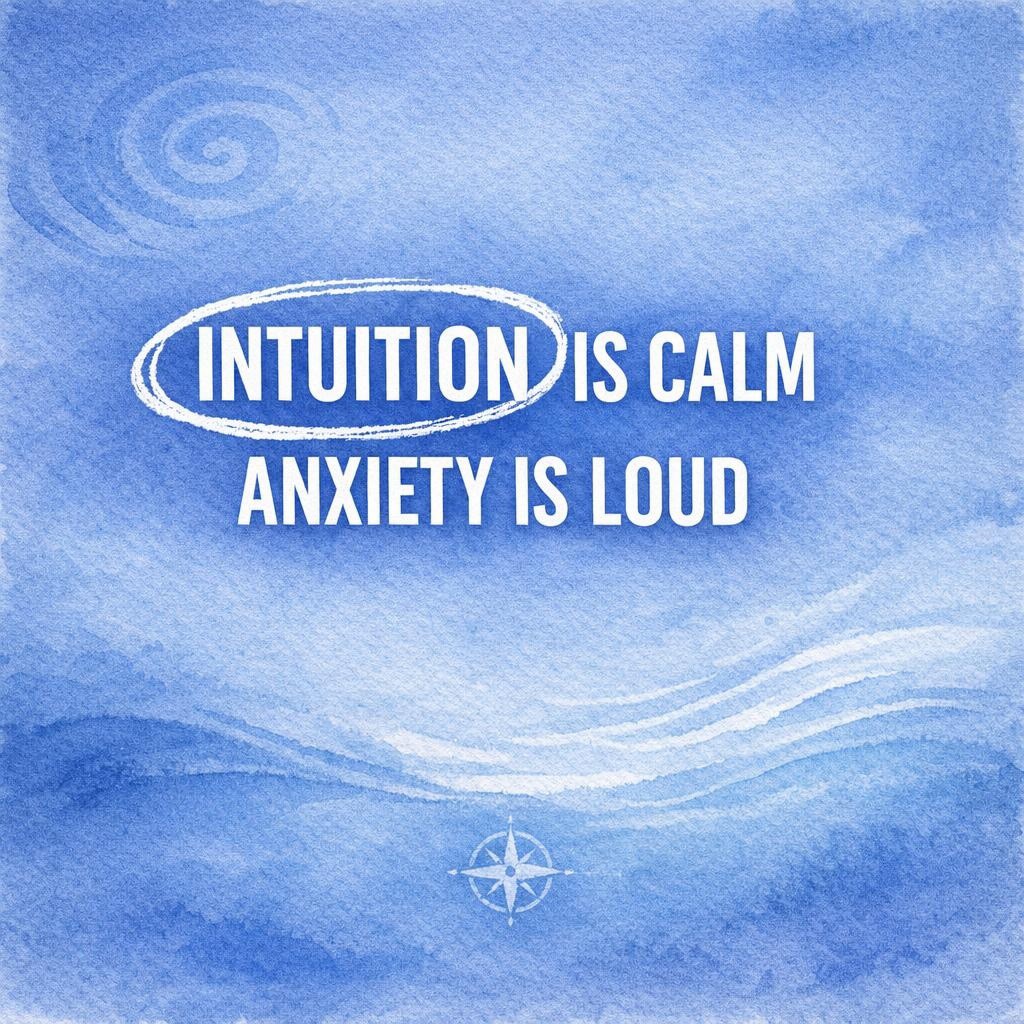
Intuition vs. Anxiety: How to Tell the Difference When Life (and the Internet) Is Loud
Intuition is your inner “GPS system,” a steady, inside voice that guides you toward what serves you. Anxiety pulls you out of the present and into fear, pressure, and worst-case futures. As one simple line puts it, “If you are anxious, you are in the future.” When life gets loud, it can feel hard to tell which voice you’re hearing, especially when news, phones, and other people’s opinions are constantly competing for your attention. The good news is you can learn to pause, breathe, and “check in” so you can choose from peace, not panic.
Intuition vs. Anxiety: What’s the Real Difference?
A clear way to start is to notice what each one is trying to do.
Intuition (your inner GPS)
Intuition helps you come back to yourself. It feels like guidance that supports your well-being and helps you move forward in a way that fits you.
It’s rooted in self-trust. As Karen says, “We were all built with our own GPS system,” and you can use your internal GPS (intuition) to make beneficial choices.
Anxiety (fear pulling you out of the present)
Anxiety tends to pull you into “what if,” into worry, overwhelm, and stress. It can make you feel like you need to figure everything out immediately, or like you can’t trust your own knowing.
Peace and anxiety don’t live in the same place. “If you are at peace, you are in the present.” That’s why the most helpful first move is often not “think harder,” but “come back to now.”
Why Intuition Gets Quiet When You’re Burned Out or Overloaded
It’s hard to hear your own wisdom when your system is flooded.
One contributor names it directly: we can get caught looking for external answers, letting others’ thoughts influence us. That can lead to “stress, a cluttered mind, and overwhelm,” which can trigger a stress response and create changes in the body.
A few common “loud life” blockers show up again and again:
- Too much input. News, phones, texts, emails, and constant updates can pull you out of your deeper sense of discernment.
- Overthinking and exhaustion. When you feel depleted, you can’t show up with the clarity you want. (It’s why self-care comes first, like putting on your oxygen mask first.)
- Fear and resistance. Resistance to “what is” can keep stress, worry, and fear active, and fear can make it harder to access higher wisdom.
One of the most honest reminders is this: at times, it may be difficult and challenging to step back, take a deep breath, and reflect. Still, that pause is often where your inner compass becomes clear again.
How Your Body Helps You Tell: Peace Signals vs. Fear Signals
Your body is not random. It gives clues.
Peace often feels like safety
Kumari shares a powerful example: two rescued dogs who were fearful with everyone else immediately felt safe around her. She explained it simply, “I am being peace and being safe. I’m being secure.” The dogs felt that safety and responded right away.
That story matters because it points to a big distinction:
- Fear makes us defensive, braced, and reactive.
- Peace creates a field where the body can soften, settle, and feel safe.
Fear can show up as tightening, especially around the heart
Another contributor describes how, in negative or hostile situations, she tends to tighten up, especially around the heart area. That kind of tension can be a sign you’re in a stress response, not in steady guidance.
The “ego monkey mind” tends to recycle the past
When the mind spins, it often repeats what it already knows. Karin describes it like this: the ego tries to pull you back into past experiences, into a limited view. Discernment begins when you ask, “Who am I listening to right now?” Is this guidance expanding you, or is it keeping you stuck in old patterns?
If you’re not sure, you don’t have to force an answer. You can pause and go inward.
A Simple “Gut Check” for Discernment (Deep Breaths + Heart Questions)
One contributor says it plainly: “We are entering a period where discernment is critical.” So here is a simple, gentle way to practice it, using only what’s already been shared: breathe, check in, ask, listen.
Step 1: Take a few very deep breaths
Peace can be simple. As one contributor learned, peace can be as simple as taking a few very deep breaths instead of tensing up.
You can also try this practice: hold the word peace in your mind while drawing in a breath, allow the feeling of peace to settle into your heart, then breathe out what is not peace (judgment, anger, bitterness, resentment). It may sound simple, but it’s described as a powerful part of a healing toolkit.
Step 2: Check in with your heart (yes or no)
Ask the kind of clean questions that cut through noise:
- “Does this feel positive, uplifting, or higher vibrational, yes or no?”
- “Does this serve my highest good and the highest good of all, yes or no?”
If it’s yes, explore. If it’s no, move on.
Step 3: Ask for guidance (especially when fear is present)
If you’re in a hard season, you can still ask for direction without judging yourself. These questions are offered as especially helpful during challenging circumstances:
- “What feels right for me?”
- “What direction should I move in?”
- “What resources do I need to have?”
- “What will help me to move through this current challenge?”
- “Can I be with the fear that is coursing through me without judging myself?”
This is what self-trust looks like in real life. Not pretending fear isn’t there, but choosing not to let fear lead.
If you want a simple weekly rhythm for this kind of check-in, you can also explore: 3-Minute Gut Check: Weekly Self-Audit for Clear Decisions.
How to Trust Yourself Without Going It Alone
Self-trust doesn’t mean you refuse support. It means you stay connected to your own knowing while you gather the right teammates.
Karen puts it clearly: “We are not suggesting you forego seeking medical attention and health consultation.” The deeper point is that you still have a role, a voice, and a choice, and you can use your inner guidance to decide what truly serves you.
The simplest guiding line to hold onto is still this: “Love and trust yourself.” When you pause long enough to breathe and check in, you give your intuition the one thing it needs most, space.
One gentle question to sit with today: When you’re about to decide, can you take a few deep breaths first, and ask, “Am I choosing from peace, or from fear?”