Forgiveness Isn’t Soft, It’s Neurochemical: A 7‑Day Protocol From “Let’s Be Peace”
You can feel forgiveness happen in the body. Shoulders drop. Jaw unclenches. Breath returns. What looks like softness from the outside is a reset on the inside. Your system stops guarding and starts healing.
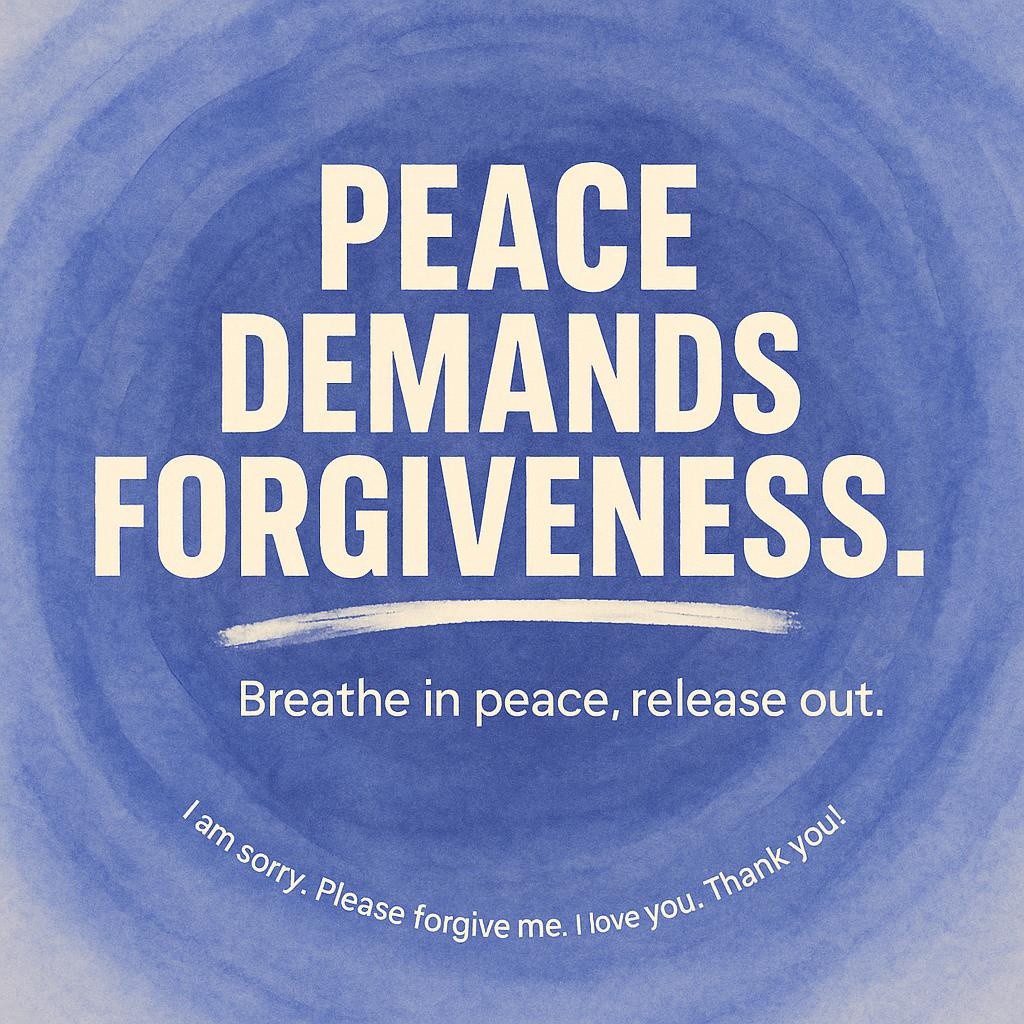
That is the heartbeat of Karen Lee Cohen’s book, Let’s Be Peace: 20 Unique Paths to Healing Yourself and Spreading Peace in the World. The message is simple and brave, "Peace demands forgiveness." Remember to forgive yourself and others. Not later, not after an apology, but now, in small, steady ways that bring you back to yourself. As an advocate for this work, I am sharing a practical, compassionate 7‑day protocol drawn from the book’s spirit and tools. It pairs a beloved healing mantra with gentle breathwork and tiny actions that help forgiveness move from idea to lived experience.
A Small Story, A Big Shift
Two emails, one morning. A nonprofit director I know, kind and overextended, opened a donor’s pullout notice, then a colleague’s jab that she had “lost her edge.” Her chest went tight. Her sleep vanished. She replayed imaginary debates all week. She told me, it feels like my body is stuck on red alert.
She tried a forgiveness sequence like the one below. No apology came. But something better did, quiet. Within a week she slept longer, chose clearer, and saw options she could not see before. She said, I am not excusing anything. I am releasing my nervous system from guarding a door that does not need to be guarded.
That is what forgiveness does. It lowers the siren so your inner guidance can be heard again.
What Karen Lee Cohen Really Means By “Peace Demands Forgiveness”
Let’s Be Peace is a collaborative circle of healers and everyday peacemakers. The tone is warm and conversational. The practices are simple and repeatable. Forgiveness here is not a pass for harm. It is a return to personal authority. You reclaim authorship over your inner weather.
This is a book that invites you to trust your own compass. Karen often encourages us to "embrace what resonates, discard what does not." In that spirit, forgiveness becomes the tool that clears the fog, quiets the inner critic, and puts you back in touch with wise choice. The transformation is subtle and huge. You start with a grudge or a shame loop or a person who will not change. You end with a steadier body, more self‑trust, and next steps that feel clean. Karen’s voice is invitational. She is a Peace Whisperer, a curator who turns conversations into tools and tools into small wins. The golden nugget is this, peace is a skill you can practice, then you carry it into your day, "one person at a time."
The Four Lines That Change The Weather Inside
At the center of this week is ho‘oponopono, a four‑line clearing practice. You can direct it to yourself, to another person, to a part of your past, or to the situation itself.
- "I am sorry."
- "Please forgive me."
- "I love you."
- "Thank you."
We will pair these lines with breath patterns and touch points. Think of it as a peace stack, simple words plus gentle signals to your body. Together they help release stored tension and open the path to kinder action.
How To Use This 7‑Day Protocol
- Each day offers a focus, a 10 to 15 minute practice, and one tiny action.
- Name the part of you that is activated, meet it with care, then close with a breath in peace, breath out release routine.
- Use the same situation for all seven days or rotate. If strong emotion rises, slow down. Drink water. Step outside. This is practical spirituality, not pressure.
What you can expect by week’s end, a lighter emotional load, sounder sleep, and clearer decisions. In the book’s language, comfort is a trustworthy sign. When you feel more comfortable in your body, you are aligned.
Day 1, Name The Knot, Meet The Shadow
Focus
Bring kind clarity to what hurts. Today is about naming, not fixing.
Practice, 12 minutes
- Sit upright with feet on the floor. Inhale 4, hold 4, exhale 4, hold 4, for four rounds.
- Journal for five minutes, complete this sentence three times, The part of me that is most activated by this is… Describe its voice, posture, and favorite lines. Maybe it is the Defender, the Pleaser, the Judge, or the Small One who hates being misunderstood.
- Whisper the mantra for yourself once and for the other person once, "I am sorry. Please forgive me. I love you. Thank you."
Tiny Action
Place a hand on your chest twice today for three slow breaths. Say, I see you. I will not abandon you.
Day 2, Locate It In The Body
Focus
Find where the story lives in your body. Forgiveness begins there.
Practice, 10 minutes
- Do a breath scan, inhale 4, exhale 6, for two minutes. Notice where attention lands, throat, solar plexus, belly, jaw.
- Map the sensation with simple words, heat, tightness, pressure, buzzing. Rate the intensity from 1 to 10.
- Say the mantra slowly. I Am Sorry, Please Forigve Me, I Thank You and I love You (in any order that feels good to you) With each line, place your palm where the sensation lives. If it moves, follow it.
Tiny Action
Drink al glass of water, slowly. Imagine the water rinsing the places you mapped.
Day 3, Neutralize The Charge
Focus
Shift from alarm to response. We are not rewriting history, we are downshifting the body.
Practice, 15 minutes
- Inhale for 4, hold for 7, exhale for 8, for four rounds.
- Keep your attention wide and soft. Let the scene float by like a cloud. Notice if the intensity drops from Day 2. If it spikes, return to your breath count.
- Mantra, "I am sorry. Please forgive me. I love you. Thank you," for three rounds, letting the words spread like warm light over the scene.
Tiny Action
Take a five minute walk without your phone. Look at the horizon. Let your body taste safety in motion.
Day 4, Release The Role, Reclaim Authorship
Focus
Forgiveness unhooks you from the role that keeps the scene on loop.
Practice, 12 minutes
- Quick inventory, what role has been running the show, Savior, Scapegoat, Prover, Enforcer, Ghost? Name it.
- Speak to that role, Thank you for trying to protect me. I release you from overtime. From here, I choose to be the Author.
- Mantra with a closing line, "I am sorry. Please forgive me. Thank you and I love you," and, I am free to choose a new next step. Sit for one minute and let that small step rise.
Tiny Action
Take that step in the smallest way possible, a kind boundary, a draft email, a plan postponed, a walk taken before you answer.
Day 5, Offer What You Wanted To Receive
Focus
Turn grievance into generosity, not for them, for your nervous system. Offering completes a loop your body craves.
Practice, 15 minutes
- Ask, what did I most want then, to be seen, to be safe, to be given time, to hear the truth?
- Give it to yourself directly. Say it aloud as if to your past self, I see you. I am with you. Take all the time you need. Here is the truth, you are worthy of care.
- Mantra on the exhale, "I am sorry. Please forgive me. I love you. Thank you." Look for a softening. The shift can be small.
Tiny Action
Offer one micro kindness with no audience and no scoreboard. Your body remembers how it feels to give without strain.
Day 6, Choose The Boundary That Protects Peace
Focus
Forgiveness is not the same as reconciliation. Today you build the fence that guards your garden.
Practice, 12 minutes
- Gut check, hand on belly and chest. Ask, what boundary would make me more comfortable, fewer late night texts, one agenda at meetings, 24 hours before tough replies?
- Say the boundary aloud with care and clarity, For my well‑being, I respond to non‑urgent messages during work hours, thank you for understanding.
- Mantra directed to your limits, "I am sorry for the times I ignored my limits. Please forgive me. Thank You and I love you. (in any order)
Tiny Action
Practice the boundary once in a low‑stakes way. Your body needs proof that you will protect the peace you are growing.
Day 7, Breathe In Peace, Breathe Out Release
Focus
Integration. Seal the shifts and keep the ritual simple.
Practice, 10 minutes
- Sit or lie down. Inhale through the nose for 4, hold for 4, exhale through the mouth for 4, hold for 4, for six rounds. On the inhale say quietly, Peace in. On the exhale say, Release out.
- Do one slow round of the mantra for yourself, one for the other, and one for the situation, "I am sorry. Please forgive me. I love you. Thank you." If a next step appears, note it. If not, trust the quiet.
- Seal with touch, one hand on chest, one on belly. Name a quality you will embody this week, steadiness, warmth, clarity.
Tiny Action
Bedtime ritual, two rounds of Peace in on the inhale, Release out on the exhale. Let your body know, we are safe to rest.
What You May Notice By Week’s End
- You tell the story less, especially to yourself.
- Your body returns to neutral faster after a trigger.
- Anger, if it comes, is cleaner and shorter, it moves and it passes.
- You can picture the other person without the same spike.
- You care for yourself before and after contact, without drama or apology.
These are quiet signs of freedom. They are worth celebrating.
Simple Answers To Common Questions
- Do I have to reconcile? No. Forgiveness returns your inner balance to you. Reconciliation is a separate choice that includes trust, timing, and safety.
- What if the person never apologizes? You are not waiting for their nervous system to heal yours. You can close your loop today.
- How will I know it is working? You will catch yourself not rehearsing the comeback. Your sleep deepens. Your next step feels easier to choose. Comfort is your sign.
- I tried and nothing changed. Try smaller. Two rounds of breath. One sentence of the mantra. Boundaries in low‑stakes settings first. As Karen encourages, "embrace what resonates, discard what does not." Progress is personal and iterative.
Why This Works In Real Life
When you pair kind words with slow breathing, you deliver a clear message to your body, we are not in danger right now. The guard can rest. With that quiet, your choices get cleaner. When you add a boundary, you restore a sense of safety that lasts beyond the practice. Over time, these small shifts become a new normal. You are less reactive, more present, and better able to act from your values.
This is what Let’s Be Peace does so well. Karen Lee Cohen gathers tools that speak to both heart and habit. The book’s pages are friendly and direct, often in a Q and A tone that helps you try a practice right away. You do not have to choose one path or one teacher. You get to create your own peace stack, breathwork, reflection, and forgiveness cues, and keep what makes you more comfortable with who you are and what you are here to do.
It creates the inner conditions to meet the present well.
Make Forgiveness A Lifestyle, Not A One‑Time Event
- Build your peace stack. Choose one breath pattern and one phrase you love. Use them twice a day. Consistency beats intensity.
- Do a monthly self‑audit. What resentment is growing? What boundary needs a refresh? Which practice still feels good? What can you set down?
- Choose practitioners by how you feel during first contact. After you connect, do you feel more comfortable in your body, or less? Your body is your compass.
- Keep an open door to community. Invite a friend to witness your practice. Peace grows faster in company.
Language To Keep In Your Pocket
- I release you to your path, and I return to mine.
- I can be kind and clear at the same time.
- I let my body tell me when enough is enough.
- Peace in on the inhale, Release out on the exhale.
- I am the author of my next step.
The book names this sense of ownership again and again. In Karen’s words, "we are the author, the director, and the producer." When you feel like you have lost the plot, come back to breath and come back to these lines.
What “Let’s Be Peace” Adds To Your Practice
- Breadth with depth. The book draws from many modalities so you can build a personal path.
- Gentle structure. Short interviews and clear how‑tos make the practices easy to try.
- A living ecosystem. The brand extends beyond the page, with ongoing community that helps you keep going without pressure.
The soul of the book is a promise, when we cultivate peace inside, we help heal the world, "one person at a time." Your practice matters. It changes the way you talk to your children, to your partner, to your team, and to yourself. People feel your calm. They tune to it. They make kinder choices because you did.
A Short Script For Hard Moments
When a memory hits or a text lands wrong, try this three line reset. It is fast and it works.
- In the body, hand on chest, one breath in, one breath out.
- In the mind, one round of the mantra, "I am sorry. Please forgive me. I love you. Thank you."
- In behavior, one boundary or one delay, I will reply after a short walk, or I will sleep on this.
Your 7‑Day Recap To Screenshot
- Day 1, Name the knot, meet the shadow.
- Day 2, Locate it in the body.
- Day 3, Neutralize the charge.
- Day 4, Release the role, reclaim authorship.
- Day 5, Offer what you wanted to receive.
- Day 6, Choose the boundary that supports peace.
- Day 7, Breathe in peace, breathe out release.
If You Are Skeptical, Try A Small Experiment
Skepticism is healthy. Give this seven days. Five minutes each morning for breath plus mantra. Five minutes each evening for peace in, release out. Watch your body. Watch your sleep. Watch how your next step feels. Let results speak louder than ideas.
A Quiet Close You Can Carry
"Peace demands forgiveness." Read it again. Not peace considers forgiveness. Peace demands forgiveness. This is not pressure from outside. It is a steady request from inside. Your well‑being asks for it. Your clarity thrives on it. Your future benefits from it.
You do not need perfect conditions to be at peace. You can breathe differently today. You can speak differently to yourself today. You can set one boundary that protects your well‑being today. You can say the four lines that change the weather inside you today.
- "I am sorry."
- "Please forgive me."
- "I thank you and "
- "I love You."
When you forget, return. When you remember, share. Tonight, place a hand on your heart and ask, what would feel like comfort right now? Give yourself one small piece of that comfort. This is how we live the promise of Let’s Be Peace by Karen Lee Cohen, not in a rush, but with steady care, one person at a time.