“Be Your Own Best Doctor”: A Heart‑Led Way to Understand Symptoms (Without Spiraling)
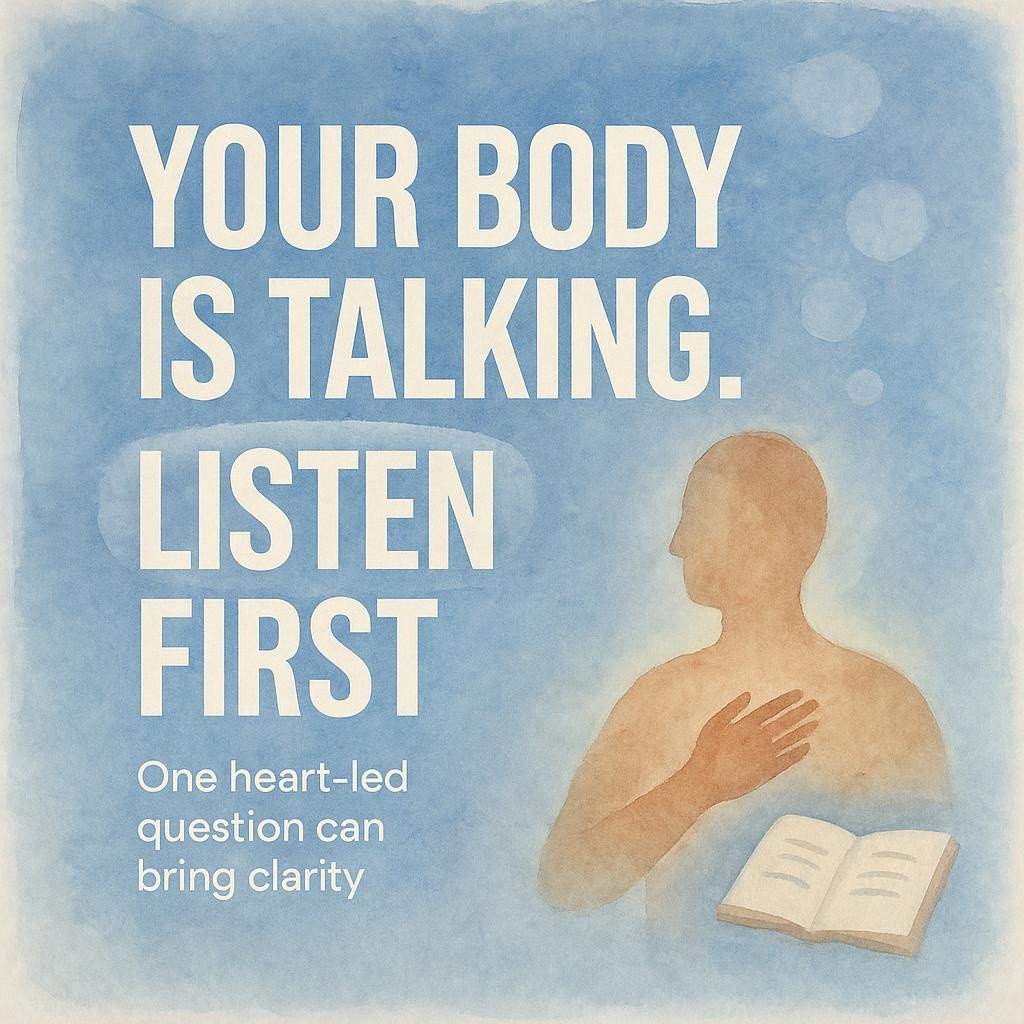
You can become your own best doctor by doing one simple thing first: come into your heart, breathe, and ask your body what it needs you to know. In Let’s Be Peace, Susan Kennard calls this a “soul inquiry.” It is how you stop guessing, stop outsourcing your power, and start listening to the inner wisdom already inside you.
This practice does not ask you to reject outside help. It helps you stay connected to yourself while you choose your next step. Because as Susan reminds us, “There’s no one modality, and there’s no one person that is going to be your answer.”
If you want a companion read on this same theme of self-led wellness, these related posts fit beautifully:
- Own Your Calm: Radical Responsibility for Wellness
- Soul Inquiry for Pain, Fatigue, and Overwhelm Relief
What “Be Your Own Best Doctor” Really Means (In Plain Language)
In Let’s Be Peace, Susan defines it clearly: “I think the key thing is to come into your heart. Breathe into your heart, and ask the question…”
She gives examples of what that question can sound like:
“What do I need to know about this pain in my shoulder? What do I need to know about this dis-ease I’ve been diagnosed with? What do I need to know about my headaches? What do I need to know about my weight?”
This is not about blaming yourself for symptoms.
It is about responsibility in the most calming way: listening. Susan says that by asking and listening, you are “starting to take responsibility for what is showing up in your own body.”
A powerful shift happens right there.
Instead of, “My body is betraying me,” the story becomes, “My body is talking to me.”
Why This Works: Your Body Is Not Random, It’s Communicating
Susan’s view of wellness is simple and deep: “your body is a barometer for your soul and that your soul is always talking to you. The body is always talking to us via our soul.”
So when something feels off, the invitation is not only to manage it, but to learn from it.
She takes it even further:
- “any message we have in our vehicle… is a fantastic opportunity for us to align more fully with an unconditional love, and with why we’re truly here, our mission, our purpose, our destiny.”
And also:
- “all of our dis-ease is just a fantastic opportunity to remember who we are… to know that we are our own inner healer. We are our own Holy Grail.”
That line is not meant to pressure you.
It’s meant to free you.
Because if you are your own inner healer, then no symptom gets to steal your authority. You can still get support, but you do not have to abandon yourself to do it.
The Heart‑Led Protocol Susan Recommends (Simple Daily Steps)
Susan’s steps are not complicated. They are steady.
Step 1: Come into the heart (and get calm first)
Susan’s first instruction is direct: “to really come into the heart.”
She also emphasizes grounding and daily calm:
“really ground into the Earth star under your feet, connect with the soul star. Really bring that sense of calmness each day.”
If you’re thinking, “I don’t have time,” this is your reminder: calm is not a luxury. It is how you hear yourself.
Step 2: Ask for guidance (and listen like you mean it)
Susan suggests inviting support:
“invite your guides to come in and be with you which is really important on this journey.”
Then she gives a grounded way to hold the process:
“It’s important to ask for and be grateful for guidance, then follow it and know that Rome was not built in a day and that there isn’t a quick fix.”
That last part matters.
If you expect instant answers, you may miss the real gift, which is a relationship you build over time with your own knowing.
Step 3: Journal in a way that keeps you honest (not overwhelmed)
Susan is clear that journaling does not need to be long:
“it doesn’t have to be hours and hours of writing.”
And she makes it beautifully doable:
“Even if you just had a little notebook, and you sat every day, and you just listened and wrote. That is what journaling is.”
Then she explains what journaling is really doing:
“It’s getting yourself connected to your true knowing, your higher self, and also to work with the guidance that’s there for you.”
Reflective question: If you did this for one week, what would change, not in your body yet, but in your relationship with your body?
Use the “Mirror” Without Shaming Yourself
Susan offers a line that can change how you walk through the day:
“Look at what your outside world is showing you,. This is essentially your mirror.”
This does not mean, “Everything is your fault.”
It means your life can help you see what you keep ignoring.
Sometimes the “mirror” is your schedule.
Sometimes it’s your patterns.
Sometimes it’s the way you keep pushing through when your body is asking you to slow down.
And sometimes, it’s simply the nudge to remember who you are.
Susan also points to deeper healing as part of the journey:
“one of the key parts of our journey is to make peace with, and let go of, the childhood perceptions we had that no longer serve us.”
That sentence alone can soften a lot of inner war.
Because many symptoms are not just physical events, they are also moments when old perceptions get loud.
How to Choose Support Without Losing Yourself
Being your own best doctor does not mean doing it all alone.
One contributor, Kumari Mullin, says it clearly: “I’m totally willing to go outside and get help when I need to.”
The key is how you choose help.
Kumari explains her decision filter in a way most people can feel right away:
- “I make every decision from my own inner guidance system. How I feel around somebody.”
- “there’s just an inner big, fat yes.”
- “Find somebody who is mastered a modality, go for the practitioner, don’t go for the modality.”
Another contributor shares what it can look like when you’re searching and feel desperate. She describes being sick, feeling unheard by doctors, and then choosing to ask for the right support. She says: “One day, I set my intention and asked to meet a practitioner who would truly understand me.”
Then comes the part many people recognize as truth in their bones:
“I received a big ‘yes,’ like a green light.”
This is what self-trust looks like in real life. Not perfect certainty, but a clear inner signal.
And when you’re struggling, the book offers this reminder:
“Remember, the Universe always has your back. Simply ask for support, and you will receive it.”
Synthesis: If you want symptom clarity, start where Susan starts, in the heart. Breathe, ground, ask, listen, and write. Let the “mirror” show you what matters. Then choose support by how you feel, not by fear.
One gentle next step: What is one question you can ask today, the exact way Susan asks it, “What do I need to know about…”?