Rewriting Your Story: The Role of Choice in Personal Transformation
You don’t need permission to begin again.
This is the heartbeat of Sandy Duarte’s book, Cancer Ramblings—written between chemo sessions, whispered prayers, and slow laps down hospital halls with her “chemo‑friend on wheels.” Her turning point wasn’t a cure or a clever quote. It was a question: instead of “Why me?” she chose “Why not?” That simple switch moved her from feeling powerless to being the captain of her own ship. “There’s always a choice. Even in the dark.”
The Moment That Changes Everything
Sandy remembers the day the room went quiet—Stage 4. Alone in a small hospital space, she gave herself one day to feel it all. Then she made a choice: “Why not me—if I’m strong enough?” That pivot didn’t erase the diagnosis, but it changed how she met it. It turned a tidal wave into a question she could stand on. She writes about shifting from “Why?” to “Why not?” as the spark that set a new course: acceptance, then something beyond it. “There’s always a choice. Even in the dark.”
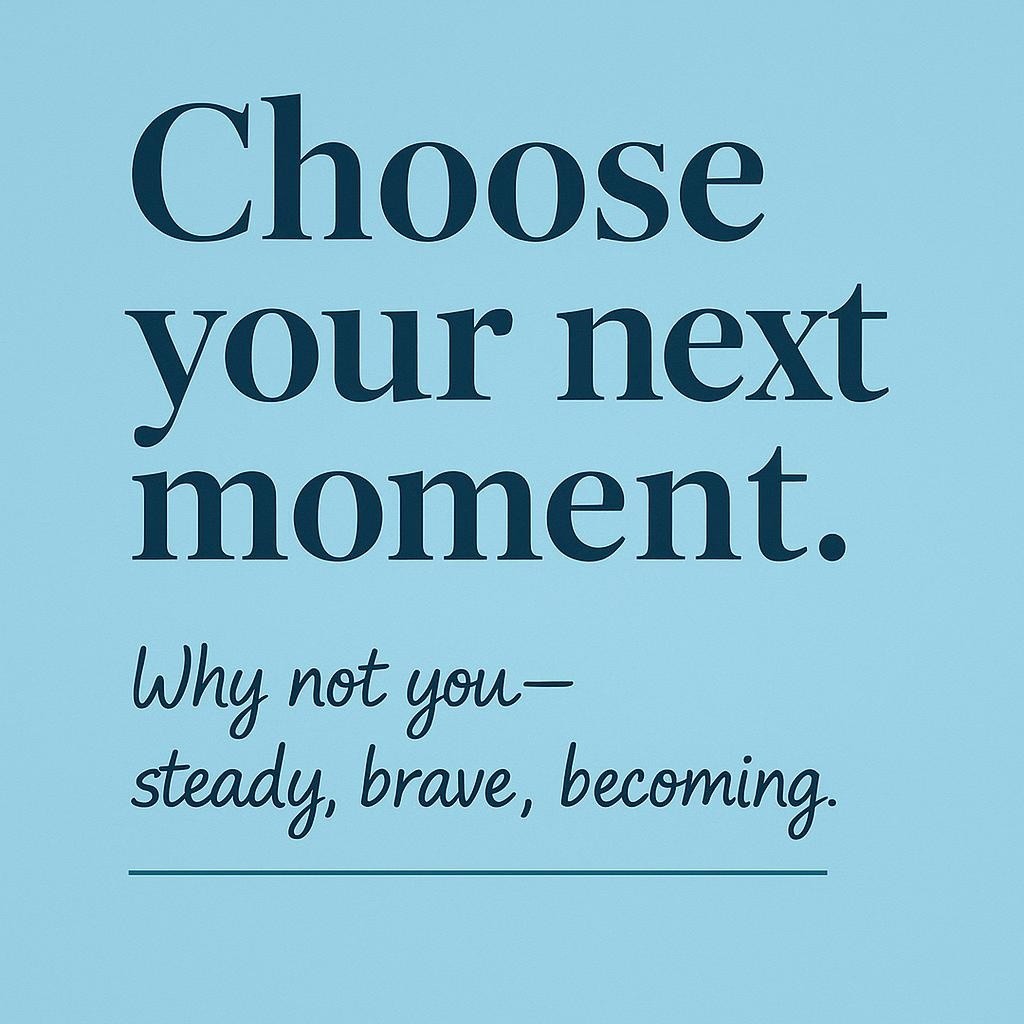
If you’re sitting in a waiting room or awake at 3 a.m., that choice may feel small. But small doesn’t mean weak. Sometimes it’s a whisper said often: Why not try? Why not hope? Why not me—steady and brave?
The Hidden Truth That Most People Miss
The mind is part of the medicine. As Sandy moved through strong chemotherapy, her care team kept noting her resilience. She believes her grounded mindset helped her body recover and even gave her a visible “glow” as she healed from the inside out. Healing wasn’t only physical. It was mental, emotional, and spiritual—and that inner shift changed how the outside looked and felt too .
Science gave her language for what she was living: neuroplasticity. The brain can change. Thoughts can rewire patterns. That made room for faith in her own voice. She even spoke to her lungs, asking the right to help the left return to life. This wasn’t wishful thinking—it was a fierce, tender act that aligned belief with care. “Healing isn’t just a physical process—it’s a holistic one, where mind, body, and spirit are all interconnected and equally vital.”
Acceptance Isn’t Giving Up—It’s a Door That Opens
When Sandy said “Why not?”, two things showed up: acceptance and transcendence. She began to see cancer as a moment to meet—“a strange pause to truly be”—not an enemy that owned her. From there, something lifted. She could dream inside the nightmare. Questions like “What is the lesson?” and “How can I make the most of this time?” started guiding the day. Acceptance gave her feet. Transcendence gave her horizon .
This is a quiet kind of courage: not pretending it’s fine, and not drowning in fear. It’s choosing steady ground in the middle of the storm so you can keep moving.
A Real Scene You Can Hold
Picture a hot shower, low energy, one lung not doing its job. Sandy talks to both lungs like they’re teammates—asks the right to help the left, asks her body to return. Is it unusual? Sure. But in that private conversation, she reclaimed her place inside her body. She also worked with her doctors, choosing treatment while staying curious about supportive practices. “The C‑word is no longer a death sentence. It can be a choice. A series of choices… And yes, you can still be the captain.”
Curiosity shows up in small ways: asking a question, taking notes, researching a supplement, speaking up about what you feel. It keeps your inner lights on. “If you’re not curious, you’re dead… Don’t just show up for the matter part of this moment. Actively participate in all that matters.”
How to Choose When You Feel Powerless
These practices come straight from Cancer Ramblings. Pick one and try it today.
The 24‑Hour Window
When shock hits, give yourself one full day to feel everything—to cry, to ask “Why me?” to say the hard words out loud. Then set a time to ask a new question: Why not try? Why not me—strong and steady? This simple container helped Sandy move from spiraling to steering .
“Write to the Light”
Journal to your kindest, wisest self. Ask, “What do you know that I forget?” This exercise pulls attention from pain toward the part of you that sees farther. It’s gentle, portable, and powerful in the dark hours .
Two‑Clip Visioning
Keep two mental movie clips ready. Clip one: you, leaving the hospital or closing a treatment plan. Clip two: you, alive in motion—hair in the wind, laughing, moving, living. When fear loops, press play on either clip. Speed matters; let hope move faster than worry .
Love Chants
Whisper “love, love, love” when the spiral starts. It coats noisy thoughts with warmth and helps your nervous system calm down. It’s simple, steady, and grows stronger with practice .
Your Support Triangle
Name your three anchors: people, practices, and professionals. It might be one friend, one ritual (a daily walk, breathwork, or sound bath), and one clinician you trust. “Family, friends, faith—where are yours?” Even one steady voice can steady you. Connection shrinks the dark corners in a room .
What This Choice Makes Possible
Choice isn’t a one‑time event. It’s a rhythm. It’s the same rhythm that helped Sandy move through harsh treatment and still find her center, so much so that others could see it—“on the glow,” as one friend described her. The goal isn’t only to make it through. It’s to live with intention and love, even here. “You can turn pain into purpose. It begins with the power choice, the powerful question: Why not?”
Next Steps on Your Path (and Future Topics We’ll Explore)
-
Mind‑Body‑Spirit Healing: Why your thoughts, your breath, and your beliefs matter—and how to work with all three in simple daily ways. Cancer Ramblings shows how inner steadiness can support physical recovery and emotional peace .
-
Somatic Practices That Help: Sandy’s excited about body‑based healing (like gentle movement and trauma release). We’ll dig into small, doable steps you can try at home .
-
Project Love: How basic rituals—breath, stillness, journaling, sound—can hold you when the day wobbles. This is where the book began to grow into a living practice you can use now .
-
Courageous Curiosity in Care: Bringing thoughtful questions to your appointments, your food, your supplements, your rest. This is how you lead your care, not just receive it .
Want a companion piece that expands these ideas? Read Empower Your Healing: Discover the Transformative Power of Choice, inspired by Cancer Ramblings: https://inkflare.ai/profile/sandy-duarte/blog/empower-your-healing-discover-the-transformative-power-of-choice/
A Line to Carry in Your Pocket
“I was weak, now I am strong.” Let that be your small, sturdy sentence when you forget who you’re becoming. Healing isn’t a straight line. It’s a process of choosing again and again—some days from your knees, some days with a clear head. But each choice points you toward life, toward love, toward the self who can say: I am still here. I am still choosing .
You don’t need permission to rewrite your story. If you’ve been waiting for a sign, take this one. What is one small choice you can make today that your future self will thank you for?