The Hard Truth About Eco-Friendly Shopping and Why Buying Less Is the Real Upgrade
Eco-friendly shopping often promises relief, buy the right thing and the guilt melts away. The harder truth is that “buying better” can quietly keep the same machine running, more consumption, more packaging, more noise, just painted green. Integrity, the kind that holds weight over time, often looks simpler and more surprising: buying less.
That is not a scolding message. It is a freeing one. When the goal shifts from “perfect purchases” to “enough,” sustainability stops being a frantic chase and becomes a steadier form of character, calm, consistent, and quietly powerful.
Why “eco-shopping” so easily turns into another kind of overconsumption
Eco-shopping becomes slippery when it treats the planet like a receipt problem, if the label looks right, the impact must be right. But most environmental harm is not caused by one “bad” choice. It is caused by volume, repeated extraction, repeated shipping, repeated disposal, repeated replacement.
Green upgrades can also create a subtle psychological loop. A purchase provides a small hit of relief, a sense of being responsible, a sense of being “the kind of person who cares.” Then the relief fades, the next problem appears, and the mind reaches for the same tool again, another purchase, another promise, another attempt to purchase peace.
This is where moral licensing sneaks in, the feeling that one good choice earns permission for more choices. It can also sharpen anxiety. When every item is a referendum on values, shopping turns into a gauntlet. The home fills, the credit card balance rises, and the nervous system pays a quiet tax.
There is a hidden cost here that gets less attention than carbon footprints: the cluttered life. Clutter is not only a physical problem. It is an attentional problem. It crowds out clarity. It makes everyday decisions heavier. It can turn the home, which should be a place of restoration, into a warehouse of good intentions.

The threshold moment is recognizing that the problem is not a lack of “better products.” The problem is the reflex that says growth always means adding. Sometimes growth is subtraction. Sometimes the next step is restraint.
The integrity test most “green upgrades” fail: does this purchase reduce total demand
A useful definition of integrity is structural alignment, values and actions holding the same shape under pressure. In sustainability, that pressure shows up in the ordinary moments: a flash sale, a limited edition “eco” release, a social post that suggests a person is only as ethical as the items in the cart.
A purchase can be ethically motivated and still increase harm if it increases total demand. Buying an organic cotton tote to replace a perfectly functional tote is a common example. The story feels virtuous, but the math can be inverted, the “upgrade” is an additional product, not a reduction.
A better question is not “Is this the most sustainable option?” A better question is “Does this choice lower the number of things entering and leaving the household?” That question brings integrity back to first principles.
When a person feels the tug to “eco-shop,” it helps to pause at the doorway of the decision and ask a few simple questions. Keep them few, keep them honest, keep them repeatable.
- Will this replace something that is truly worn out, or is it an upgrade itch?
- Can the same function be met by repairing, borrowing, or buying secondhand?
- Will this be used regularly for at least a year, or is it a short-lived idea?
- If this arrives tomorrow, what will be discarded to make room for it?
These questions are not designed to create shame. They are designed to protect integrity, and protect attention.
“Everyone gets enough and stops” is not deprivation, it is a calmer definition of success
Affluence is not only money. It is access, options, speed, convenience, abundance. When that abundance is left unattended, it can become a kind of leaking pipe. It does not flood the house all at once. It drips, purchase by purchase, until time, space, and peace feel strangely scarce.
The ethical challenge is not to make consumption feel nicer. The challenge is keeping affluence under control so that everyone gets enough and stops. That sentence sounds blunt because it is a boundary. Boundaries are blunt by design. They are what keep a life from collapsing under endless “just one more.”
This is also where personal thriving and environmental responsibility overlap. A person with a clear “enough” line is less vulnerable to comparison, less vulnerable to the false promise that a new object will fix an old feeling. That is not only sustainable. That is stable.
The deeper reward is psychological. Restraint is not absence, it is authorship. It is the decision to choose the story rather than be dragged by the next advertisement. It is a life built like a well-designed home, with space to breathe, with rooms that serve a purpose, with light where it matters.
The better model: Reduce, Resist, Repair, then build borrow and recommerce into the default
Buying less sounds abstract until it becomes a living system. The goal is not perfection. The goal is a reliable set of loops that make “less” practical.
Start with Reduce. Reduce is not a vow. It is a pattern: fewer impulse purchases, fewer duplicates, fewer “backup” items that quietly become clutter. Reduction begins by identifying the categories that create the most churn, clothing, gadgets, kitchen tools, decor, children’s items, hobbies.
Then Resist. Resistance is a skill, not a personality trait. It can be trained with small structural changes: removing shopping apps, unsubscribing from deal emails, creating a 48-hour pause rule for non-essentials, keeping a shared household list so “want” is separated from “need.” A pause is not denial, it is discernment.
Then Repair. Repair restores dignity to objects and to the person doing the caring. It also restores patience, which consumer culture erodes. A repaired item carries a story. It becomes a reminder that value can be maintained, not only replaced.
The final step is making borrow and recommerce feel normal, not like a last resort. A household can treat secondhand as a first stop, not a compromise. Rental can be a default for special-occasion items, tools, and gear that will otherwise sit idle. Borrowing can be framed as community, not inconvenience.
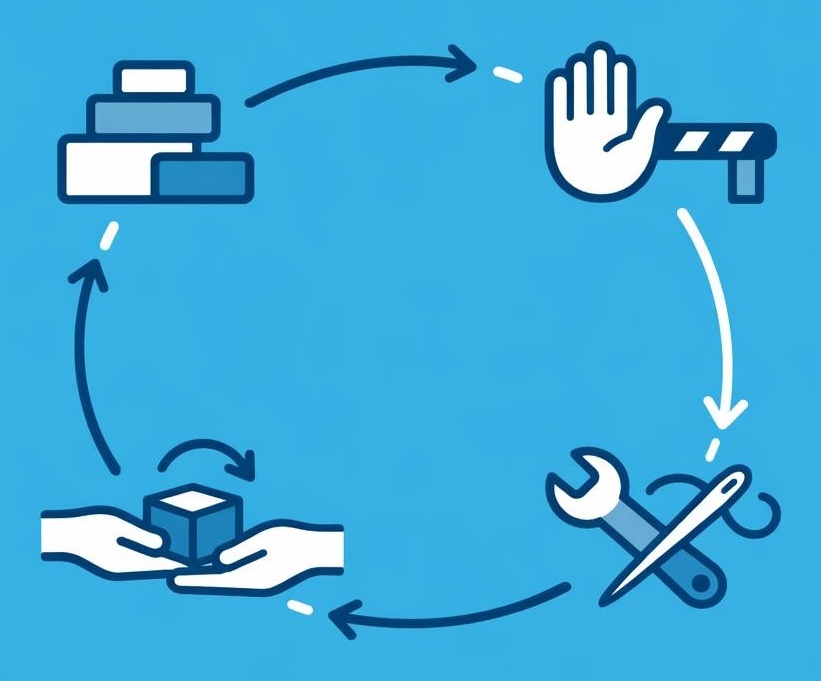
This model works because it does not rely on willpower alone. It relies on design. It builds a life where sustainability is not a performance, it is infrastructure.
When sustainability becomes mainstream, it looks like recommerce, rental, and shared stewardship
The most hopeful shift in consumer behavior is not a new “eco” product line. It is the normalization of circular habits. Recommerce and rental are not niche anymore because they solve multiple problems at once: budget pressure, storage pressure, and the fatigue of owning too much.
Secondhand platforms, local buy-nothing groups, tool libraries, and clothing swaps do more than reduce waste. They reduce loneliness. They create a web of mutual support, the quiet confidence that needs can be met without everyone privately purchasing their own version of everything.
This is also where integrity becomes visible. Integrity is not only an inner virtue. It is a social practice. A community that shares, repairs, and rehomes is a community that treats resources as sacred and limited, not as disposable.
For readers drawn to the character side of this conversation, the book "Thriving!" by Rand Selig offers a steady companion perspective. It places integrity and responsibility at the center of a meaningful life, not as rigid rules, but as virtues that strengthen a person from the inside out.
The audiobook is available now, and hearing the story in the author’s own voice brings a particular kind of clarity. There is warmth in it, energy in it, emotional depth that lands differently when it is spoken. Use an Audible credit to get it free, listen while walking, cooking, or unwinding at night, and let the ideas feel less like advice and more like a lived practice. Order the audiobook of "Thriving!" by Rand Selig and let each chapter become a tool for the journey.
Buying less is not a retreat from life. It is a move toward a life that holds together. When sustainability is treated as integrity, the question changes from “What should be bought next?” to “What is already enough?” That question is a threshold, and crossing it can make both the home and the heart feel lighter.