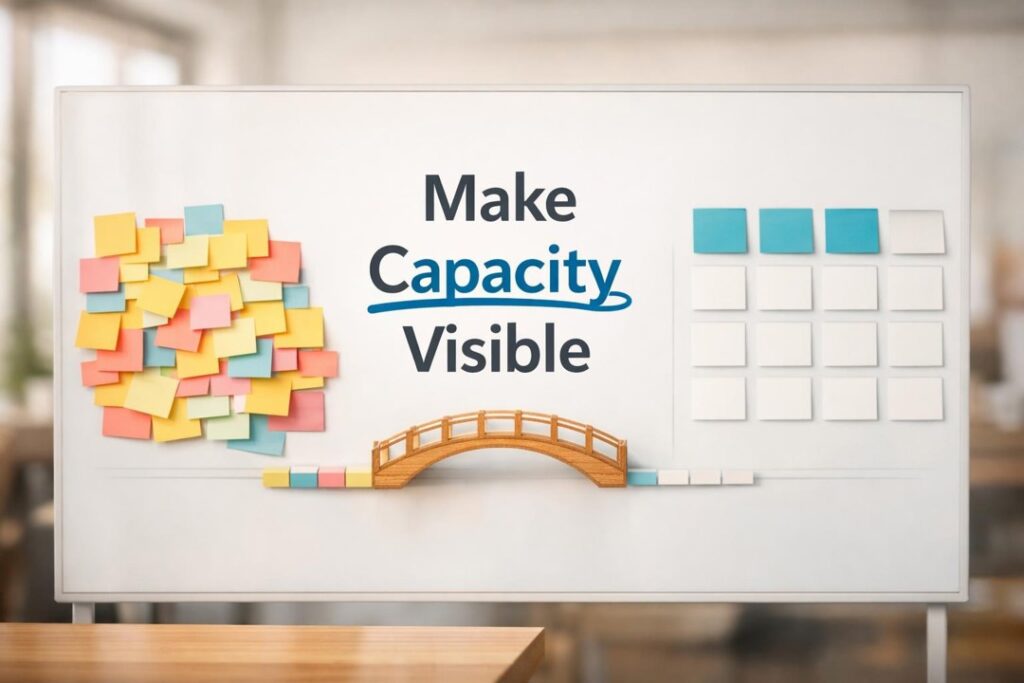
WIP Limits vs Capacity Boards vs Add AI Which Fix Actually Helps an Overloaded Team
If you’re leading smart people who are already at full tilt, you have three obvious moves: ask for more effort, buy more tools (maybe with an AI label), or control commitments so work flows instead of piling up.
This guide is for leaders who feel the drag of too many parallel priorities and want relief without lowering standards. It’s not for teams that need a motivation speech, or organizations that refuse to say no to anything, then blame “execution” when physics shows up.
The balanced recommendation is simple. Use heroic overwork only for true, contained emergencies. Use AI and tooling to remove friction once you know what “done” means and what decisions the tool will change. Use WIP limits and a capacity board when the system keeps overpromising because capacity is invisible.
Start Here: If capacity is invisible, every “solution” is a guess
Office work has a unique magic trick. Unlike a factory line or a hospital bed count, work capacity hides in plain sight. People look busy, calendars look full, Slack looks alive, so leaders assume capacity exists somewhere, like spare change in a couch.
When capacity is invisible, the organization spends it twice. First, it spends it by starting too much. Then it spends it again by paying the tax: handoffs, waiting, rework, meetings to explain why the thing that was “almost done” is now “back in discovery.” Speed is only helpful when you’re pointed at the right thing.
A quick self-audit can tell you whether you have a motivation problem or a commitment problem. Look for observable signals, not vibes.
- Backlog pressure: work keeps arriving even though the team can’t absorb it, and “urgent” keeps winning simply because it showed up last.
- Redo and rework: requirements churn, quality escapes, or the familiar sentence, “We have to go back and restart.”
- Constant reprioritization: priorities change faster than your cycle time, so people build workarounds just to survive, and the workaround becomes the process.
If you see one of these occasionally, you may be in normal business turbulence. If you see all three as a steady weather pattern, you don’t need more intensity. You need a different operating system.
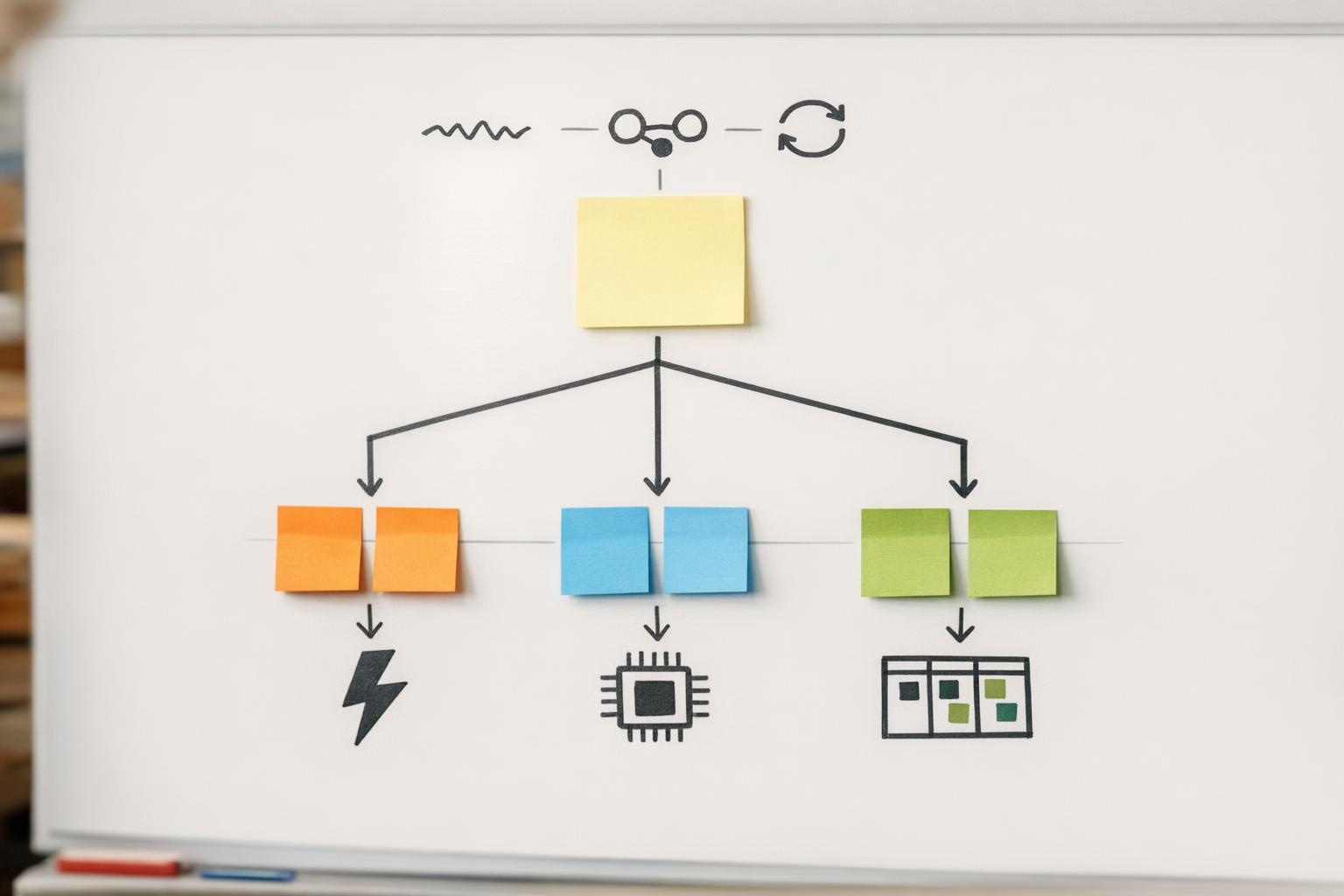
Path 1 — Heroic overwork: the expensive shortcut (sometimes necessary, rarely sustainable)
Heroic overwork is popular because it works, at least once. It’s the leadership equivalent of sprinting through a yellow light, you feel competent, decisive, slightly electric. High performers also reach for it because it preserves the story that “we can handle it,” which is comforting in the way denial often is.
There are situations where this lever is appropriate. A true incident with a fixed deadline and clear scope, low cross-team dependency, minimal redo risk, and a decision that can be reversed later is the right shape of problem for a short burst. The team can recover, the work can be boxed in, and you are buying time.
It turns into a trap when “short burst” becomes the default operating mode. Recurring surges, chronic WIP creep, and leadership quietly expecting workarounds to be normal all point to a system that is unstable. The compounding cost is not only fatigue. It’s credibility. When people constantly route around missing information, unclear authority, and shifting targets, the team learns that promises are ceremonial, not real.
Exhaustion is not evidence. It proves effort, not effectiveness.
Path 2 — Capacity tools + “Just add AI”: an amplifier, not an antidote
Tools are multipliers. They multiply what you already have. If your workflow has a stable definition of “ready” and “done,” tooling can compress time and reduce friction. If your workflow is a fog machine, tooling helps you produce fog at scale.
That’s why AI often disappoints stretched teams. Leaders buy it hoping for relief, but relief requires a decision framework. Without one, the tool becomes another surface area to maintain, another place for work to hide, another tab where optimism goes to reproduce. The goal is not more data. The goal is better choices.
Used well, AI earns its keep in three places. First, it reduces administrative drag, the summaries, first drafts, routing, and the small paper cuts that steal an hour a day. Second, it improves visibility by tagging work types, spotting aging items, and turning a messy thread into a clear blocker statement. Third, it cuts rework by acting like a quiet checklist, prompting for missing requirements, defining what “ready” means, and flagging ambiguity before it becomes a redo loop.
Used poorly, AI accelerates the worst parts of modern busyness. You get faster wrong work, because the team is still rebuilding requirements mid-flight. You get tool stacking, where context switching becomes the real bottleneck, and everyone is “integrating” instead of shipping. You get dashboard theater, where the team is asked to update the system so the system can report that the team is updating the system.
A practical litmus test keeps this honest. If you can’t name the decision the tool will change, don’t buy it, don’t build it, and definitely don’t roll it out with a three-hour training.
Path 3 — Flow-based commitment control: WIP limits + a capacity board (calm, visible, enforceable)
WIP limits and capacity boards aren’t about managing people harder. They’re about managing commitments so the system stops lying about what can be done.
Most overloaded teams are not failing because they lack talent. They’re failing because too many commitments are being treated as simultaneously “in progress,” which is a polite way of saying “not progressing.” When everything is started, nothing is finished, and finishing is the only thing that actually reduces load.
A capacity board makes work capacity visible. Not in a surveillance way, but in a decision-support way. It answers simple questions leaders often can’t answer in real time: who is working on what, how many things are currently in motion, what is blocked, what is waiting on another team, and what keeps getting reopened. In knowledge work, those questions are the closest thing you have to an instrument panel.
WIP limits do the protective work. They guard focus, they increase finish rate, and they stabilize cycle time because they reduce thrash. This matters most when you live in volatility. If priorities change weekly and work takes three weeks, your system is already in conflict. WIP limits turn that conflict into a visible trade-off instead of a silent tax.
The missing piece is policy. The board shows reality, but policy turns reality into behavior. You need explicit start and stop rules, plus a simple escalation when WIP is full. When a new request arrives and the system is at limit, the response is not “sure.” It’s “which existing commitment should we pause or drop to make room?” This is how leaders say no via systems, not personality.
Keep it practical or it won’t survive. Updating the board should take under ten minutes a day, and you should be able to see the key issue in under ten seconds. If it takes longer, it becomes another chore in the pile, and the pile always wins. Keep it human as well. The point is to remove barriers, not assign blame. A board that feels like a courtroom will quickly become a work of fiction.
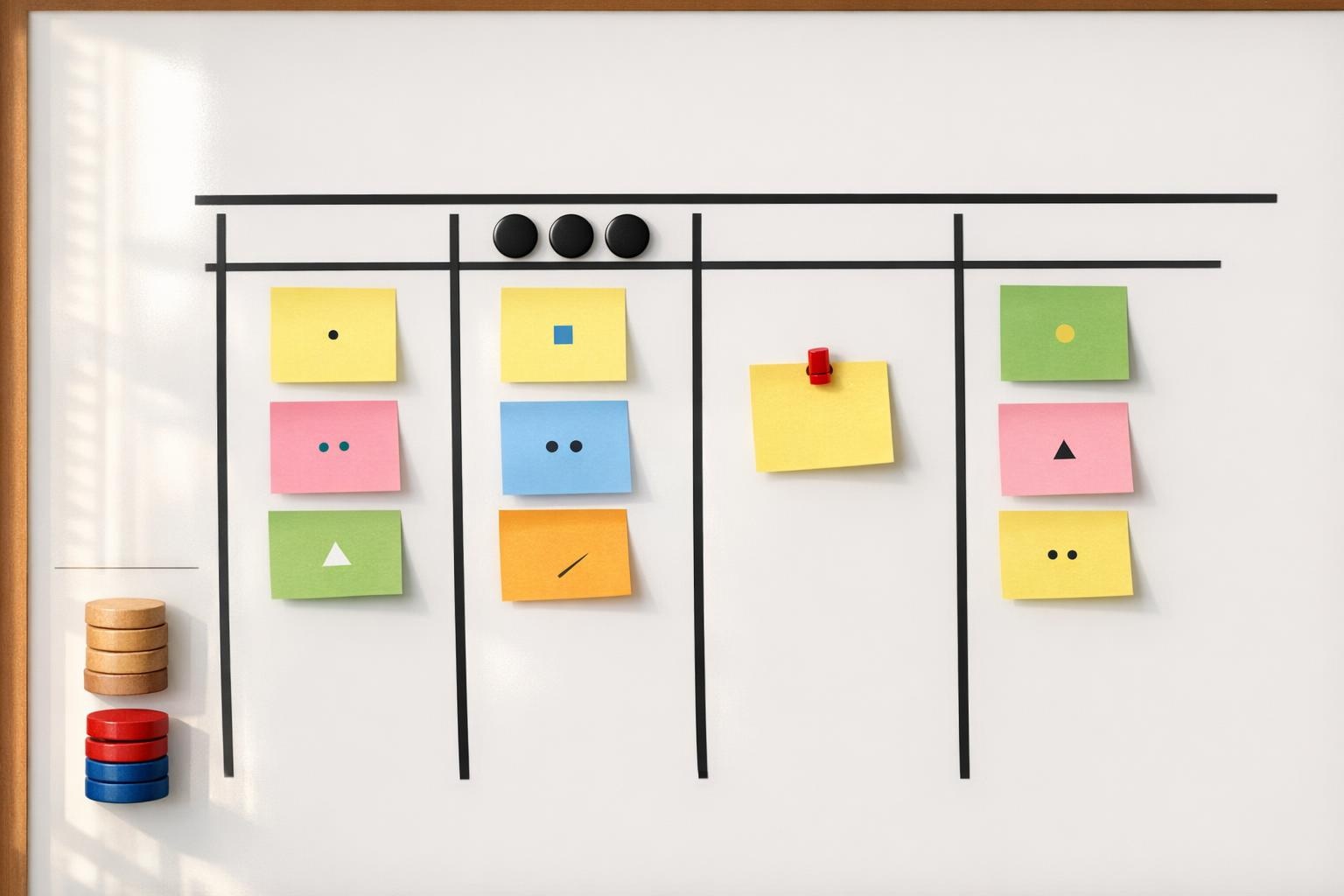
Decision Tree + 30-Day Plan: what to do now vs. later (and what “working” looks like)
The cleanest decision tree uses three variables: volatility, cross-team dependencies, and redo rate. Volatility is how often priorities or requirements change relative to your cycle time. Dependencies are how much work must pass through other teams, approval gates, or unclear authority. Redo rate is how often work restarts because inputs were missing, misunderstood, or changed.
When volatility and dependencies are high, start with a capacity board and explicit intake rules. You are not “behind,” you’re overloaded, and overload can’t be AI’d away. You need a visible negotiation surface so stakeholders can see that every new priority displaces an existing one.
When redo rate is high, stabilize definitions before you speed anything up. WIP limits help because they force finishing and learning, and clearer “ready” and “done” rules reduce the number of times work boomerangs back to the start. AI can help here, but mainly as guardrails, prompting the questions people forget to ask when they’re rushing.
When volatility is low and redo is low, selective AI and tooling can produce real gains. Even then, a light WIP cap is insurance. Teams rarely get into trouble because they can’t do the work. They get into trouble because they start too much work.
A 30-day experiment is enough to create measurable calm.
In week one, make work visible. Define a small set of work item types (planned delivery, unplanned support, improvement), then set a provisional WIP limit that is intentionally a little uncomfortable. Not punitive, just honest. In week two, add a daily ten-minute review at the board. The purpose is not status. The purpose is to capture your top recurring blockers and notice what keeps aging.
Week three is where leadership earns its keep. Use the board to renegotiate commitments with stakeholders. Introduce a one-in, one-out rule when WIP is full, then enforce it gently and consistently, like watering a garden rather than declaring a revolution. In week four, tune the limits and remove one systemic bottleneck, the most common dependency, the most frequent missing input, the approval gate that turns a one-day task into a two-week wait.
What does “working” look like at day 30? It looks quieter. Fewer mid-cycle priority flips. Fewer workarounds that everyone pretends are normal. Faster finish rate, even if start rate goes down. A visible backlog you can actually defend, because you can explain what’s in motion and what it will cost to add more.
A final thought worth holding. Overloaded teams don’t need more motivation, they need fewer lies. Make capacity visible, control commitments, then use tools, including AI, as accelerators once you’re accelerating the right thing.