
Why a Full Leader Standard Work Checklist Can Still Leave You Reactive
What is your checklist actually standardizing
A leader can complete a detailed standard-work checklist and still remain reactive when the checklist mainly records routine tasks, meetings, and immediate demands. Leader standard work should protect a small set of observable behaviors that develop people, improve processes, and review performance against plan before urgent work fills the available time.
That is the surprising trap: more structure can formalize response work without changing leadership practice. Leader standard work often ends up looking like a to-do list: a meeting at 9 a.m., a gemba walk at 10, draft reports at 11, and so on through the week. These are activities that need to get done, but completing them doesn’t necessarily make someone a more effective leader. A calendar full of approvals, status reviews, and escalations may show activity, yet coaching and improvement follow-up can disappear again. The useful test is simple: does this routine strengthen people, improve the process, or improve performance over time?
Why can leader standard work make a leader more reactive
A checklist is not inherently restrictive. It becomes restrictive when it treats every recurring activity as equally important. Put every report, meeting, approval, and interruption on one list, and completing the list becomes the goal. The leader may be disciplined about administration while the behaviors that change tomorrow’s operating conditions are repeatedly postponed.
This is the difference between standardizing a schedule and standardizing leadership practice. A schedule tells a leader where to be. Leader standard work specifies what the leader should visibly do there: Go See the work, ask what is happening, coach problem solving, identify an abnormality, or follow up on a countermeasure. The source material makes the same distinction, cautioning against a laundry-list checklist and directing leaders toward important but non-urgent work. Leader standard work should help leaders become more intentional about their behavior and periodically reflect on whether those behaviors are actually helping.
What belongs in leader standard work
Leader standard work is a small, repeatable commitment to leadership behaviors that create better operating conditions. Choose each item by asking three questions:
- Does this practice strengthen people?
- Does it improve the process?
- Does it improve performance over time?
A short list might include reviewing performance against plan and identifying abnormalities, going to see the work firsthand, coaching with questions such as “What is the target condition?” and “What help do you need from me?”, and following up on an improvement experiment or agreed countermeasure. Leaders’ intentions are typically honorable; they want to do the right thing. But intentions do not equal impact, and these need to be observable practices, not good intentions.
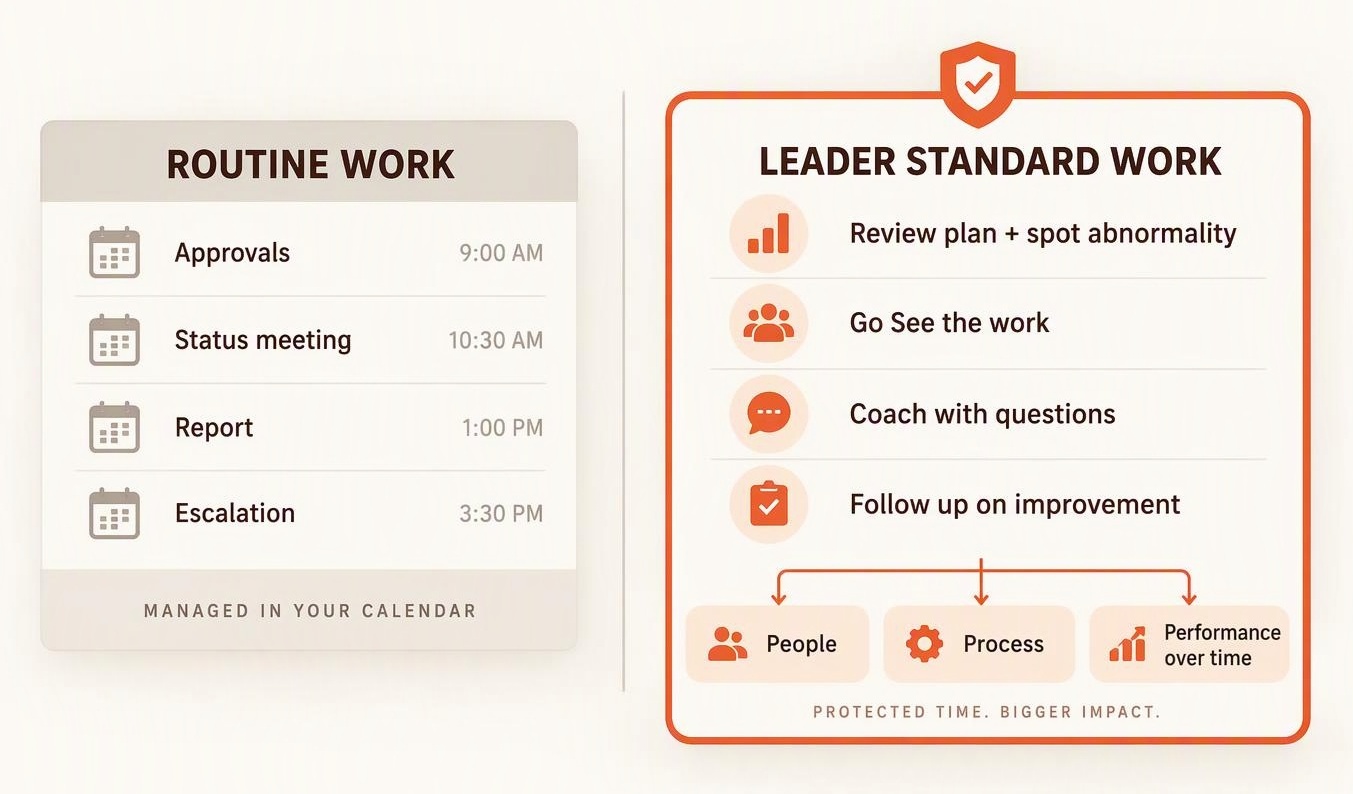
Meetings can support leader standard work, but a meeting does not automatically belong on the list. Include it only when the leader’s role in that meeting is clear, such as reviewing a visible plan, developing someone’s thinking, or closing the loop on a process issue. The purpose of leader standard work should touch people, process, and performance, rather than merely document activity.
How do you separate routine work from leadership practice
Routine work is scheduled because it must be administered. Leader standard work is protected because it changes capability, process conditions, or future performance. Both matter, but they should not compete for the same meaning on a checklist.
Review the current list line by line. Label every item as routine administration, immediate response, or leadership practice. Keep administration and response work visible in a calendar or task system. Then create a separate, short leader standard-work list. For each practice, define a cadence, an observable action, and a follow-up signal.
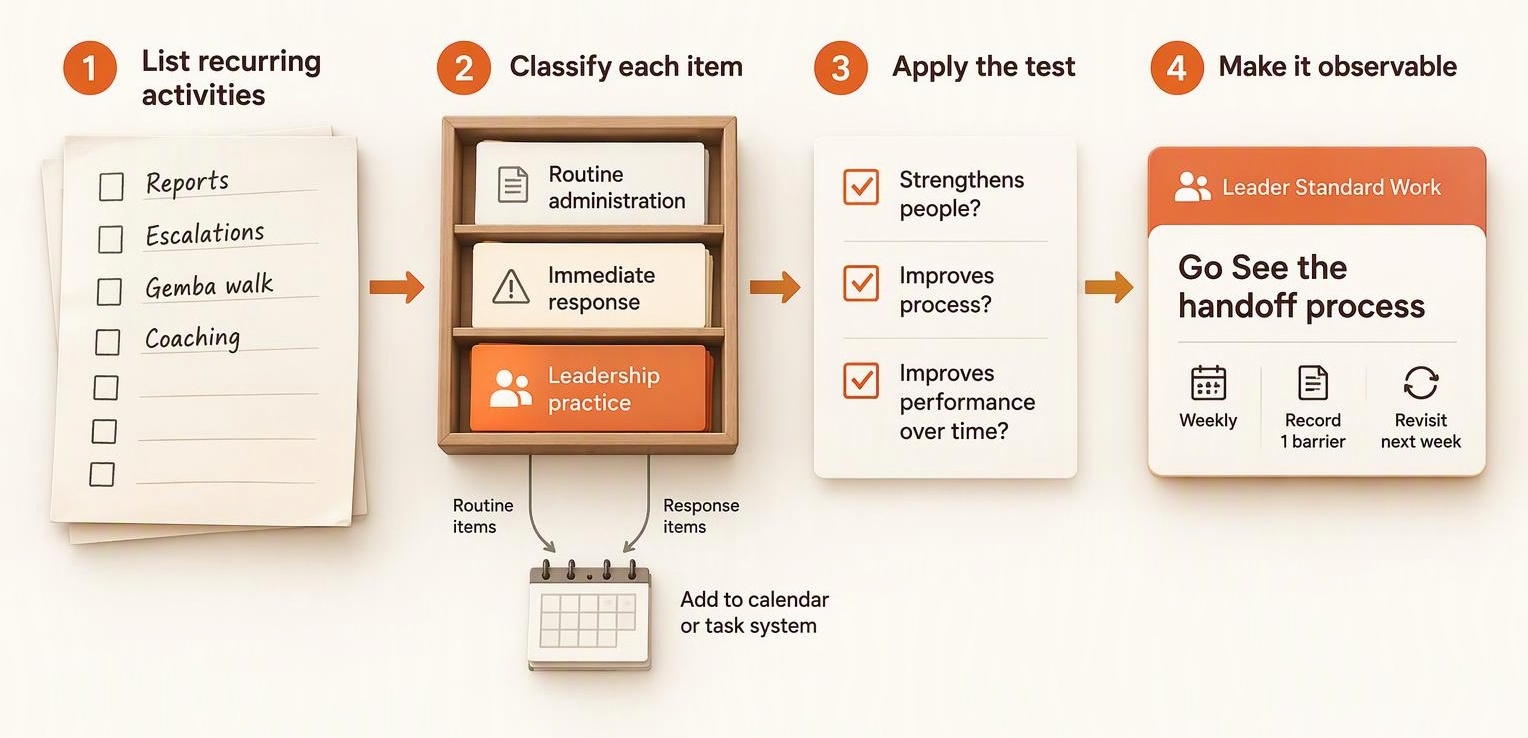
For example, “Gemba walk” is vague. “Go See the handoff process, Ask What, Then Why, and record one barrier to revisit next week” is observable. The list must be small enough to use during an ordinary week, not an ideal one. Standard work is most useful when it makes the right behavior visible and open to reflection, rather than creating reporting theater.
Build capacity before urgent work consumes it
Leader standard work is a promise about where leadership attention will go consistently. A full calendar can show busyness. Protected coaching, observation, performance review, and improvement follow-up show whether leadership is improving the system that produces tomorrow’s work.
Leader standard work should provide a baseline for the leader’s role, not a finished answer. Periodically, leaders should reflect on whether their standard work is helping the team become more effective, and on how they might become more effective at what they do, then run the experiment. A useful next step is to test this in the next weekly review: remove one routine item from the leader standard-work checklist and replace it with one observable coaching, Go See, or improvement follow-up practice. Results vary by context, team, and consistency of practice, but the experiment makes the real purpose of the checklist visible.