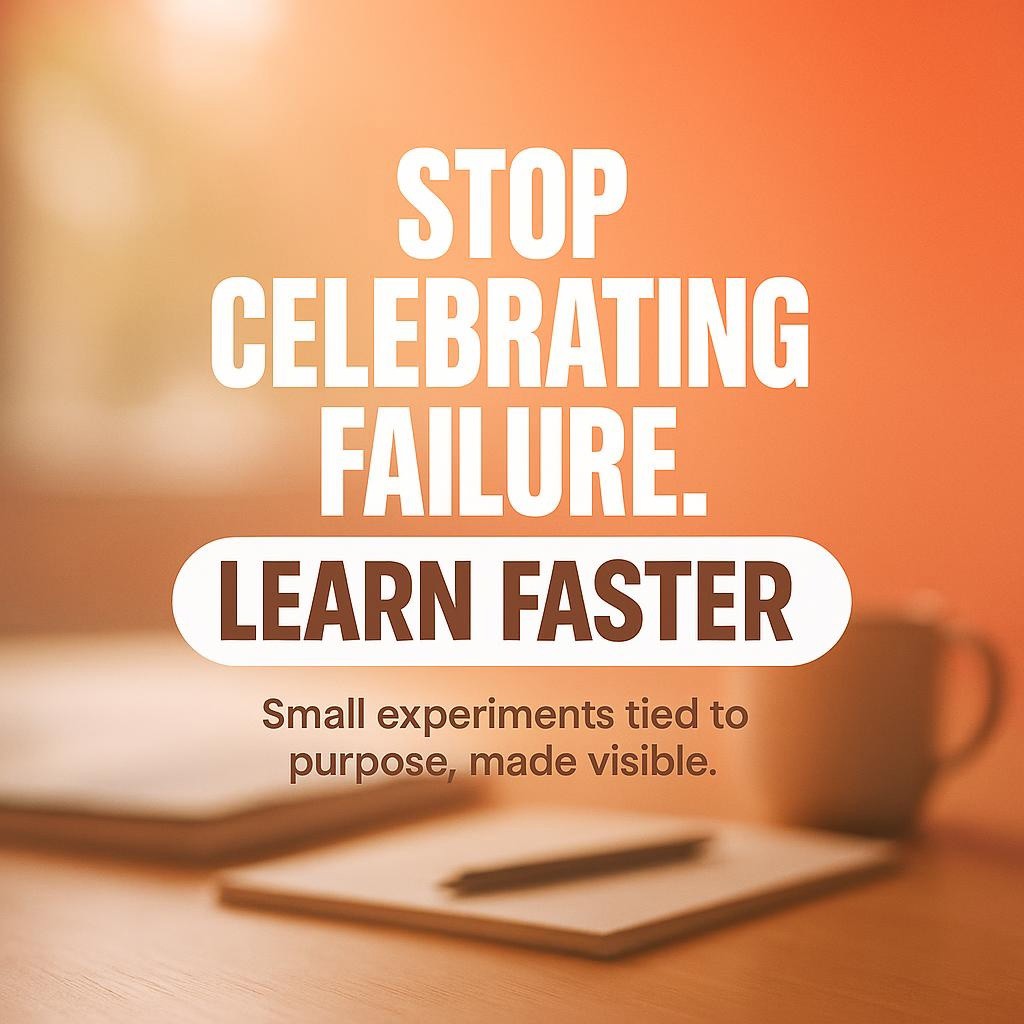
Stop Celebrating Failure, Start Learning Faster With Learn to See the Invisible
Failure is not a party. It is a prompt to learn. Michael Bremer puts it plainly in Learn to See the Invisible, “Failure is fine, so long as we learn from it. What we don’t want is to be afraid to fail or to admit failure” .
This is a book for people who want progress without the noise. Bremer’s goal is clear, help you see what you are missing today so you can make better choices tomorrow. He shows how awareness, purpose, relationships, and simple visuals can speed up learning and make daily work more meaningful .
Who This Is For
If you lead a team, run a project, or want a system that works, this is for you. Mid-level leaders touch most people in an organization, and their daily behavior sets the pace for learning. First and second line leaders directly touch about 80 percent of people at work, which means your choices matter more than you think .
The Real Struggle You Face
We rush. We assume. We miss signals. Habits and beliefs can blind us to what is actually happening. Bremer notes that leaders often do not see the behaviors that hold back team performance. The reasons differ by place, but the result is the same. Good people cannot see the full reality, so they repeat the same patterns and get the same results .
There is also fear. When leaders act as if everything is fine, or they stop observing the real work, they create a kind of distortion. People grow cautious and stop saying what needs to be said. Bremer urges leaders to go see the work, question their own assumptions, and replace the “joy of being right” with the joy of learning what is true. That shift opens space for better listening and better decisions .
What Changes When You Learn To See
Bremer’s change model is simple to use. Treat each change as an experiment tied to a clear purpose. Make it safe to spot problems and satisfying to see progress. Use visuals that help people think, decide, and adjust in real time. Great visuals are fast to update and make the key issues obvious at a glance .
Ask three quick checks for any visual or scoreboard. Does this help the people doing the work make better decisions quickly. Can we update it in less than 10 minutes. Can we see where the issues are in under 10 seconds. If yes, you have a tool that will speed learning and raise accountability across the team .
Bremer also recommends posting feedback publicly to foster accountability and collaboration, so people know if they are winning or losing against what matters. The point is not compliance, it is shared learning that moves decisions closer to the work .
Proof You Can Feel
Jess’s story shows what this looks like in real life. Early on, she solved problems alone. Her fixes did not last. She learned to form a team, listen, and let people test ideas. In one case, she doubted the team’s top idea but held back. It worked and saved more than 200,000 dollars a year. More important, the team learned that their own experiments could win. Trust grew, and results followed .
The book also shares a painful story from healthcare. A patient died after a nurse picked up a look alike vial in a dim room. Small issues stacked up, from labels to lighting to storage. Standards were unclear, and leaders were not observing the actual work. The lesson is to design for success, make problems easy to see, and build habits where people can point out risk without fear. Leaders must go see key processes and set clear, reliable standards so mistakes are less likely to happen again .
Here Is How To Start
Think of this like a coffee chat with a friend. Keep it simple. Start this week.
-
Ask why three times about your team’s work. Go see how your customer uses what you produce. If you can, talk to your customer’s customer. Then check your measures with them. Do your metrics help their work, or get in the way. This turns purpose into a daily guide for choices .
-
Set up one visual your team will use. Share the purpose for it. Keep updates under 10 minutes. Use it for a week or a month, then review what it changed and evolve it. Good visuals should drive the right conversations and decisions, not just track counts .
-
Make learning public. Post progress where people can see it. When everyone sees the same facts, people adjust together. This raises ownership and reduces blame .
-
Build safety and trust. Ask yourself three questions from Paul O’Neill’s test. Are people treated with dignity and respect. Do they have the tools and skills to do the job. Are they thanked for their contributions. Use the answers to guide your next step with your team .
-
Create a small peer group. Meet weekly or every other week to share plans, wins, and struggles. You will learn faster and stay accountable together .
Remove Fear, Grow Courage
Making better choices takes courage on both sides. Leaders need to say I do not know when needed, trust their people, and allow time for others to think and try. This is how teams move faster without hiding misses. It is also how leaders grow into better listeners and coaches who ask good questions instead of giving quick answers .
Do Not Fix One Slice And Break The Whole
You cannot optimize each silo and expect the system to work. Bremer warns that narrow fixes often hurt other parts of the flow. Clarify purpose across teams, share measures, and study cross functional processes together so improvements help the whole, not just one corner .
Your Next Move
Pick one purpose that matters. Create one fast visual tied to that purpose. Run three small experiments. Post what you learn. Invite a peer to do the same. At the end of the period, ask, what did we see that we could not see before, and what will we change because of it. Do not celebrate failure. Celebrate honest learning, clear purpose, and better daily choices. As Bremer reminds us, learning to see the invisible is how you become the leader your people need, and how your team gets better, together .