Stop Being the Hero and Build Leadership That Scales
The Hero-Leader Pattern: Fast Relief, Slow Damage
Hero leadership is a high-competence trap: it rewards the leader for solving everything quickly, then punishes the team for needing the leader too much. At first, it looks responsible. A customer issue escalates, the leader steps in. A decision stalls, the leader decides. A project gets messy, the leader absorbs the ambiguity and turns chaos into motion.
That motion feels good. It produces the small, clean satisfaction of being useful. The inbox shrinks. The meeting ends with a plan. Someone says, “Thanks, that really helped.” For capable leaders, this can become a quiet identity system: speed means value, rescue means care, being needed means proof.
The trouble is that hero leadership often confuses motion with progress. Motion is when the leader removes the immediate obstacle. Progress is when the team becomes more capable of removing the next one without waiting for rescue. One creates relief. The other creates capacity.
The pattern usually begins with generous intent. A leader wants to protect quality, reduce stress, keep commitments, and avoid letting people flounder. None of that is wrong. The issue is design. When every difficult moment routes back to one person, the team does not learn the shape of judgment. They learn the shape of dependency.
A leader can become the most efficient person in the system and still be the reason the system cannot scale. That is the hidden ache inside the hero pattern. Competence becomes a bottleneck with a nice calendar invite.
The Hidden Bill: Burnout, Bottlenecks, and Learned Helplessness
The cost of hero leadership arrives as a bill with several line items, and none of them look dramatic at first. Decisions slow down because people wait for approval. Execution becomes brittle because the team knows what to do only when the leader has already defined it. Ownership language gets thin: “Just checking,” “wanted to run this by you,” “let us know what you think.” Reasonable phrases, repeated often enough, become an operating model.
Soon the leader’s calendar becomes the team’s workflow. A paused decision sits until the next one-on-one. A minor trade-off waits for the next leadership meeting. A teammate who could have learned by making a reversible call learns instead to package uncertainty upward. This is how a team full of smart adults accidentally becomes a queue.
The emotional cost is quieter but heavier. The leader starts carrying not only tasks, but everyone else’s unresolved thinking. There is always one more clarification, one more rescue, one more late-night cleanup done under the noble banner of “just this once.” Just this once, of course, is a subscription service.
The team pays too. People stop building decision muscle when every meaningful choice is corrected, softened, or taken back. A shallow bench forms, not because people lack talent, but because they have not been given enough reps with real stakes and clear guardrails. The organization becomes dependent on the person who most wants it to grow.
Being indispensable can feel like security. It is often a growth ceiling wearing a cape.
The Better Model: Relationship-Centered Leadership Equals Impact Through Others
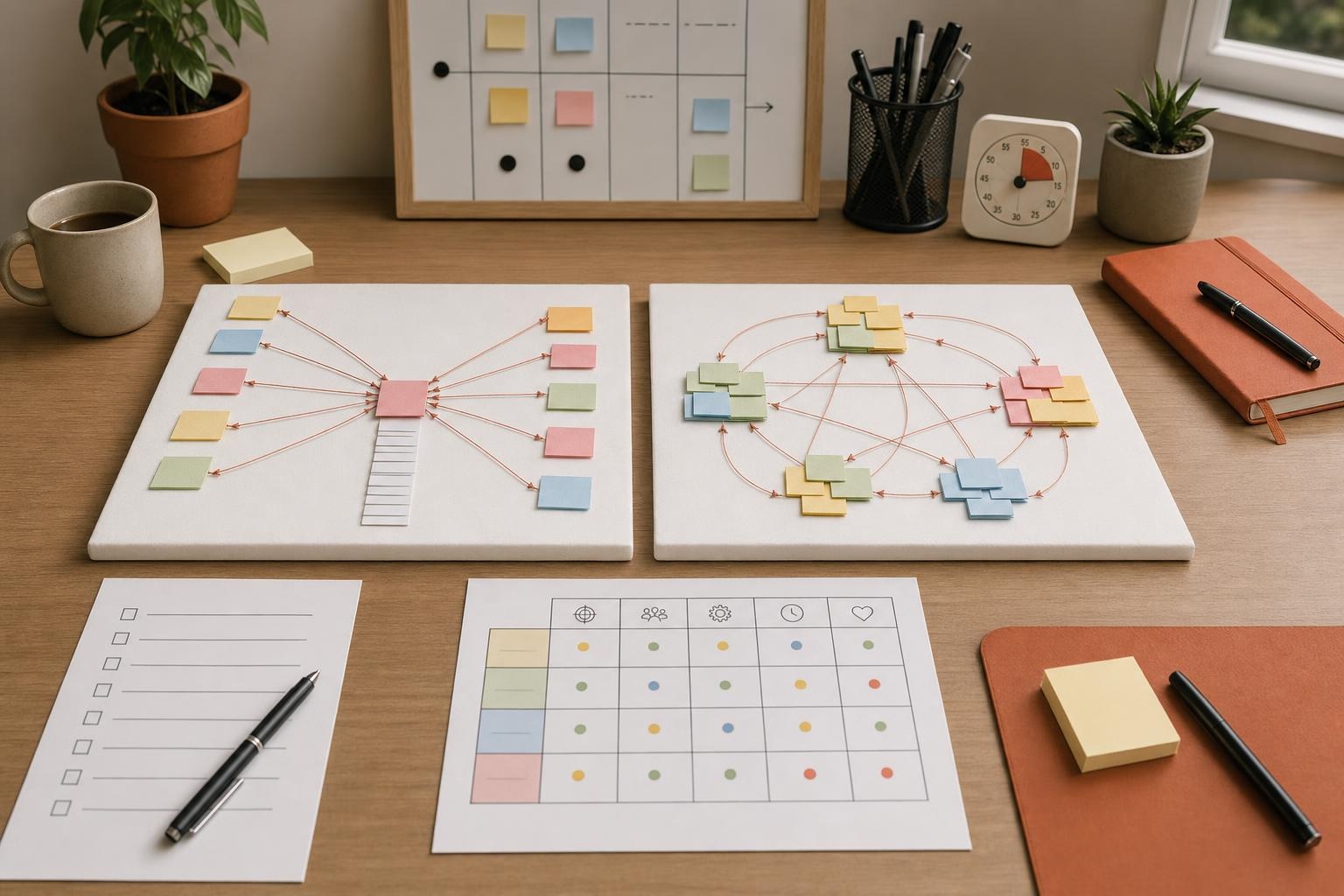
Relationship-centered leadership shifts the measure of success from what the leader personally accomplishes to what the organization can accomplish through others. The most successful leaders over time make this transition: from personal output to organizational impact, from doing the work to developing the people and systems that make better work repeatable.
This is not softness. It is not a sentimental preference for warmer meetings or more agreeable language. Relationship-centered leadership is a scaling strategy. It treats trust, clarity, mentoring, feedback, and decision rights as infrastructure. The leader stops trying to be the strongest beam in the building and starts asking whether the building can carry weight without constant reinforcement.
That distinction matters because burnout is rarely solved by better personal discipline alone. A leader can sleep more, block focus time, and make a beautiful Sunday planning ritual, complete with tea and false optimism. If the operating system still routes every judgment call through one person, the fatigue will return. Burnout is not always a time problem. Sometimes it is a design problem.
Impact through others creates a different kind of energy. Instead of spending each day answering the same category of question, the leader teaches the underlying principle. Instead of correcting every decision after the fact, the leader defines the decision boundary before the work begins. Instead of hoarding context, the leader distributes it in usable pieces, like seed packets placed where growth is expected.
Capability compounds when it is built into people. Held in one head, it is fragile. Embedded across a team, it becomes resilience. This is why relationship-centered leadership pairs naturally with consistent leadership systems. For a related lens on building rhythm without becoming rigid, see Should Leaders Use Leader Standard Work for Consistent Leadership Without Rigidity.
The deeper move is architectural. The leader becomes less of a performer and more of a platform. Not absent. Not passive. Present in a more useful way.
Builder, Not Critic: The Energy Stance That Creates Ownership
Builder leadership turns frustration into design, while critic leadership turns frustration into commentary. Every workplace has problems worth naming. Naming them is useful only if it becomes the first brick in something sturdier.
It is easy to complain and tear things down. It takes energy and effort to be a builder. The critic says, “People need to take more ownership,” then returns to correcting every meaningful decision. The builder asks what ownership would require: clearer outcomes, safer practice space, faster feedback, and fewer invisible rules. One spends attention on disappointment. The other converts disappointment into structure.
This stance is not cheerful denial. Builders are often more honest than critics because they stay with the problem long enough to improve it. They notice where work is vague, where priorities compete, where fear of mistakes slows judgment, and where conversations happen too late. Then they change the conditions.
A few builder questions can shift the room from blame to construction:
- “What decision can this person own without creating irreversible risk?”
- “What does good look like before the work starts?”
- “Where is the feedback loop too slow?”
- “What constraint would make the next action obvious?”
- “What needs to be taught once so it does not need to be rescued ten times?”
Without this stance, the leader becomes trapped in a loop of diagnosis without design. That loop feels intelligent. It produces elegant complaints. It does not produce stronger teams.
Relationship-centered leadership also requires enough psychological safety for people to make thoughtful calls, surface uncertainty, and learn without theater. For a practical system around that, read Psychological Safety in 2026 Without the Fluff.
A 30-Day Anti-Hero System: Delegation That Develops People
The way out of hero leadership is not a dramatic personality change. It is a 30-day system that moves selected work from rescue to development. Small enough to try. Serious enough to matter.
Start by choosing one category of work to stop heroing. The best candidates are high-frequency, teachable, and mostly reversible. A weekly client update. A recurring operational decision. A project trade-off where the cost of a mistake is manageable. Do not begin with the most politically sensitive issue on the board, unless chaos has recently become a preferred hobby.
Next, define outcomes rather than tasks. This is where many leaders accidentally create dependency. A task says, “Send the update.” An outcome says, “By Friday noon, the client understands progress, risks, next decisions, and where support is needed.” Add constraints: tone, budget, stakeholders, non-negotiables, and success measures. If “done” lives only inside the leader’s head, delegation becomes a guessing game with performance reviews attached.
Then hand off decision rights. A simple ladder works: decisions the person can make alone, decisions they should make and inform the leader about, and decisions that require escalation before action. This protects quality without forcing every choice through the leader’s inbox. It also gives the team member something more valuable than permission. It gives them judgment practice.
Build a feedback cadence that is light but reliable. A short weekly scorecard can replace a surprising amount of status theater: what moved, what is stuck, what decision was made, what was learned, what needs attention. The point is not surveillance. The point is to shorten the learning loop. If feedback arrives only after the work is finished, development becomes archaeology.

Celebrate ownership signals when they appear. Notice initiative, thoughtful trade-offs, clean escalation, and the moment someone brings options instead of only problems. These are not soft wins. They are proof that capability is moving outward from the leader and into the system.
There is one caution worth placing in stone: delegation without clarity is abandonment. Handing off work while keeping expectations vague does not develop people. It creates anxiety, rework, and quiet resentment. The leader still pays the bill later, usually with interest.
Try this for one week: choose one recurring decision currently routed to the leader, write the outcome and constraints in plain language, define the decision rights, and schedule a 15-minute feedback loop after the first attempt. Not a grand reinvention. One clean transfer of ownership.
The real question is not whether the leader can keep saving the day. The sharper question is whether the day still needs saving because the leader trained the system to wait.