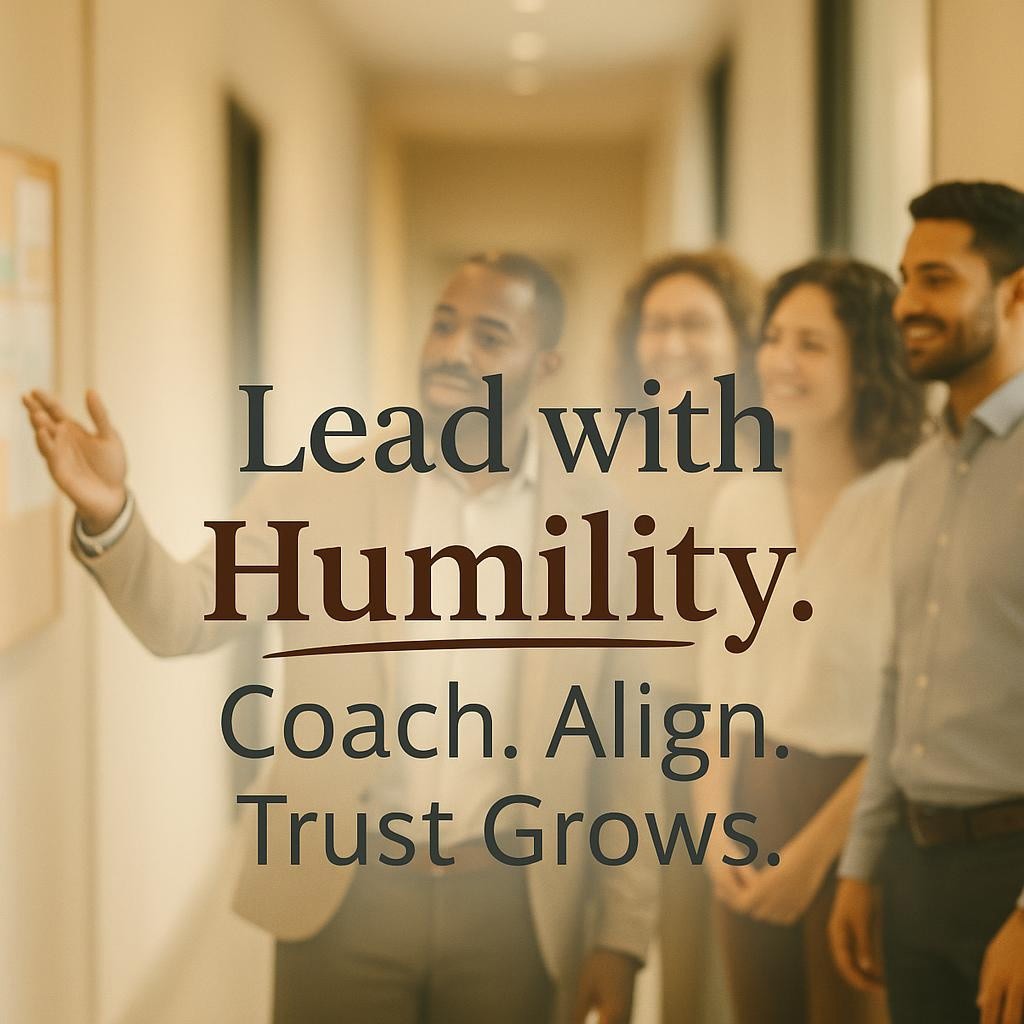
Humility Is a Performance Strategy: The Advanced Behaviors of Level Two Leaders
The operator was grinding the part again. Not because it was wrong, but because “that’s how we make it fit.” A leader on a Gemba Walk paused, asked what, then why. The team pulled old drawings. Forty years old. For decades, people had been grinding parts out of spec to keep work moving. No one had asked why. That day, they did, and the real issue finally stood up in the light. Michael Bremer shares this story in How to Do a Gemba Walk to remind us that we often manage the ghosts of old decisions. Humble questions make those ghosts visible .
What Level Two Leaders Actually Do
Most leaders can set targets and spot waste. Useful, but not sufficient. In How to Do a Gemba Walk, Michael Bremer describes three advanced behaviors that separate “Level Two” leaders from the rest:
- Teach and coach people to perform, fix, and improve their processes.
- Stay the course with tenacity, and balance that drive with humility that keeps you in touch with reality as it really is.
- Align support systems, including planning, metrics, communications, and recognition, so improvement becomes easier to do and harder to stop .
These are not titles. They are behaviors you can see and feel on the floor. People speak openly. Problems are not hidden. Small experiments are owned by the team, not dictated by the boss .
The Golden Idea: Humility Improves Performance
The way you ask matters more than what you ask. Bremer teaches leaders to start with “what” before “why,” to stay curious, and to show respect in every conversation. People are always watching to see if it is safe to tell the truth. Leaders who are truly effective at improving tend to lead with humility and a willingness to learn, and that shifts how improvement happens every day .
John Shook called it “Go see, ask why, show respect,” a behavior he learned from Toyota’s Fujio Cho. It is how we turn scientific thinking into daily action. We go to the place where work is done, we ask humble questions, and we respect people who create value. That is not soft. That is discipline that produces better outcomes .
Mike Hoseus put it plainly: “For us, the Gemba Walk was a way to live out the ‘Servant Leadership’ principle we were taught. A big part of our focus was building a relationship of mutual trust and respect on our walks” . And if your coaching does not land, remember the reminder Bremer includes: “If the student hasn’t learned, the teacher hasn’t taught” .
Teach and Coach, Right There at the Work
Level Two leaders do not walk to catch errors. They walk to grow capability. On the floor, sit with the team and coach through a simple pattern:
- What is the target condition?
- What is the actual condition?
- What was the last step? What did you expect? What happened? What did you learn?
- What obstacle is in the way now? What is your next small step? What do you expect to see? When will we check together ?
Two practical moves:
- Start at the team’s visual board. Ask, what is the target, why that target, and are we on track this hour. If not, what happened, what will we try next, how long will we test it, and how will we know it worked. Treat it like an experiment, not a verdict .
- When you see awkward steps or inconsistencies, ask why this work gets done that way and why the issue has not been addressed. Keep ownership with the people who do the work. Your role is to make learning safer and faster, not to supply the answer and walk away .
Align the Support Systems or Improvement Will Stall
Most teams are not blocked by one missing tool. They are blocked by the rules baked into planning, metrics, communications, and recognition. If metrics reward silo output, people act like silos. If planning ignores real process capability, teams end up firefighting. If recognition celebrates heroic workarounds, those workarounds become the norm. Bremer warns that misaligned support systems quietly undo good intentions, and he urges leaders to adjust these systems on purpose during and after walks .
A powerful example comes from Autoliv in Ogden, Utah. The company changed its idea system. Instead of pushing every idea up to managers, they let teams post ideas on the cell board, gain shift approval, share with the other shift, and check with support staff when needed. Implemented ideas grew from about 16,000 in 2004 to more than 100,000 in 2010. They did not push harder. They changed the path so improvement could flow .
On your next walk, test your systems with four clear questions:
- Planning: Does our plan reflect actual capability, or is it wishful thinking that forces workarounds ?
- Metrics: Do our metrics drive cross functional cooperation and customer value, or just local wins ?
- Communications: Is there a clear, fast path to escalate unresolved issues that works in real time, not just on paper ?
- Recognition: Do we reward sustained improvements and learning, or only end of month heroics ?
Build Cross Functional Trust You Can See
Trust is not a speech. It is visible when functions gather at a shared board, set priorities together, and limit work to real capacity. In one office example, leaders from Engineering, Purchasing, Sales, and Operations met twice a week around a capacity board. Once people saw the real workload, Sales changed what they sent to Engineering, and the win rate on proposals doubled. Seeing work together changed behavior together .
How to Start This Week
- Walk with a purpose. Write one clear purpose that touches people, process, and performance. For example, learn how ideas flow, find one barrier, and leave with a test you will check on the next walk .
- Ask what, then why. Begin each conversation with what is the purpose of this activity and who is the customer. Then ask why the work is done that way and why the issue has not been addressed. Keep your tone calm and your body language open .
- Coach one small experiment. Help the team choose a next step, define what they expect, and decide when you will both check. Set the follow up before you leave. Plant a seed you intend to water .
- Adjust one support system. Change one lever you own. Shift a metric from silo output to end to end flow. Shorten the escalation path by one step. Recognize learning and sustained gains, not just firefighting. Invite a partner from a support group to your next walk so they can see the impact with their own eyes .
A Word You Can Carry to the Floor
“Go see, ask why, show respect.” Use this to turn science into daily leadership. Respect means designing work that lets people think, learn, and contribute. It also means having the courage to look at your own systems when results slip. Bremer wrote How to Do a Gemba Walk to help leaders get in touch with reality, teach on the spot, and align the invisible structures that shape behavior. If you walk with humility and purpose, you will see what others miss, and your people will see themselves as capable problem solvers. That is how trust grows. That is how performance changes .
On your next walk, stop at the first workaround and ask yourself, what in our planning, metrics, communications, or recognition made this the smart move for a good person today. Then ask the team, what experiment would you try next if it were safe to learn. Make it safe, and they will show you the way. Are you ready to lead that kind of walk.