Understanding Gemba Walks and Their Impact on Operational Efficiency
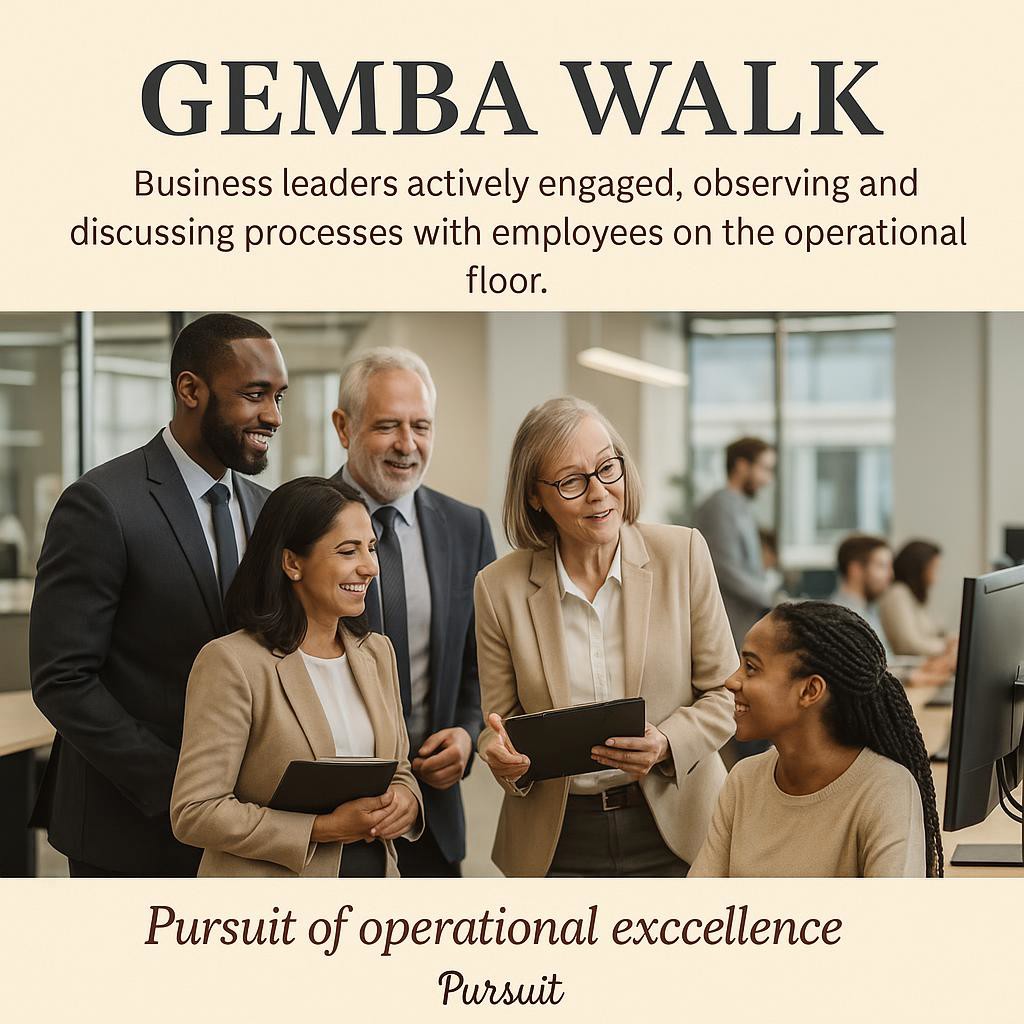
Gemba Walks, a fundamental practice in lean management, empower business leaders by providing firsthand insights into process execution, enhancing operational efficiency. As discussed in "How to Do a Gemba Walk," this practice allows leaders to observe operations as they occur and identify inefficiencies. This insight is key for crafting improvements that align with strategic goals.
Observing Processes Firsthand
A vital principle of a Gemba Walk is the importance of going to where the work happens (the Gemba) to observe processes directly. This approach helps understand real-time operations, contrasting actual workflows with assumed processes. Leaders visiting the workplace get a true picture of operations, which is crucial for understanding process performance.
In line with Toyota’s philosophy of "go see, ask why, show respect," this direct engagement helps identify discrepancies between expectations and outcomes, making it easier to detect inefficiencies and adjust value-adding activities as needed.
Identifying Inefficiencies
Gemba Walks offer a structured method to assess process performance, often surfacing key issues that require attention. A culture of inquiry during these walks—where questions about performance metrics and their impact on processes are encouraged—enables leaders to uncover inefficiencies that might have otherwise stayed hidden.
The book highlights the importance of focusing on "system" problems rather than assigning blame to individuals. This shift in focus allows leaders to address the root causes of inefficiencies within processes, thereby enhancing overall operational efficiency.
Enhancing Employee Engagement and Development
Another significant benefit of Gemba Walks is their potential to boost employee engagement and development. By involving employees in the walk and encouraging feedback, leaders not only gain insights but also build trust and respect within the organization. This inclusive approach can improve morale and foster a stronger sense of ownership among employees, creating an environment where continuous improvement thrives.
These walks can help identify outstanding talents and promote a culture where employees feel encouraged to share improvement ideas and hone their critical thinking skills. This level of engagement is crucial for sustaining improvements and achieving long-term organizational success.
Creating a Framework for Improvement
Gemba Walks are closely tied to continuous improvement frameworks such as Plan/Do/Study/Adjust (PDSA). During these walks, leaders study processes and adjust strategies based on their observations. This iterative approach ensures that improvements are not only implemented but continuously refined to better meet organizational goals.
Aligning management support systems with findings from Gemba Walks is critical for supporting ongoing improvements. This alignment sustains the gains from improvement initiatives and prevents reverting to old, inefficient ways of operating.
Fostering a Culture of Experimentation
Leaders conducting Gemba Walks create an environment where experimentation and learning are encouraged. By asking probing questions and challenging assumptions, leaders foster a space where employees feel safe to express concerns and propose innovative solutions. This culture of open dialogue is key to identifying and eliminating waste, driving greater operational efficiency.
Long-term Success and Continuous Improvement
Strategic benefits of Gemba Walks go beyond immediate operational improvements. By embedding this practice into routine, organizations can achieve a higher state of improvement maturity. Leaders focus on long-term process health, leading to sustained organizational success.
In the broader context of lean management, Gemba Walks cultivate a mindset of continuous improvement, concentrating on building a resilient organization capable of adapting to changes and challenges. This resilience is essential for long-term competitiveness and success.
Final Thoughts
Gemba Walks are about more than observing processes; they transform how leaders and organizations perceive and engage with operational environments. By fostering a culture of inquiry and continuous improvement, Gemba Walks enable organizations to enhance efficiency, engage employees, and achieve sustainable success. Insights from these walks empower leaders to align efforts with strategic goals, ensuring the organization remains competitive and innovative.