A 30-Minute Gemba Walk Playbook: Prepare With SIPOC, Ask Better Questions, Follow Through
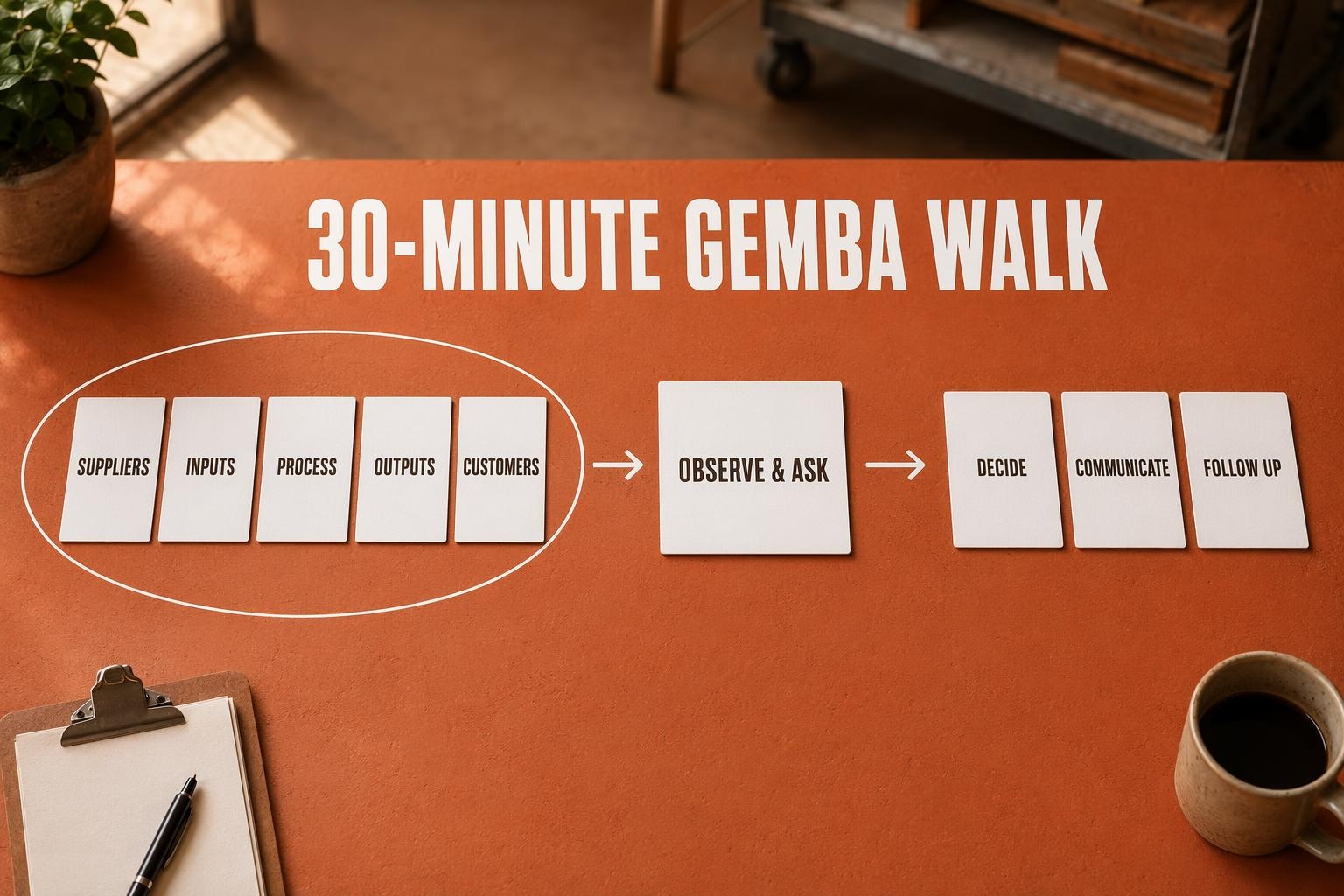
A focused gemba walk can fit into 30 minutes when it follows three moves: prepare with a SIPOC, observe the actual work and ask open questions, then close with decisions, communication, and follow-up. Gemba means going to the real place where work is done and value is created. This is not a tour, an inspection, or a chance to solve every issue on the spot. It is a short learning routine that helps a leader see the process before deciding what to do.
Set One Learning Purpose and a 30-Minute Agenda
A useful gemba walk begins with one question: what needs to be learned here? Without that purpose, a walk can become a loose conversation, a hunt for problems, or a visible sign that leadership is watching. None of those creates much clarity.
Choose one focus for the walk. It might be progress on an existing action, an observation of standard work, a look at a cross-functional handoff, or a conversation about barriers to reaching a target condition. First-line supervisors can use different purposes for different walks during the week. The key is not doing more walks. It is making each walk specific enough to produce better information.
A 30-minute block is a practical timebox to try, not a universal rule. Give the time a simple shape: prepare the learning purpose, spend most of the visit observing and asking, then reserve the final minutes for a clear debrief. The tempting thought: the problem is already obvious. That assumption is often where a walk turns into a verdict before the facts are visible.
The purpose is to understand how work moves, where it gets difficult, and what the people closest to it can teach. That requires preparation before stepping into the work area.
Prepare the Walk With a SIPOC That Defines What to Learn
SIPOC gives a gemba walk a frame before it becomes a conversation. The acronym stands for Suppliers, Inputs, Process, Outputs, and Customers. It is a simple map of how work creates value, and it helps a leader decide what data or conditions are worth observing.
Start with the process under review. Who supplies the information, materials, or approvals? What inputs are needed? What are the main process activities? What outputs should result? Who receives or depends on those outputs?
SIPOC can also map the leadership role itself. That is the useful distinction many leaders miss. A supervisor’s inputs may include schedules, leader standard work, daily meetings, or performance information. The leadership process may include huddles, coaching, and gemba walks. Expected outputs may include developed people, implemented improvements, or progress toward goals. Customers may include team members, peers, and the leader’s manager.
This does not need to become a large process-analysis project. A one-page map is enough to narrow the walk. Use it to identify the stakeholder connections, the expected output, and the evidence that would help clarify whether the process is working as intended. Review the map with relevant stakeholders when possible. That check matters because a leader’s version of the process may leave out a handoff or customer need that others can see.
A SIPOC is preparation for learning, not paperwork that proves the answer is already known. If it is used to confirm a preferred diagnosis, the walk begins with blinders on. If it is used to define what to learn, it creates a better starting point for observation.
At the Gemba, Observe First and Use Questions That Invite Learning
At the gemba, the leader’s job is to see, ask, and show respect before trying to fix. Effective walks can clarify the purpose of work, reveal how well work aligns across departments, and surface barriers that keep people from doing their best work.
What most people get wrong is treating questions as a faster route to the answer they already want. A leading question can make the expected response obvious. A closed question can end the conversation with a yes or no. Either approach may produce a neat answer while hiding the actual condition.
Then again, the exact opposite can happen when a leader asks broad questions but never probes for an example. Curiosity alone is not enough. The question needs to help the person explain what is happening in the work.
Use open and probing questions such as:
- What types of problems happen doing this work?
- How do you know when a problem exists?
- Can you show me an example of what you are describing?
- What has been learned from the actions taken?
- What are the next actions planned?
Questions that begin with what, how, and why can invite more useful detail than questions that contain the preferred answer. "What do you mean by that?" is often more productive than a quick correction. "How do you use this information to decide?" can reveal whether a metric supports the work or merely reports activity.
People at the worksite are also reading the leader’s behavior. They may be deciding whether it is safe to name a problem, whether the leader wants the real answer, and whether speaking up will lead to useful action. Interrupting, defending an assumption, or solving the issue before the explanation is complete can waste that moment. For a closer look at the difference between learning and inspection, see Most Gemba Walks Fail for a Quiet Reason: They Become Inspections, Not Learning Loops.
The goal is not to leave with every answer. The goal is to leave with a clearer view of reality and a shared understanding of what happens next.
Debrief Before You Leave: Decide, Communicate, and Follow Up
A gemba walk is incomplete until the leader clarifies what, if anything, changed because of it. Before leaving, ask three questions: Did we make any decisions? How will we communicate that decision? How will we follow up on progress?
These questions prevent a familiar failure: a useful conversation ends, everyone returns to work, and each person carries a slightly different version of what was agreed. The consequence is avoidable confusion, not lack of effort.
A debrief does not require an immediate root-cause analysis. It does not mean every walk must produce a decision. Sometimes the right next step is to gather more information, observe again, or involve another part of the process. The important part is making that next step visible enough that it does not disappear into daily activity.
When an action is identified, clarify who owns it and when progress will be revisited. Keep the focus on learning from the action, not on defending the first idea. Results vary with the process, the purpose of the walk, and the quality of follow-through.
Try one focused walk this week. Prepare one SIPOC, ask questions that help people think, and end with the three debrief questions. If a walk does not change what the team learns, communicates, or follows up on, what was it really for?