How to Start a “Let’s Be Peace” Circle (3–5 People) for Calm, Self-Trust, and Real Support
A “Let’s Be Peace” circle is a small group of 3–5 people who meet on purpose to practice inner peace together, not to talk about peace. You do a few simple things over and over: breathe, forgive, notice your “miracles” (your wins and moments of grace), and learn to trust what your body and heart are telling you. In the provided reference document, the heart of the movement is simple: when you find peace inside, you “radiate peace, calm, and a sense of well-being that becomes infectious.”
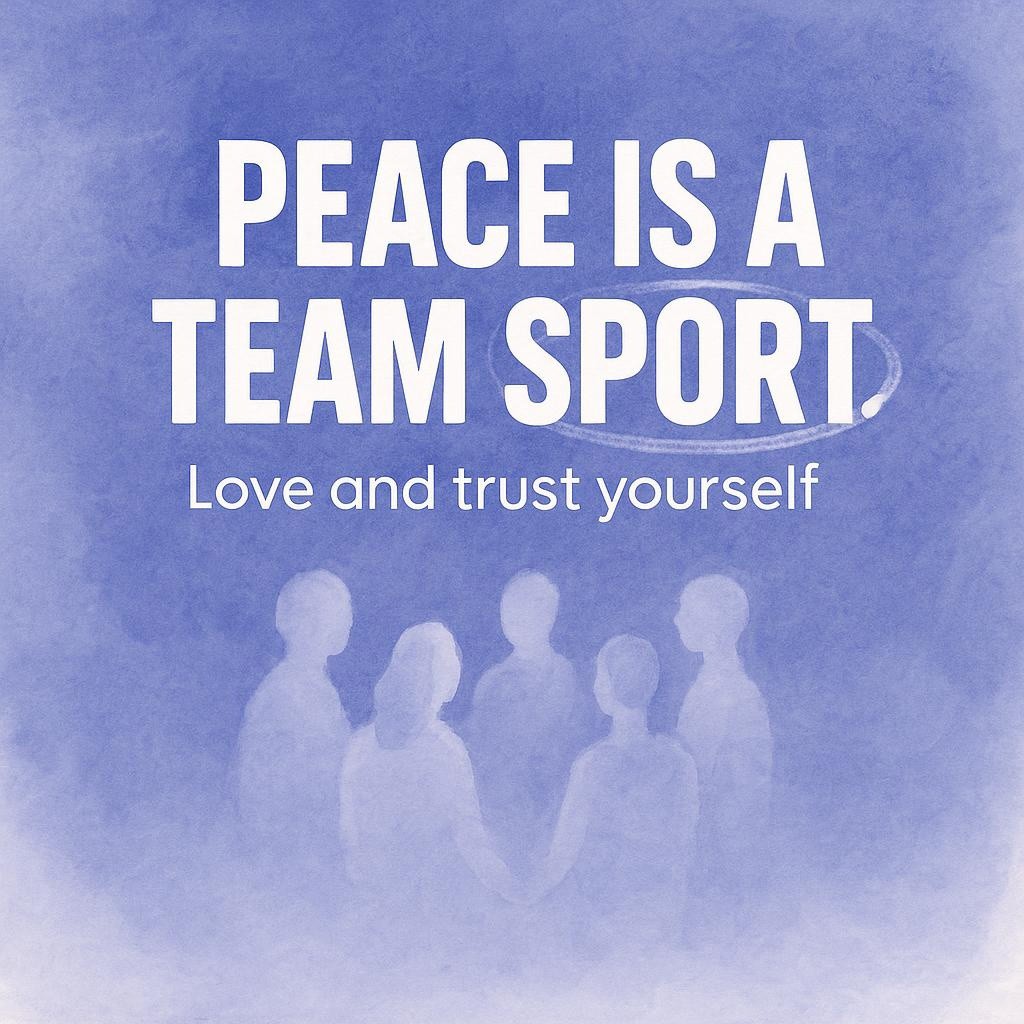
Let this be the throughline of your whole circle: “Love and trust yourself.”
What makes a “Let’s Be Peace” circle work (and what breaks it)
This kind of circle works because peace is not only private, it is also something we practice with other humans. The provided reference document says you can build peace “by yourself and for yourself,” and also “using the help of select teammates to assist you in your peace and wellness endeavors.”
Here’s the key: your circle is not a place to perform, fix, or prove anything.
It’s a place to come back to the part of you that already knows how to settle.
A story in the provided reference document shows this clearly. One contributor describes walking into a home with two rescued dogs who were afraid of everyone, and the dogs greeted her right away. When the homeowner asked what she was doing, she answered: “I am not doing anything, but I am being peace and being safe. I’m being secure.”
That’s the goal of your circle, to be a space where people feel safe enough to soften.
What breaks it is also simple:
- people who give advice when nobody asked
- people who turn sharing into a competition
- people who gossip or leak stories outside the group
If you want a quick gut-check, ask yourself: Do I feel safer after I talk to this person, or do I feel smaller? Your answer matters.
Step 1: Choose your 3–5 people by one standard, “Do I feel safe with them?”
You do not need perfect people. You need people who can be real, kind, and steady.
Look for:
- Good listeners. They can let someone speak without jumping in.
- Low drama. They don’t turn everything into a crisis.
- Respect for privacy. They understand what “confidential” means.
One contributor in the provided reference document explains that true peace is not made in the mind, it is “anchored and expressed from the heart, not from the mind.”So when you pick your circle, don’t overthink it. Notice what you feel in your body.
A simple invitation (copy, paste, send)
“Hey, I’m putting together a small ‘Let’s Be Peace’ circle, 3–5 people. It’s a calm weekly check-in where we practice breathing, forgiveness, and we share small wins and ‘miracles.’ No fixing, no judgment, just support. Want to try it with me?” We are starting virtually via Zoom.
Step 2: Set “gentle rules” so it stays safe and simple
Your first meeting can be short. Even 30 minutes is enough.
Start by agreeing on a few rules. In the provided reference document, the “miracles group” has “gentle rules,” including: “During this ritual, we only talk about positive things. When one person speaks, the other(s) listen(s). We appreciate and celebrate our successes together.”
Use those as your foundation.
Here are circle-friendly versions:
- What’s shared here stays here.
- One person speaks at a time.
- We don’t give advice unless someone asks.
- We keep it simple so it’s easy to return next week.
- We end with the same words each time: Love and trust yourself.
Step 3: Use the three core circle rituals (breath, forgiveness, miracles)
These are not “extra.” They are the point.
Ritual 1: Breathe first (2–3 minutes)
In the provided reference document, the author includes clear breathing options: “Breathe deeply (4, 4, 4 4 or 4, 7, 8).”
Pick one:
- 4-4-4-4: breathe in 4, hold 4, breathe out 4, hold 4
- 4-7-8: breathe in 4, hold 7, breathe out 8
Then pause and ask, quietly: What do I feel right now?
Ritual 2: Practice forgiveness (1–2 minutes)
The provided reference document is direct about this: “Forgive yourself and others. Forgiveness is a key to moving on.”Another contributor puts it even more plainly: “Peace demands forgiveness.”
If forgiveness feels big, keep it small. Try one sentence:
- “I forgive myself for what I did not know then.”
- “I forgive myself for my less-than-elegant choices.”
Ritual 3: Do a weekly “miracles” check-in (20 minutes)
The provided reference document explains why this matters: “one negative experience can seem to overwrite ten positive ones,” so it’s “an oasis of well-being to have a sacred time that we dedicate only to our successes, achievements, wins, and miracles.”
Here’s a simple flow:
- One minute to arrive: each person names one body feeling.
- Two minutes each:
- “A win or miracle I noticed was…”
- “What helped me was…”
- Close with one shared line: Love and trust yourself.
If you want a ready-made version of this structure, you can also use Miracles Ritual: 20-Minute Weekly Practice for Lasting Calm as a simple guide.
Step 4: Let your circle strengthen self-trust (so you stop asking everyone else)
A big thread in the provided reference document is learning to listen inward.
The author describes a moment of decision where she took deep breaths, asked what was right, and felt “a gripping in my stomach, as if a fist were sitting in the center of me.”She took that feeling seriously.
This is what your circle supports: not rules, but awareness.
Try this question in your next meeting:
- “When I’m calm, what do I already know?”
And if someone in your circle is stuck, you can borrow a line of support from the book’s tone:
- “Give yourself time, even if it is only five minutes each day, to unplug.”
For simple daily structure between meetings, Inner Peace Health Plan: Daily Steps for Calm That Spreads fits well with the “small steps, often” spirit in the provided reference document.
Peace is not something you force. It’s something you return to, again and again, until it feels familiar in your body. And when you do it with “select teammates,” it gets easier to keep choosing it.
Your next step is simple: invite 3–5 people, set gentle rules, breathe together, forgive a little, and track your miracles. Then end the same way every time: Love and trust yourself.