The Founder Projection Trap: Why Your Audience Doesn’t “Get It” (Even When You’ve Explained It 100 Times)
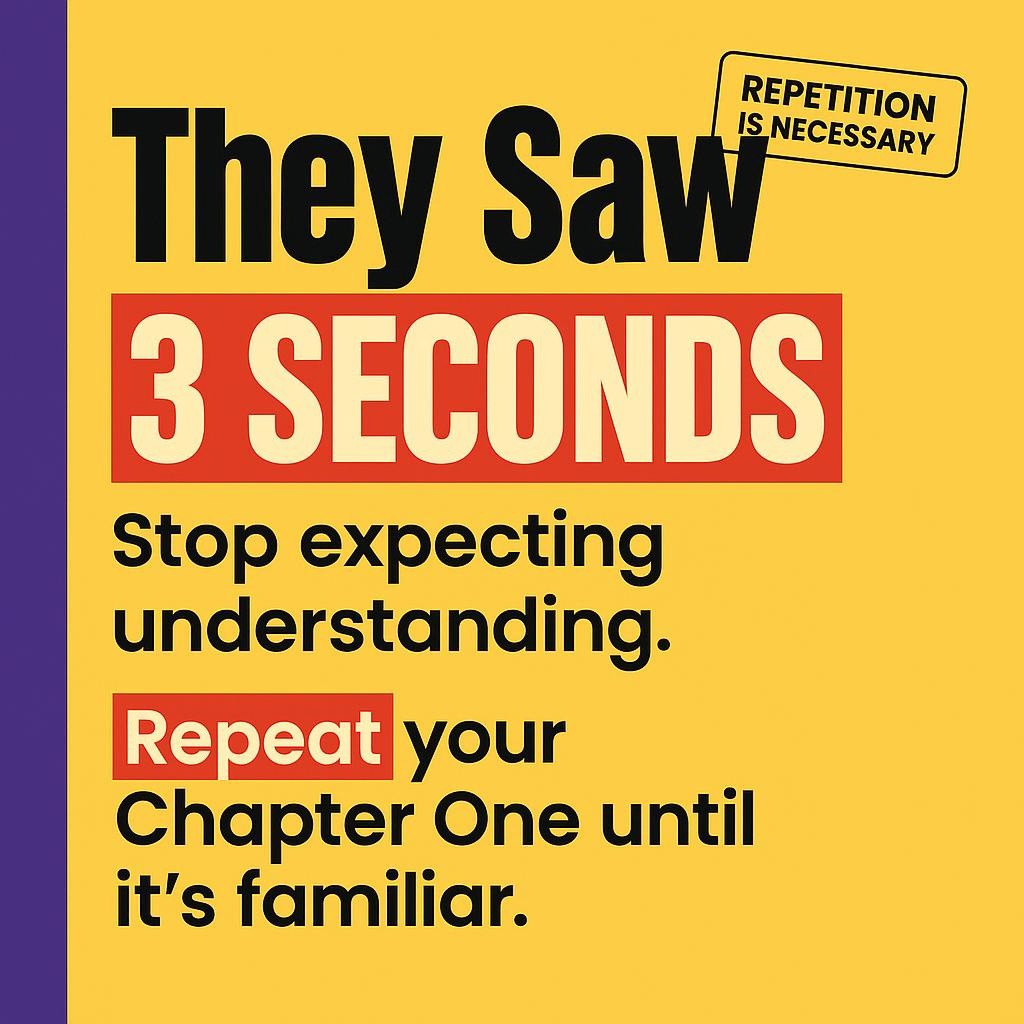
You are not bad at explaining. You are just expecting a stranger to understand a whole world from a three-second glance.
You see the roadmap. The vision. The five-year arc. The broken parts of the industry you’re trying to fix. The philosophy underneath your decisions. Then you post one carousel and wonder why people still don’t get it. That gap has a name: the Founder Projection Trap.
What the Founder Projection Trap is (in plain English)
The trap is simple:
Because you see the full picture, you unconsciously assume your audience does too.
But your audience has not been living in your head. They’ve seen:
- Two Instagram posts
- One LinkedIn update
- A three-second scroll past your website
- Maybe one podcast clip if you’re lucky
So when you feel like you’ve explained everything… they feel like they’ve barely met you.
This is where founders start spiraling:
- “I guess my content isn’t good enough.”
- “I guess people don’t like my message.”
- “I guess we need to post more.”
- “I guess we’re too late.”
It feels personal. It feels like rejection.
A lot of the time, it’s not rejection.
It’s just underexposure.
The “I already said this” illusion (and why it’s wrecking your momentum)
Founders don’t quit because they have nothing to say.
They quit because they think they’ve already said it.
“I already talked about our mission.”
“I already explained our differentiator.”
“I already told the story of why we started.”
Here’s the reality check, and it’s sharp for a reason:
"Yes. You did. Once. On a Tuesday. At 11:13 a.m. To 3 percent of your audience."
So take this as your permission slip:
"Online, repetition is not annoying. It is necessary."
If that line makes you breathe out, good. It’s supposed to.
Because most of your audience is not loud. They’re quiet.
They watch. They internalize. They evaluate. They don’t comment. They don’t like. They still buy later.
Repetition is not spam, it’s how people learn to trust you
Repetition only feels annoying when it’s lazy.
Done right, repetition is leadership.
It’s teaching.
It’s how your message becomes familiar instead of forgettable.
And it only works when it’s varied on purpose:
- Varied in format (video, text, carousels, short posts, long posts)
- Delivered in different emotional tones (serious, playful, personal, analytical)
- Placed in different contexts (FAQ, story, analogy, customer example)
That’s how familiarity forms without your audience feeling hammered.
It’s also how trust forms.
Trust does not come from one “perfect” post. It comes from many touchpoints that stack.
Your message might be fine, the “room” might be cold
There’s a brutal picture that explains what’s happening to a lot of founders:
You walk onto a stage. You deliver your best speech. Then you realize the theater is pitch black because the audience never showed up.
Most founders blame themselves.
But the real issue is often structural.
Here’s the hard truth:
"Content doesn’t fail because it’s bad, it fails because there’s no audience prepared to receive it."
Every platform has invisible prerequisites. To be seen, you need ongoing signals. Rhythm. Interaction loops. Consistent publishing. Identity cues. Repetition. A warmed room.
If those signals aren’t present, you can drop a masterpiece and the algorithm will shrug:
"Cute. Anyway, next."
So if you’re stuck thinking, “Why doesn’t anyone get it?”, ask a better question:
Is the room warm enough for the message to land?
What people are actually listening for (hint: it’s not your features)
A lot of brands treat content like a stage.
They step up and proclaim:
“Here’s what we do.”
“Here are our features.”
“Here’s why we’re great.”
It’s understandable. You’ve poured your life into this.
But the deeper truth is simple:
People don’t bond with explanation. They bond with recognition.
"Humans bond with reflection, not explanation."
That’s why it’s possible to explain your product flawlessly and still lose people. They’re not listening for a feature list.
They’re listening for themselves.
Their pressure. Their fatigue. Their mission. Their fear of falling behind. Their desire to make a real impact.
And this is why one line matters so much:
"Features are forgettable, but feeling understood is unforgettable."
When someone feels seen, their defenses dissolve. They lean in. They stay longer. They begin to trust.
The silent majority is not passive, they’re deliberate
If you’ve been chasing likes as proof that “it’s working,” you’ve been measuring the wrong thing.
Your most important audience is often the one you never see.
Silent followers are the majority (often 80 to 95 percent). They’re decision-makers. Thinkers. Busy professionals. Serious buyers. Mission-driven people who prefer to learn quietly.
They don’t need more noise.
They need consistent meaning.
And they’re watching your patterns.
A simple playbook to escape the trap (without burning out)
This is the part founders actually need. Not more motivation. A clear path.
1) Build a real backbone, not random posts
If your content feels scattered, it’s usually because there’s no underlying philosophy holding it together.
"Content without philosophy is just decoration."
You don’t need to “become a philosopher.” If you built something because you saw a problem and believed in a better way, you already have a worldview.
Your job is to stop keeping it trapped in your head.
2) Show up as a guide, not a performer
Founders often think they need to be louder, more charismatic, more camera-ready.
But audiences aren’t looking for a celebrity.
They’re looking for someone who can teach with clarity, express mission with sincerity, and provide emotional grounding.
That’s guide energy.
Not posturing. Not hype. Not shouting.
3) Choose predictability over perfection
The internet is obsessed with polish. Perfect branding. Perfect scripts. Perfect lighting.
But trust doesn’t come from perfect.
"Perfection doesn’t build trust. Predictability does."
Consistency does something powerful:
- It reduces your audience’s cognitive load. They don’t have to re-learn who you are.
- It builds emotional stability. People subconsciously relax when your brand feels steady.
- It turns your voice into a recognizable presence instead of a random pop-up.
If you disappear for weeks at a time, even if everything behind the scenes is fine, your audience feels the wobble. They don’t always say it, but they sense it.
4) Repeat your core truths until you’re recognized
This is where most founders stop too soon.
They post once, twice, ten times, then decide the message “didn’t work.”
But content doesn’t grow linearly. It compounds.
And repetition is the engine.
Here’s the truth that removes the guilt and replaces it with calm:
"Repetition does not bore people. Repetition teaches people."
Even better:
"Authority isn’t declared, it’s repeated into existence."
You don’t need to say new things every day.
You need to say the real things many times, from many angles, until the market stops guessing who you are.
The bigger goal: become a place people return to
Most brands feel fragmented. A post here. A clip there. A blog once in a while. No thread. No emotional stability. No continuity.
People forget fragments.
They remember worlds.
When your voice, worldview, tone, and rhythms stay coherent, your brand becomes a place. A familiar environment. A kind of emotional home.
And that’s when the real shift happens: your presence becomes heavier in the market. More felt. More substantial.
Where Inkflare fits (and why this isn’t about “posting more”)
At Inkflare, we’re not trying to turn you into a content machine.
We’re here to protect your voice and multiply it, without making you perform daily.
We do that by learning your mission and voice in depth, translating it into a system (not random posts), generating content across formats that points back to the same core truths, then publishing and interlinking it so each piece strengthens the rest.
Over time, your brand stops feeling like scattered content and starts feeling like a coherent world people can step into.
Because the truth is, most founders don’t need more content.
They need meaningful repetition, done consistently enough to build belonging.
So if you’ve been thinking, “Why don’t they get it?”, sit with this question instead:
If repetition is how trust is built, what would change in your business if you stopped treating repetition like a flaw, and started treating it like leadership?