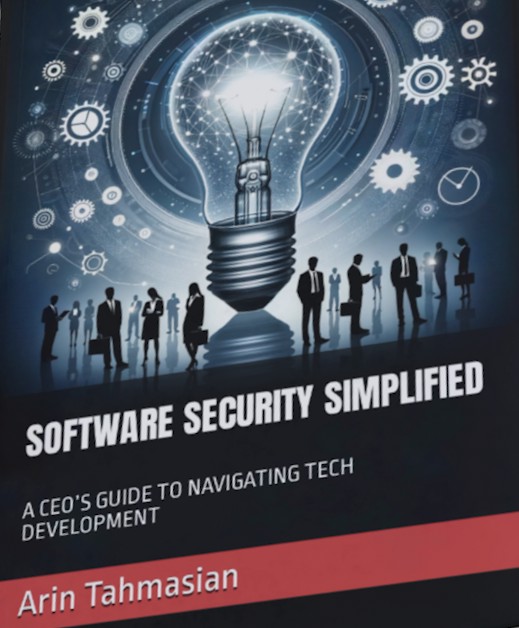
Reading this book equips leaders with a practical, end-to-end playbook for safeguarding their organizations in a world where every company runs on software. By translating complex security concepts into clear decisions, it helps executives embed security into strategy, culture, and daily operations—reducing breach risk, protecting brand trust, and unlocking confident innovation. You’ll learn how to build on bedrock principles like confidentiality, integrity, and availability; align secure design with the software development lifecycle; and champion authentication, authorization, and encryption that fit your risk profile and growth plans . The guidance on risk management, compliance (GDPR, CCPA, HIPAA), and incident response turns security from a reactive cost center into a proactive capability that preserves resilience, speeds audits, and strengthens market credibility . Finally, the closing chapters show how to lead a security-first culture that adapts to evolving threats, cloud realities, and IoT complexity—so your teams stay vigilant, your systems stay dependable, and your customers stay confident .
Software Security Simplified: A CEO’s Guide to Navigating Tech Development
Key Points
Part I: Introduction to Software Security
See the invisible: treat software security as an executive discipline, not a technical afterthought.
The book reframes software security as a board-level competency that determines brand trust, resilience, and growth. It opens with a vivid question—how do you protect what you can’t touch?—and a chilling image of a “hidden mechanism silently pilfering sensitive data from your servers” to underscore that today’s threats are often invisible until reputational damage lands on headlines . The author distinguishes software security from the wider umbrella of cybersecurity so leaders can prioritize the right investments and metrics; software security is about ensuring applications behave as intended under attack through secure SDLC, threat modeling, and vulnerability management—decisions executives can shape with governance and funding . Why it matters now: as software complexity and attacker capability scale with faster networks and compute, leadership blindness becomes a risk vector in itself . Practical move: elevate software security into strategy reviews and product roadmapping, requiring secure design checkpoints and risk sign-offs. The payoff is immediate clarity—security becomes an enabling constraint that protects velocity rather than a brake. Expect a mindset shift from reactive patching to proactive design, from delegated tech worry to accountable leadership intent. This shift avoids costly errors that could devastate customers’ lives and reputations while positioning your company to move faster with confidence .
Part I: Introduction to Software Security
Adopt the gardener’s mindset: continuous vigilance beats one-time fixes.
The book’s case-study lessons compare security to “gardening”—a living system that needs regular care. Continuous updates, audits, and policy enforcement prevent small vulnerabilities from becoming exploit pathways, while incident rehearsal enables “rapid response” that limits blast radius when things go wrong . This is not generic advice; the contrast between companies that were breached due to lax maintenance and those that contained damage through rehearsed incident playbooks crystallizes a leadership takeaway: treat security as routine hygiene, not a crisis-only activity . Actionable steps: calendar recurring patch windows, mandate vulnerability scans, and track time-to-remediate as an executive KPI; pair this with a tabletop-tested incident response plan that defines roles, communication, and recovery operations. The gain is cultural: teams internalize that constant care is strategic, not optional. Leaders who operationalize vigilance remove luck from the defense equation, converting uncertainty into managed risk. The book’s framing helps non-technical executives champion predictable, rhythmic security work that compounds over time—exactly how healthy gardens thrive .
Part I: Introduction to Software Security
Draw the line: know precisely where software security starts and general cybersecurity ends.
By cleanly separating the scope of software security from general cybersecurity, the author gives leaders a targeting lens for investment and accountability. Cybersecurity spans networks, hardware, and organizational policy; software security focuses on the application itself—secure coding, code reviews, automated testing, vulnerability management, and user access controls—all integrated across the software development lifecycle . This distinction matters for budgeting, OKRs, and ownership. If your breaches originate in app logic and identity missteps, pouring funds into perimeter tools won’t fix root causes. The section’s plain-language rundown of SDLC embedding, threat modeling, and application-layer defenses lets executives align security with product cadence and engineering reality . Leadership action: assign clear product-security ownership, require security acceptance criteria at design, and verify via code reviews and automated tests tied to release gates. Benefit: a tractable, measurable program that reduces exploitable software defects and strengthens compliance posture without slowing delivery. The payoff is software that “behaves as intended, even in the face of malicious attempts” because security work is built-in, not bolted on .
Part II: Foundation of Software Security
Anchor every decision in the CIA triad—confidentiality, integrity, availability—and the principle of least privilege.
Part II grounds leaders in the few principles that do most of the work: protect secrets (confidentiality), ensure correctness (integrity), keep systems up (availability), and minimize access (least privilege) . The prose makes these ideas tangible with crisp analogies—“only trusted people know the secret,” “don’t change the signed contract,” “keep the library open,” and “only give house keys to those who need them”—so executives can immediately map them to customer data, transaction accuracy, uptime SLAs, and access policies . Why it matters: this is a mental checklist leaders can wield in design reviews and vendor assessments. Practical move: require teams to document how each feature safeguards CIA and enforces least privilege; then test those claims with targeted scenarios. The result is a shared language that shortens meetings and sharpens trade-offs, transforming vague “security concerns” into specific, solvable requirements. By institutionalizing these fundamentals, you preempt many classes of attacks and simplify audits because your controls are legible and consistent across systems.
Part II: Foundation of Software Security
Design security in, don’t strap it on: build a fortress with defense in depth, fail-safe defaults, and separation of duties.
The book insists that secure software is architected—never improvised. Its “fortress” metaphor clarifies why layered controls, safe defaults, and divided responsibilities turn single points of failure into controlled, contained events . Executives will appreciate how these principles translate into policy: require input validation, default-deny access, multi-layered checks, and duty separation in workflows that move money, data, or permissions. The narrative shows how layering keeps protection intact even when one layer falters, much like redundant shields in a multi-tier defense . Action: institute architecture reviews that explicitly grade designs on defense-in-depth and fail-safe behavior; tie approvals to closing identified gaps. Impact: fewer surprise vulnerabilities, clearer operational runbooks, and resilience when incidents occur. This is how you turn compliance boxes into operational strength—systems that “lock down in an emergency” rather than widen the breach .
Part II: Foundation of Software Security
Operationalize privacy and compliance: minimize data, prove consent, and rehearse incident response like a fire drill.
Compliance isn’t paperwork—it’s an operating model that preserves trust. The book distills privacy into decisive moves: collect only what you need (data minimization), secure explicit consent, honor user rights (access, erasure, portability), and audit routinely to verify you’re doing what you say, aligned with GDPR, CCPA, HIPAA, and sector rules . The author then pivots to incident readiness: build a documented Incident Response Plan, designate an Incident Response Team spanning security, legal, and PR, and run simulated exercises—“like fire drills”—to surface gaps before real heat arrives . Executive action: make DPIAs a gating artifact for new initiatives, measure audit completion rates, and schedule quarterly incident simulations. Value: faster breach containment, fewer regulatory surprises, and a demonstrable culture of care that customers and regulators can see. This blueprint transforms privacy promises into verifiable practice and turns crisis into choreography rather than chaos.
Part III: User Authentication & Authorization
Treat identity as your new perimeter: modernize with tokens, SSO, and layered authentication.
In a connected world, identity and access management carry most of the security weight. The author clarifies OAuth’s token-based model and why it’s authorization—not authentication—until extended with OpenID Connect, a distinction that prevents costly design mistakes . The book’s “single, secure key” metaphor for SSO makes the business case palpable: fewer passwords, less fatigue, lower support costs, and stronger centralized control—while LDAP/Active Directory enforce role-based limits so people only reach what their role permits . Action: standardize on SSO with MFA for all critical apps; adopt RBAC and periodic access reviews to sustain least privilege; and store credentials centrally instead of scattering them across services. Outcome: attack surfaces shrink, user friction drops, and audits accelerate because access decisions are consistent and explainable. This identity-forward posture turns fragmentation into clarity and gives executives a lever to reduce both risk and cost in one move.
Part III: User Authentication & Authorization
Eliminate password fatigue without weakening control: use SSO to boost both security and productivity.
The chapter turns a common trade-off on its head: with SSO, you get more security and better usability at once. The narrative explains how an initial authentication issues a trusted token—your “digital ID card”—that downstream applications accept, drastically cutting repeated logins and the weak-password behaviors they cause . Tactically, SSO centralizes credential storage, enabling uniform MFA, session policies, and revocation. Integrating SSO with directory services ensures that when roles change, access rights change with them, enforcing least privilege automatically . Executive move: make SSO mandatory for all SaaS and internal apps, tie it to HR-driven role changes, and track reductions in password resets and unauthorized access attempts. Result: a measurable lift in employee experience and a defensible improvement in your audit trail—proof that convenience and control can rise together when identity is designed well.
Part III: User Authentication & Authorization
Audit what matters: lifecycle, logs, and least privilege create accountable access at scale.
Beyond sign-in, the book emphasizes governance: keep a “visitor log” of who accessed what and when; manage the full user lifecycle from onboarding to exit; and enforce role-based access with the principle of least privilege as your north star . These practices are presented with pragmatic metaphors—RBAC as assigning specific access cards, least privilege as giving only necessary keys—that help leaders reason about risk in human terms . Action: institute quarterly access reviews, automate deprovisioning on offboarding, and require strong factors (including biometrics where appropriate). Benefit: fewer dormant accounts, clearer forensics, and reduced insider risk—while simplifying compliance evidence. This disciplined identity fabric is how large organizations keep access coherent and defensible even as teams, tools, and vendors shift.
Part IV: Encryption in Transit & at Rest
Encrypt everywhere, differently: protect data in motion and at rest with purpose-built controls.
The author elevates encryption from buzzword to operating rule. First, understand the basics—encryption transforms readable data into ciphertext recoverable only with the right keys—and then apply distinct strategies for transit versus storage . In transit, default to HTTPS and modern TLS; for file movement, prefer FTPS or SFTP to keep payloads secure across networks . At rest, select proven algorithms like AES, separate key management from data stores, and use whole-disk encryption for devices plus database features like TDE for structured data . Executive action: mandate TLS-only endpoints, inventory all data stores and enable at-rest encryption, and centralize key management. Impact: eavesdropping becomes unproductive, device thefts turn into non-events, and compliance burden eases because you can demonstrate that even if data is accessed unlawfully, it remains unreadable without keys.
Part IV: Encryption in Transit & at Rest
Treat keys like crown jewels: separate, centralize, and monitor key management.
Encryption is only as strong as its keys. The book’s pragmatic guidance—never keep “house keys under the doormat”—lands a crucial operational point: store encryption keys separately from the data they protect, use centralized key management, and tightly control access to those systems . Leaders should also extend the protection envelope to backups, which often contain the same sensitive data and may live offsite or in cloud services; encrypt them and monitor access just as rigorously . Action: deploy a managed KMS, enforce role separation between data admins and key custodians, and audit key rotations and usage. Benefit: you neutralize a class of catastrophic failures where attackers bypass crypto by stealing keys. Strong key stewardship turns encryption from checkbox to genuine risk reduction that stands up to forensic scrutiny.
Part IV: Encryption in Transit & at Rest
Balance security and performance: measure, then optimize your encryption impact.
Leaders often fear encryption will slow systems. The author addresses this directly: modern solutions and hardware mitigate performance overhead, and careful design can keep user experience seamless while strengthening protection . The actionable takeaway is to benchmark critical paths, enable hardware acceleration where available, and tune cipher suites and storage encryption modes to fit workload patterns. Pair this with robust access controls and audits to create a layered posture that includes encryption but doesn’t rely on it alone. The result is pragmatic parity—data that remains private without compromising responsiveness. Framed this way, performance becomes a solvable engineering problem, not a reason to weaken controls, eliminating a recurring excuse for leaving data exposed.
Part V: Security Attacks & Response Strategies
Win before the breach: preparedness and strategic response are your multipliers.
Part V crystallizes the executive play: readiness is a continuous practice, not a status. The book’s conclusion to the attacks-and-response arc emphasizes “preparedness and strategic response” paired with a willingness to adapt as the defining factors for resilience . Practically, that means establishing detection, codifying communication protocols, training staff, and empowering an IRT to execute swiftly—moves that drastically reduce impact when incidents occur . Action: set MTTR targets for security incidents; drill containment and recovery; and ensure legal, PR, and customer success have playbook roles. Why it matters: in a threat landscape evolving “at an unprecedented pace,” velocity of coordinated response beats the attacker’s dwell time and preserves customer trust . This chapter reframes security from fear to capability—a practiced muscle that turns crises into managed events.
Part V: Security Attacks & Response Strategies
Compliance as confidence: legal readiness protects reputation as much as it avoids fines.
The book connects legal and regulatory discipline directly to stakeholder trust. Staying informed and compliant with data protection laws isn’t just about avoiding penalties—it’s how you sustain “the trust and confidence of customers, partners, and stakeholders” in a breach-prone era . Actionable guidance includes regular audits, privacy-by-design processes, and timely disclosures, supported by an incident response framework that ensures clarity under pressure. Leaders should measure evidence readiness: can you quickly show regulators and customers what controls were in place, how you contained impact, and how you will prevent recurrence? Benefit: your narrative becomes competence rather than contrition, preserving brand equity when it’s most fragile.
Part VI: Final Thoughts on Software Security
Evolve like the threat: invest in adaptive defenses against AI-augmented attacks, IoT sprawl, and cloud risk.
Part VI looks ahead and names the moving targets: adversaries leveraging AI and ML, an expanding IoT attack surface, rising privacy expectations, and cloud-specific vulnerabilities that require rethinking controls . Leaders are urged to match sophistication with proactive analytics, threat hunting, and platform-aware cloud security—adjusting strategy as systems and regulations shift . Executive actions: fund continuous training, red-team exercises in IoT and cloud contexts, and predictive monitoring to get left of boom. The value is durability—your defenses learn as quickly as your attackers, and your organization avoids static postures that age poorly. The chapter’s message is energizing: the future favors teams that treat adaptation as standard operating procedure.
Part VI: Final Thoughts on Software Security
Lead the culture: make security everyone’s job, modeled from the top.
The final movement argues that tools follow culture. Executives must champion security, invest in training, and “lead by example,” embedding security into the organization’s ethos so protocols are lived, not laminated . Communication is highlighted as a force multiplier: open, ongoing dialogue turns security into a “shared responsibility” rather than a siloed function . Concrete steps: include security goals in performance reviews, budget for ongoing education, and celebrate teams that surface and fix issues early. Payoff: faster adoption of best practices, fewer shadow systems, and a workforce that can spot and stop threats where they work. Culture is your only scalable control; this chapter shows how leaders convert intention into everyday behavior that compounds resilience.
Part VI: Final Thoughts on Software Security
Own the narrative: as technology businesses by default, leaders must be conversant in software security.
The book closes with a direct call to modern executives: “virtually every business operates as a technology entity” now, interacting with customer-facing software and sensitive data daily. Understanding threats and their business impact “isn’t just a precaution; it’s an essential aspect of steering a business responsibly” . This is the core promise delivered throughout: you don’t need to be a coder to lead security well—you need a clear mental model, the right questions, and a bias for preparedness. Action: add software security to leadership education agendas, require security acceptance in product gates, and review risk dashboards alongside financials. Outcome: fewer blind spots, better trade-offs, and a reputation for reliability that compounds customer trust and competitive advantage.