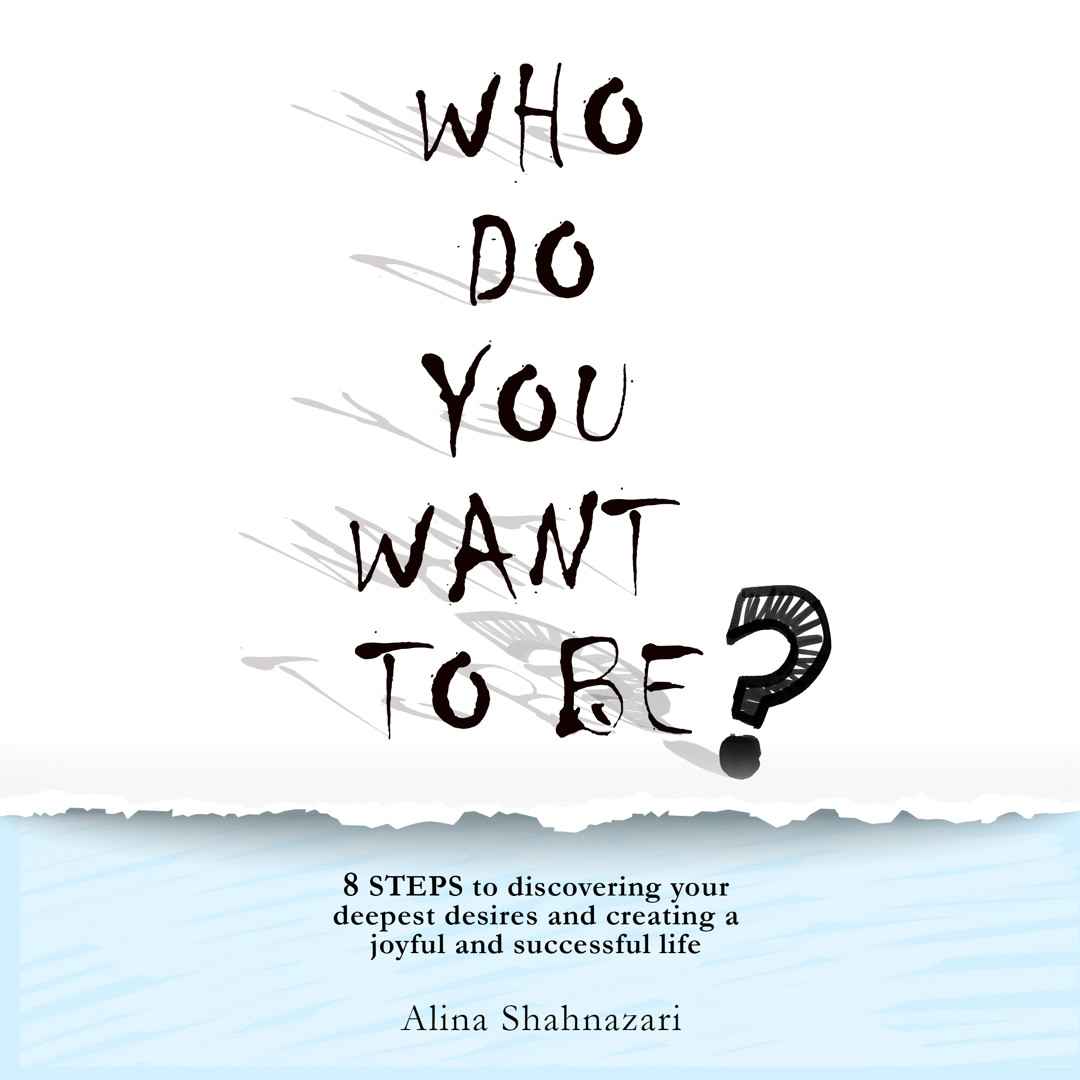
This book offers a practical, eight-step blueprint to clarify your deepest desires, align your thoughts and daily habits with your vision, and then become the person capable of living it. By internalizing its core practices—setting clear intentions, mastering your mindset, upgrading your environment, and dissolving limiting beliefs—you learn to generate sustained motivation from within rather than chase fleeting external rewards. The author’s bold, minimalist guidance and field-tested exercises help you shift your “vibration” to match your goals, emulate specific skills ethically, and take calm, high-leverage action instead of burning out with busywork. The result is a life that feels lighter, more intentional, financially smarter, and authentically yours—balanced across work, relationships, and self-care, and resilient in the face of setbacks. If you want a concise, compassionate, and actionable map for personal transformation that puts joy and integrity at the center, this book shows you how to create it step by step .
Who Do You Want to Be? 8 steps to discovering your deepest desires and creating a joyful and successful life
Key Points
Preface: A gift to my daughters Myla and Adella, and to you, the reader
“Clarity changes your trajectory: when you decide who you are becoming, life stops blowing you around.”
The Preface frames the book’s core promise: clarity plus intention is the engine of a joyful, self-created life. The author left NASA’s Jet Propulsion Lab not to chase accolades but to map the thought patterns, behaviors, and environments that produce lasting joy and success. That origin story matters because it signals a methodology: observe, distill, and apply. The Preface positions the reader to do the same—treat life as an experiment, notice what creates inner lightness, and translate insights into simple, repeatable steps. You’ll hear the book described as “minimalist” and “to the point,” deliberately designed to be re-read and used like a pocket manual, not an abstract manifesto. The author’s journey—meeting billionaires and everyday high performers, then reverse-engineering their moves—reminds you that “hard work alone” isn’t the differentiator; the differentiator is intentional thinking, ethical action, and environment design that make the right actions feel natural . This mindset instantly dissolves a common pain: drifting. By naming a destination and aligning your daily state to it, you replace frantic striving with calm precision. The Preface’s tone—bold, compassionate, experimental—establishes the book’s signature practice: decide first, then become the person who naturally behaves at that level. That’s your north star for every chapter that follows.
Part 1: Discover What You Truly Want
“Build a whole-life vision, not a single goal: align every area so progress feels like momentum, not sacrifice.”
Part 1 argues that true happiness isn’t siloed achievement; it’s harmony across the full spectrum—work, relationships, money, health, growth, and play. The author invites you to draft an inspiring, multi-area vision and then test it with real life. This solves the common trap of chasing one metric (income, role, status) while eroding health or joy. The section’s promise is practical: when every domain aligns to a coherent vision, your days feel lighter and progress compounds. The tone is invitational—“Let’s get to it!”—and deliberately clear-eyed about cultural noise that “hypnotizes” us into consumption and comparison. The book’s unique angle is its insistence on inner alignment first: cultivate thought patterns, beliefs, and daily environments that support your grand vision; otherwise, you’ll always be overcorrecting downstream. This is more than self-help cheer; it’s operational advice: define what matters, design conditions that make those choices easier, and then make calm, calculated moves that compound over time. You’ll experience an immediate shift from reactive living to intentional building—a hallmark of the book’s brand voice: bold, direct, and lovingly practical .
Step 1: Figure out what kind of life you want to live
“Find passion by doing, not daydreaming: test interests until the learning curve flattens and joy persists.”
Step 1 reframes passion as a process, not a lightning strike. Start with a spark of interest, stay engaged through the awkward learning curve, and then notice whether enjoyment grows when skill improves. The author’s simple exercise—list daily activities for three weeks, then list what truly makes you happy, and realign your time—is a powerful filter that replaces vague longing with concrete reallocation. It meets readers where they live: overloaded calendars and dull routines. The unique promise is relief through subtraction and re-prioritization; when you deliberately include what enlivens you and delete what deadens you, motivation becomes automatic. The chapter stresses that passions evolve—celebrate new chapters as signs of growth, not instability. This dismantles a hidden blocker: the belief that you must pick once and never pivot. Practically, you’ll start noticing micro-joys in activities that can be combined into a distinctive life design, which the author—an engineer by training—frames as connecting seemingly unrelated dots into something personally original. The immediate benefit: you stop waiting for a perfect calling and start building one that fits, fueled by curiosity and sustained by structure .
Step 2: Know how your mind works & what your body needs
“Thought → feeling → action → results: master the upstream and the downstream takes care of itself.”
Step 2 offers a crisp causal chain: what you dwell on becomes what you feel, which becomes what you do, which becomes your outcomes. It’s not a slogan; it’s operational psychology. The author’s instruction—generate believable positive thoughts, not hollow affirmations—guards against wishful thinking. Believability matters because feelings follow credence, not platitudes. Meditation is taught as a practical tool for noticing mental weather and choosing thoughts like skilled navigation—“watch clouds pass by” and select better ones. The section also ties mindset to environment: associate with “good vibes,” care for your space, and your thinking improves—an overlooked shortcut to behavioral change. The benefit is immediate: you stop attempting willpower marathons at the level of action and start working at the level of thought and state, where leverage is highest. This is a signature move of the book: shift identity and inner state first so execution feels natural, not forced. In a world of external stimulators, this chapter recenters sustainable motivation inside you, restoring agency and calm momentum toward your vision .
Step 3: Design your environment
“Design the soil before you plant the seed: curate people, spaces, and money beliefs that let your vision take root.”
Step 3 uses a vivid metaphor: a seed can’t grow if the wind is harsh, the soil is barren, and there’s no sunshine. Likewise, your vision needs supportive people, helpful systems, and a calm inner climate. The author’s counsel to clear negative influences and upgrade your financial mindset is distinctively practical—money is “a tool…like a hammer,” an amplifier that magnifies who you already are. So learn the rules, invest, and interrogate childhood scripts such as “money is evil” or “you must suffer to earn,” because those scripts quietly cap your ceiling. This chapter attacks two silent saboteurs at once: toxic environments that drain your energy and inherited money beliefs that shrink your options. The payoff is profound: when your environment celebrates your goals and your financial beliefs shift from fear to stewardship, you stop white-knuckling progress and start experiencing lift. The author insists on meaningful work (avoid “busy and superficial work”) and daily skill-up time so your external world reflects your internal intention. This is how you make right action easy—and resilience, inevitable .
Step 4: Make it all happen like magic
“Calm creates clarity: surrender frantic effort, apply the 80/20 rule, and let better paths emerge.”
Step 4 punctures the hustle myth. The author reveals that most of the extra-hard work was just “busy work,” and the real gains came from a small, high-leverage slice of effort—the 80/20 that moves the needle. The paradox is liberating: when you relax and accept where you are, you widen your field of vision; new routes appear that were invisible under strain. This runs counter to cultural prescriptions of nonstop grind and speaks to a common pain—exhaustion without advancement. The actionable shift is twofold: prune low-yield tasks and cultivate ease. Counterintuitively, “easy, calm and calculated moves do the trick” most of the time, reserving sprints for true inflection points. Practiced consistently, this stance rewires your nervous system for creative problem-solving and high-quality decision-making. You’ll feel the difference fast: fewer to-dos, more progress; less noise, more signal. It’s a blueprint for sustainable momentum and a life that feels better on the inside than it looks on the outside—a central ethic of the book .
Step 5: Become that person now
“Match your vibration: become the person now—and emulate skills, not idols.”
Step 5 delivers the book’s keystone: align your energy, attitude, and behaviors with the identity that naturally produces your goals. If you want to be a successful founder, study one’s thinking, time use, problem frames, and language—and practice them until they fit. There’s a crucial ethical twist: never make anyone your “ideal,” because everyone has a dark side; emulate the specific skills and values you need and leave the rest. This protects your integrity while accelerating growth. The chapter’s most distinctive exercise is the Raikov Effect—a guided imagination protocol to “take their brain and put it in your head,” instantly borrowing a master’s patterns. It’s playful, but powerful: breath, posture, and self-image shift in minutes, and behavior follows. The author underscores guardrails: no pretending, no deception—“whatever you put out in the world will come back to you.” The payoff is immediate confidence and traction; by rehearsing the inner stance of your desired self, you shorten the distance between you-now and you-next. It’s a humane hack for identity-level change that feels natural because it begins on the inside .
Step 6: Get out of your own way
“Uninstall limiting beliefs installed before age seven—and watch your progress unstick.”
Step 6 traces self-sabotage to beliefs absorbed in early childhood and reinforced by culture. The chapter names the inner voice—“Who am I to dream this big?”—and distinguishes it from intuition: it’s usually fear wearing concern’s mask. The author’s promise is specific: once you recognize limiting beliefs as “thoughts with no concrete truth,” you can replace them with enabling ones that align with your deepest desires, not society’s scripts. This is a profound relief for readers who have “done everything right” but still can’t break through; the issue isn’t effort, it’s a vibration mismatch between identity and goal. The section even introduces self-hypnosis as a deliberate reprogramming tool, flipping cultural “hypnosis” (from family, media, norms) into self-directed liberation. The result is structural: projects move, confidence grows, and your actions stop canceling your intentions. Progress stops feeling like pushing a boulder uphill and starts to feel like gravity is finally on your side. That’s the heart of the book’s transformation—inner alignment first, outcomes second .
Step 7: Surrender and then take the right actions
“Do less, better: surrender busywork, accept reality, then take the one right next action.”
Step 7 is the operational antidote to overwhelm. The author shows how overpacking to-do lists creates motion without momentum and recommends a strategic surrender: accept exactly where you are, exhale, and act from clarity. In this calmer state, you can perceive the one action that collapses many tasks. The 80/20 theme deepens here—most lists can be cut without consequence, freeing time for rest, learning, and relationships that actually enlarge your life. It’s a humane productivity: you’re invited to stop treating your nervous system like an engine to be redlined. The benefit is compounding energy; as you refuse busywork, you recover creativity and execute with precision. This is how you “make it all happen like magic”: not by doing everything, but by doing the right things from the right state. In a culture that worships hustle, this is a liberating, contrarian playbook that yields better results with less wear-and-tear—a signature promise of the book .
Step 8: Keep going
“Decide, imagine, intend—daily. Then be bold enough to keep going.”
Step 8 crystallizes the practice in one line: “Decide what kind of life you truly want, use the power of your imagination and start becoming the person that matches your vision... beginning today!” That triad—decision, imagination, intention—becomes a daily ritual. The chapter threads in mini-rituals: set morning intentions for how you want to feel and how you want others to meet you; take “baby steps” outside your comfort zone; and take risks you can recover from to keep life alive. The author’s tone is both loving and firm: play, fall down, get back up; you live once, so expand your life by expanding your courage. This is where the book’s inner work meets the world: you’ve cleared beliefs, tuned your vibration, and designed your environment—now you build streaks. The benefit is an identity that doesn’t shatter under setbacks; it flexes. You wake into days that mirror your desired life in miniature, and over time, the miniature becomes the masterpiece. It’s a sustainable engine for progress powered by joy, not pressure .
Part 2: Climb to Your Destination
“Use money as a force-multiplier for integrity and joy—never as a shortcut to emptiness.”
Across Part 2 and related chapters, the author reframes wealth: money “never really changes anyone. It just amplifies whoever you already are.” This lens dissolves shame and fear while demanding character. The practical counsel is explicit: study the game, invest, and keep learning; avoid manipulative shortcuts that corrode your soul and boomerang misery. This is not moralizing; it’s pattern recognition from observing “very rich” people who are “broken inside” versus those whose wealth reflects value given at scale. The benefit is both emotional and strategic: you stop equating wealth with worth or with moral decay and instead see it as a tool to build a life you’re proud of. By aligning money with service and skill, you unlock financial growth without inner fracture. In marketing terms, this is a brand-defining stance: success built on alignment and contribution, not exploitation. It anchors your decisions—what to build, who to serve, how to scale—so that prosperity and peace can finally coexist in your life .
Thematic Reinforcement: Environment and Energy in Practice
“Clear the wind, water the soil: upgrade your circle and clear your mind to help your dreams take root.”
Returning to a vivid metaphor in later chapters, the author compares your life to a seed needing sunshine, water, and shelter from relentless wind. The actionable takeaway: curate your circle to include people who nourish your vision, and detox your inner environment so creativity can happen “in the now.” This solves a common, silent problem: invisible drag. You may be doing the right things, but in a corrosive environment progress is painfully slow. The prescription is as compassionate as it is firm: associate with positive people, seek aligned mentors, and declutter your mental and physical spaces so your nervous system can create. The benefit is immediate—lightness, momentum, and the rediscovery of play, which the book treats as a serious growth strategy. You’ll feel the difference in your body and calendar: more energy, fewer detours. It’s a small hinge that swings a big door, and it’s quintessentially this book—practical, poetic, and deeply humane in how it helps you grow without breaking yourself in the process .
Final Words: Final words
“Be a dreamer with clear intentions—or risk becoming a puppet of other people’s plans.”
In the Final Words, the author distills an urgent warning and a promise: “The world belongs to dreamers; people who show up in the world with clear intentions and know where they are going.” Without intentions you “go where the wind blows,” get distracted by “shiny objects,” and become “the puppet of negative people and narcissists.” This is the book’s closing hook and its clearest stake in the ground. The benefit is existential: intention is not a productivity hack; it’s protection for your soul and a catalyst for a life of art and passion. The tone here is blessing and charge—“I wish you peace, joy, boldness and adventure”—signaling that the practices you’ve learned (decision, imagination, environment design, belief work, right action) are not just to achieve more; they’re to live more fully, with dignity and delight. The chapter also underlines a marketing truth about your own life: if you don’t write the narrative, someone else will. This final note fortifies your resolve to keep applying the steps—and to share your learnings with others, compounding the book’s impact beyond your own life .