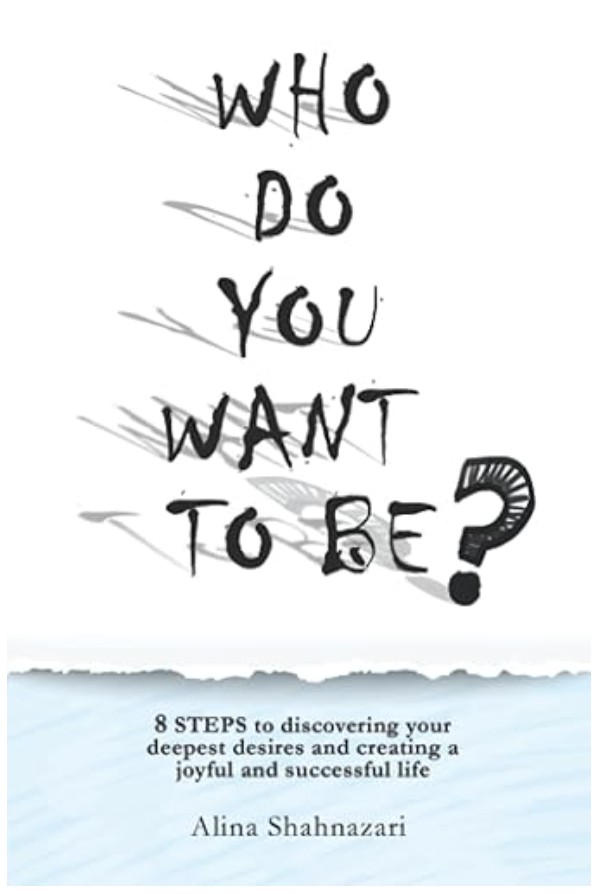
This book equips readers with an actionable, eight-step pathway to design a life that feels aligned, joyful, and sustainably successful. By clarifying a compelling personal vision and learning how the mind and body jointly create results, readers learn to “decide” who they will become and then let the subconscious do the heavy lifting through focused intention, vivid imagination, and consistent practice . The method shifts progress from willpower and overwork to alignment and flow—readers are shown how to use imagination to hardwire their future outcomes, set daily intentions, and become the person who naturally attracts the results they want . Practical guidance on dismantling limiting beliefs, building supportive environments, and ethically pursuing wealth and impact means readers not only move faster toward goals; they also feel lighter, clearer, and more energized along the way . The book’s bold, minimalist structure delivers a repeatable system—decide, design, embody, and surrender—so that readers can stop chasing and start creating, with integrity and ease, even as they keep going through setbacks and uncertainty .
WHO DO YOU WANT TO BE? — 8 Steps to Discovering Your Deepest Desires and Creating a Joyful and Successful Life
Key Points
Preface: Preface
“Unlearn, explore, and decide” — the preface reframes self-help as a minimalist, high-integrity experiment: leave borrowed definitions of success, study life directly, and distill only what actually moves you toward joy.
Why it matters: The preface is the author’s permission slip to live by design, not default. Shahnazari models radical clarity by sharing that she “left NASA’s Jet Propulsion Lab” to explore the edges of life, study people she considered truly successful, and connect the dots into a repeatable map for joy and impact . This origin story isn’t hype; it grounds the book’s core promise: you can intentionally craft a life that is aligned, original, and deeply satisfying when you stop outsourcing your definitions and start testing reality for yourself. The author’s voice is deliberately “bold, direct and to the point,” and the book’s format is “minimalist” by design so readers get only what creates movement, not noise . Value for you: 1) You’re invited to release the compulsion to memorize and conform, and instead build a personal laboratory of practice and reflection. 2) You’ll leverage a carefully pared-down, eight-step path rather than drown in scattered advice. 3) You anchor your growth to integrity: the preface cautions against chasing shiny objects or manipulating others, noting how such shortcuts hollow people out on the inside — a theme that repeats throughout the book . Vivid frame: Think of this book as a hand-built map: after eight months of deep reflection and study, the author “was able to see the whole picture … being built in front of me, step by step, like a map I could follow” . That map becomes your compass. Immediate action: Start a one-page “unlearning list” of any inherited beliefs or rules that no longer serve you. Pair it with a “decision list” — three choices you will make this week that align with your inner compass rather than social scripts. The preface makes a simple bet: deciding who you’ll be — then moving with intention — compresses time, reduces friction, and restores joy.
1: Figure Out What Kind of Life You Want to Live
“Return to ages 7 and 14” — use childhood joy as data to design an adult life that fits.
Why it matters: Step 1 makes a counterintuitive move — it takes you back to specific ages (7 and 14) to surface the raw signals of who you are before conditioning took over. Those moments you “could have done all day long” are not cute nostalgia; they’re diagnostic clues to build a grown-up life that feels alive, not performative . This section offers a concrete journaling sequence (“What makes me happy?” “What did I enjoy doing when I was 7 and 14?”) and frames the result as a whole-life vision, not a narrow career choice . Perspective shift: Instead of chasing generic goals, you align your days with what reliably lights your heart — the book’s core promise of alignment over performance. Mini-story/metaphor: The author positions this as designing days that “lighten your heart,” a simple but powerful internal compass for decision-making . Immediate action: Schedule a 45-minute, distraction-free session to answer the Step 1 prompts in writing; circle patterns that recur across memories. Those become your “non‑negotiables” for crafting a vision you’ll actually sustain. Benefit: When your vision is built from joy-data rather than social scripts, motivation stops being brittle; you’ll move with clarity and consistency because the vision is yours, not borrowed. This is the foundation for the rest of the system — deciding who to be, aligning environment, and embodying the identity now.
2: Know How Your Mind Works & What Your Body Needs
“Decide the ‘what’; give the ‘how’ to your subconscious” — leverage the mind–body link and your goal‑seeking subconscious to do the heavy lifting.
Why it matters: Step 2 reframes execution: your conscious mind sets the target; your subconscious — a “goal-seeking device” — finds the pathways when you feed it vivid images and feelings of your desired future . Practically, the chapter teaches how thoughts trigger bodily chemistries that drive actions; change the inputs (images, words, meanings), and you change your behaviors and results . This is not vague positivity — it’s a mechanics lesson. Perspective shift: Stop white‑knuckling outcomes; program them. The author provides an exercise to notice how a single thought alters your breath, posture, and tension — a live demo of the mind–body loop that either shackles you to old patterns or frees you to create new ones . Vivid metaphor: “You DECIDE what you want … and then give the job of HOW to your subconscious mind,” which works “day and night to find ways for you to achieve your goals” . Immediate action: Write one sentence that crisply defines your desired identity (e.g., “I am a calm, generous creator who ships meaningful work weekly”). Read it aloud morning and night while breathing deeply, then visualize a single concrete scene of you living it. Benefit: This offloads grind into guidance — your subconscious filters for matching people, places, and moves, so progress starts to feel like recognition rather than force.
3: Design Your Environment
“Design for alignment” — engineer your attitude, space, relationships, and money beliefs so your life pulls you forward.
Why it matters: Step 3 moves from inner clarity to environmental engineering: choose your attitude deliberately, install habits and spaces that reinforce it, and clean up beliefs about money so your vision is funded and free of guilt. You’re shown that people who seem “lucky” have designed an “attitude of gratitude,” say no to distractions, and yes to what aligns — making them magnets for opportunity . On finances, the book reframes money as an “amplifier” and a neutral tool; gratitude and continual learning unlock abundance, while limiting beliefs (“money doesn’t grow on trees”) quietly sabotage progress . Perspective shift: The author invites you to play again — to “expand your comfort zone,” take calculated risks, and even question rules that block your path, noting that many rules were made by people “who may not even be smarter than you” . Immediate actions: 1) Draft an “attitude brief” (who you want to be, your non‑negotiables, and the behaviors you’ll embody daily) . 2) Audit one money belief and replace it with a useful one rooted in value creation and gratitude . 3) Schedule one playful risk this week to widen your life. Benefit: When your environment echoes your identity, motivation becomes maintenance — and new doors appear because you’re finally knocking on the right ones.
4: Make It All Happen Like Magic
“Make it happen like magic” — use imagination to hardwire your future; program feelings first, outcomes second.
Why it matters: Step 4 reveals the book’s creative engine: imagination. As children we used it freely; as adults we’re taught to memorize — and our results suffer. The author calls imagination a “best kept secret” used by the powerful, explaining that when you vividly imagine desired outcomes while relaxed and grateful, your brain builds new neural pathways that match that future — you’re literally hardwiring a path to it . With practical tools (vision boards, sensory visualization), you make your subconscious hunt for matching opportunities. Crucially, the chapter warns against rehearsing fear; “Never go back to imagining bad outcomes … and become worried and fearful. This will destroy your chances of success” . Perspective shift: You’re not manifesting by wishful thinking; you’re training recognition systems so your actions become precise and timely. Immediate action: Build a simple vision board that answers “What do I want to look and feel like? Where do I want to live? What does success mean to me?” and review it daily after a few deep breaths to enter that creative, relaxed state . Benefit: With imagination turned from enemy (catastrophizing) to ally (creative rehearsal), momentum accelerates and dread recedes — the inner game finally fuels outer wins.
5: Become That Person Now
“Become that person now” — match the vibration of your desired identity and emulate skills, not idols.
Why it matters: Step 5 gives a concrete embodiment protocol: study people who have what you desire, but emulate only their specific skills and values, never the whole persona. “When someone shows you once that they are faking it, believe them!” the author warns, urging integrity as you choose models . The practical core: change your “vibration” — your energy, language, posture, planning, and use of time — to match that identity today; then you’ll “generate and attract success” naturally because you’re operating at the level of your goal already . Distinctive mini‑story/exercise: The book spotlights the “Raikov Effect,” a rapid modeling technique credited to a Russian neuropsychologist, with a seven‑step script (deep breaths, visualize the exemplar, “take their brain and put it in your head”) to experience the target skill in minutes . Perspective shift: Identity first, strategy second. Immediate action: Choose one skill (e.g., calm, persuasive communication) and run the Raikov script daily for a week; then, in real situations, ask “How would my future self respond?” Benefit: By embodying values and capabilities now — rather than delaying until you “deserve” them — you collapse the gap between who you are and who you’re becoming, without betraying your soul for shortcuts .
6: Get Out of Your Own Way
“Remove the weeds” — dismantle limiting beliefs with self‑hypnosis, stress hygiene, and ritual so your desires can take root.
Why it matters: Step 6 names the silent saboteurs — beliefs absorbed before age seven and reinforced by environment — and shows how they block action with fear, shame, and self‑doubt . The fix isn’t just pep talks; it’s deep reprogramming. The author offers a precise self‑hypnosis sequence (body relaxation, positive identity statements, future‑self imagery) to replace limiting scripts with enabling truths, repeated daily for at least 30 days . She adds nervous‑system care and a striking “fire ceremony”: write what’s holding you back, offer it to a fire, and immediately speak the opposite (“I am whole. I am enough…”) — a visceral metaphor for transmutation that readers can practice monthly . Perspective shift: You don’t fight weeds; you remove them and plant stronger roots. Immediate action: Pick one stubborn belief (“I’m not ready”) and run the self‑hypnosis script nightly; pair it with the fire ritual the first week. Benefit: As the inner blockers loosen, you’ll notice two changes: 1) your nervous system stops flooding you when you attempt bold moves, and 2) your behavior aligns with your vision without constant willpower. This is the book’s promise in action — inner growth first, outer results second.
7: Surrender and Then Take the Right Actions
“Surrender, then strike” — stop over‑controlling the world, relax into clarity, and take the few right actions (the 20%) that move everything.
Why it matters: Step 7 tackles a modern trap: we try to control externals and drown in “busy work,” confusing motion with progress. The author prescribes surrender — not passivity, but the discipline of letting go of what you can’t control and returning attention to the only leverage you have: your state and your next intentional move. She champions the 80/20 rule for goals, warning that most extra effort is waste; “easy, calm and calculated moves do the trick” for sustained success . Perspective shift: Your results are capped not by effort, but by clarity. Immediate action: Audit your to‑do list daily and cross out the bottom 80% that won’t materially move your vision; replace them with one leveraged action and one recovery action (walk, sleep, time with family). Benefit: This chapter reclaims time, restores composure, and paradoxically speeds results — when you stop pushing, you see the path you were too tense to notice, and you act with precision .
8: Keep Going
“Keep going, keep clearing” — momentum is a practice of daily intention, environment care, and joyful sprints at the right moments.
Why it matters: Step 8 is the system’s heartbeat. It diagnoses four reasons goals stall — misaligned desire, wrong approach, unsupportive environment, and limiting beliefs — then offers targeted remedies, especially environment clearing: if the seed lacks water, soil, or sun, it can’t sprout; remove negativity and create conditions where your vision can grow . The chapter doubles down on two superpowers: “deciding” and “imagination,” then adds a daily intentions ritual to live your identity from wake to sleep . Mini‑story/metaphor: The “boat” metaphor — do steady daily work, then sprint joyfully for the final push when the boat is almost ready, because you can already see yourself riding it — teaches sustainable intensity and timing . Immediate actions: 1) Each morning, set one feeling intention and one action intention. 2) Each week, remove one environmental weed (a draining relationship, a cluttered workspace). 3) Celebrate even micro‑wins to keep your nervous system engaged and hopeful . Benefit: You’ll build compounding momentum without burnout — a life that is steady, light, and resilient.
Final words: Final Words
“Final words: become a dreamer with intention” — carry the map forward; never compare paths; share your learnings with the world.
Why it matters: The closing pages crystallize the ethos: “The world belongs to dreamers; people who show up in the world with clear intentions and know where they are going.” Without intentions, we’re “lost,” blown by the wind, manipulated by others’ goals; with them, we march our unique path with peace, joy, and boldness . Perspective shift: Success is not a single summit but a lived alignment — every step toward your self‑defined destination is victory. The author urges readers to stop comparing journeys: your pace, routes, and seasons will differ; respect your rhythm and keep moving. Immediate action: Write a one‑sentence life intention you can carry daily (“I move with clarity, kindness, and courage toward my vision”), and read it before major decisions. Benefit: You leave with a compass you can actually use when conditions change. The call to “share your learnings with the world” is not performative; it’s how the cycle completes — your embodied example becomes a seed for someone else’s joy .